
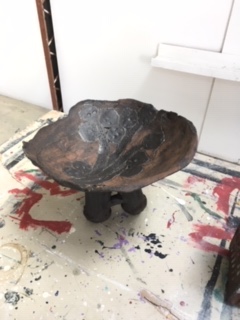
Bronze slip applied and Toms back engobe outlined around tree to help hold the 2 clays together. Black clay and red terracotta.
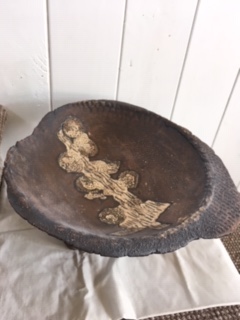
Bronze slip applied and Toms black engobe outlined around tree to stop the clays from pulling apart. Whitestone clay and red terracotta used.
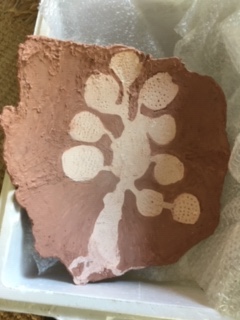
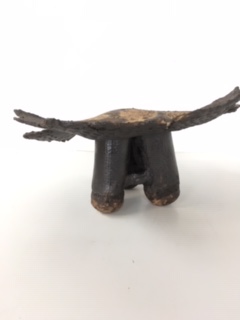
Bronze slip applied and Toms black slip outlined around tree to stop the clays from pulling apart.
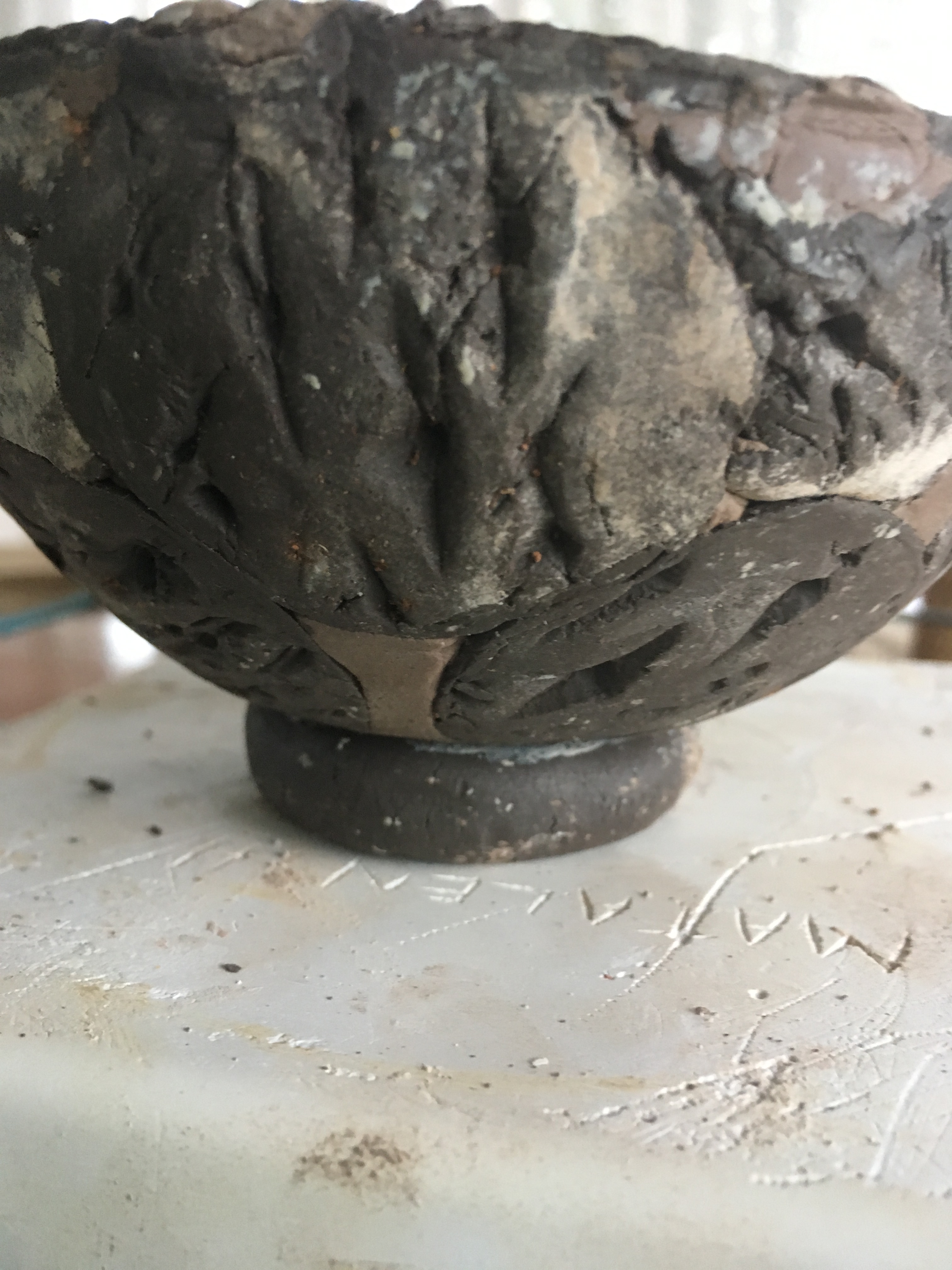
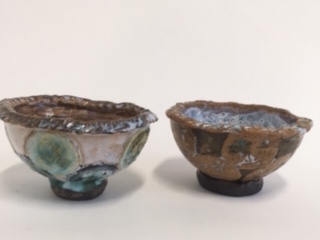
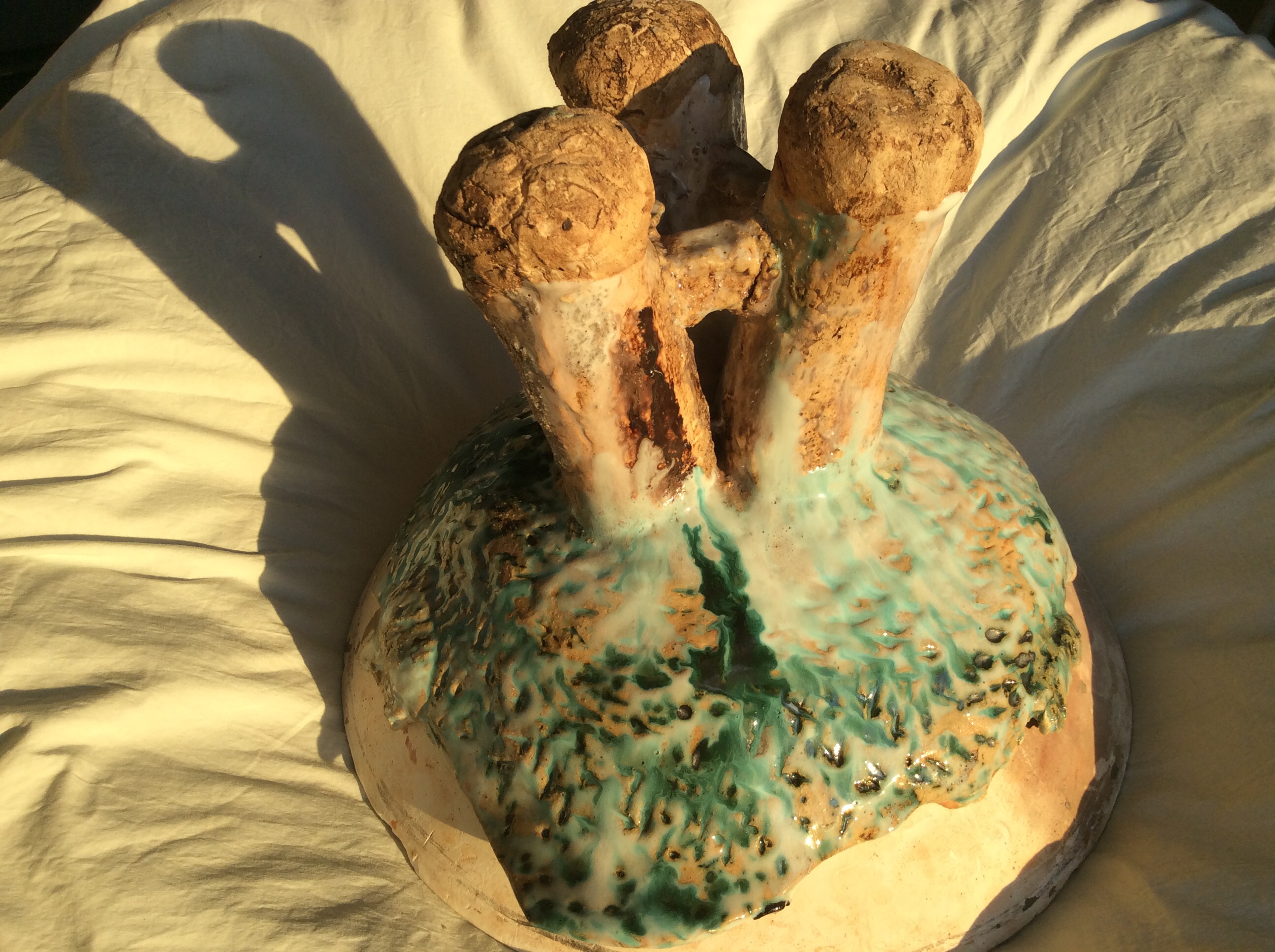
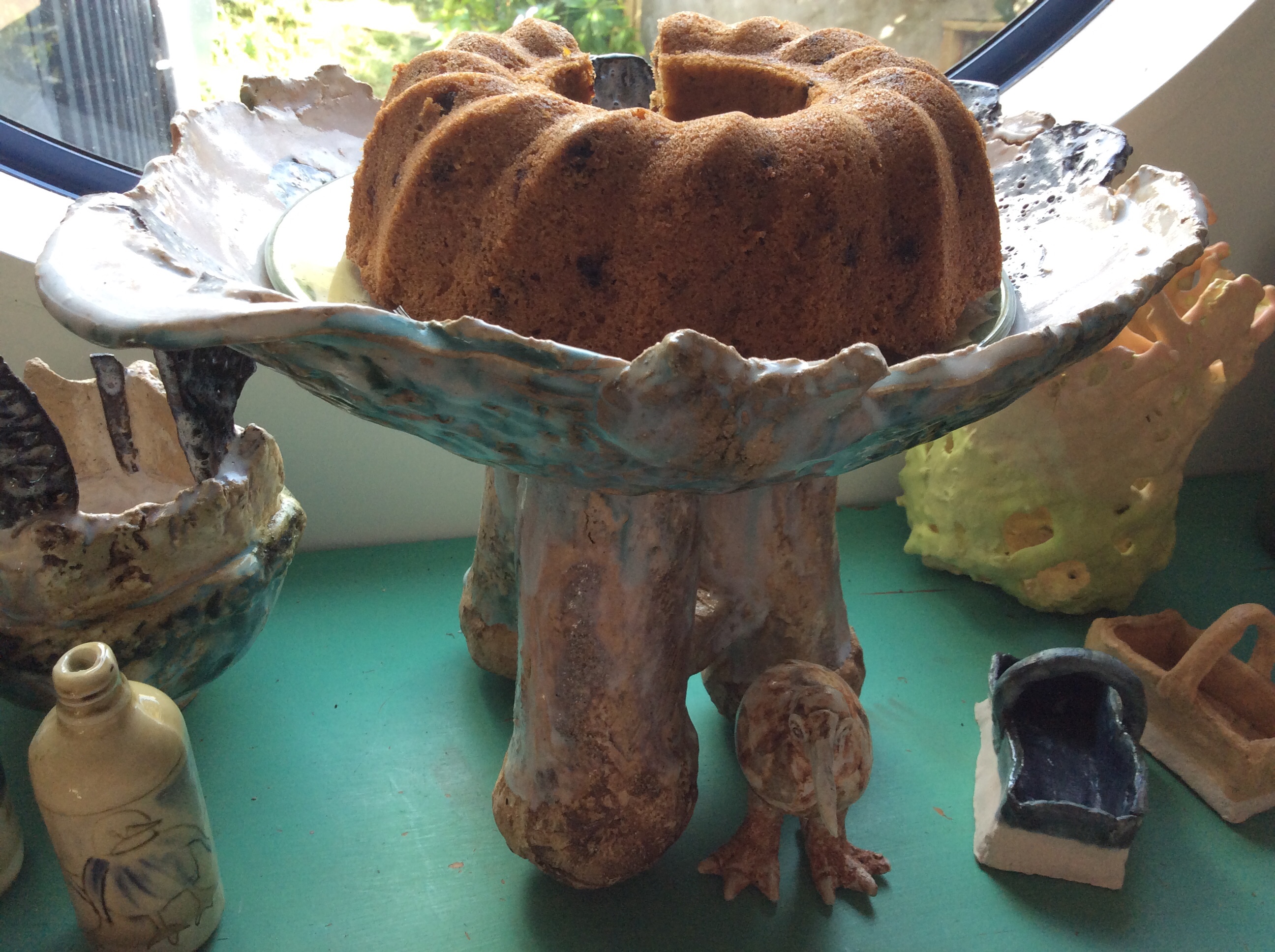
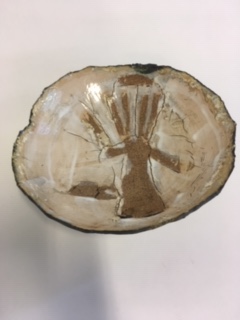
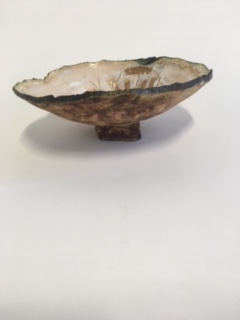
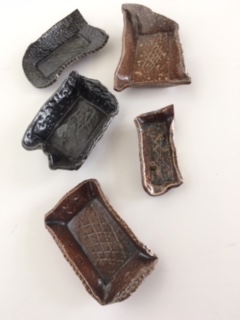
The theme for slab building has been Rakau (trees). The larger tree bowl was hard slab work and the smaller bowls were made of soft slab .
A hump mould was used to form the hard slab tree bowl and the essence of the tree on the inside was cut out of black clay and a groggy clay was used for the bowl. Cardboard rolls were used to form the trunk like legs which were joined to small pinch pots. The idea of the legs came from a 1965 book written by Carlton Ball and Janice Lovoos titled Making Pottery without a Wheel, texture and form in clay. The inspiration for the tree bowls came from being in Penny Ericsons studio who has been our tutor for this module. The Glazing was a bit of a surprise On the top photo of the bowl as I had used some of Toms white engobe with a mixture of oxides ie. copper oxide and cobalt and manganese and what I thought was a clear glaze now appears to be a frit which has run off some of my pieces. I actually like the result on the big bowl as think the coloured clay tree may have been too intense for my concept of tree essence. I have learnt now that it is important to test the glazes first.
The smaller tree bowls were made in a mould. I cut out small circles and placed them in the shape of trees and then used some wet stoneware clay to fill in the gaps and have the appearance of tree trunks. The circles were given some texture so they would take up some of the oxides.
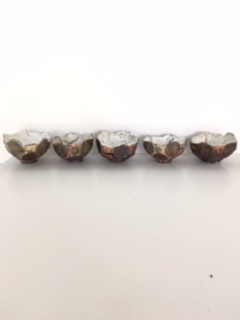
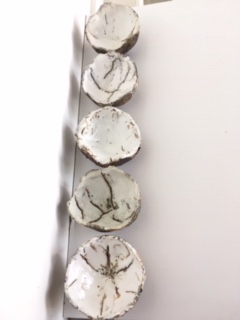
glazes have kept them intact.
- Further examples of slab work.
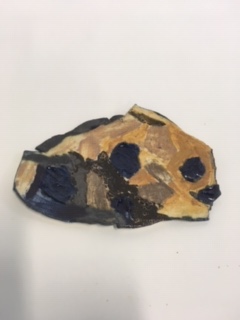
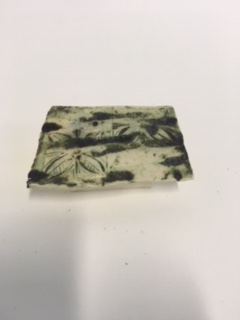
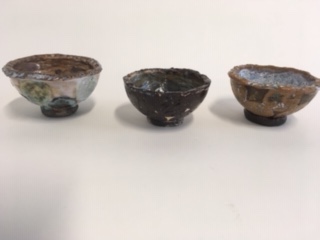
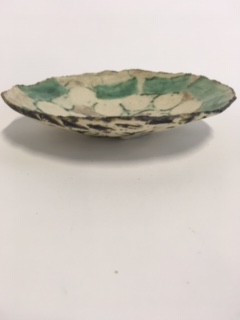
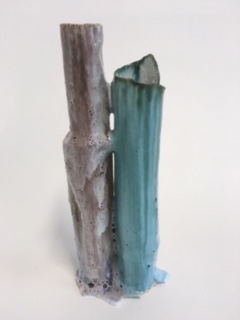
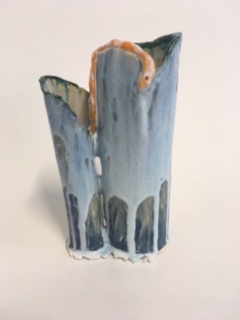
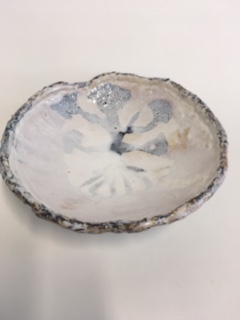
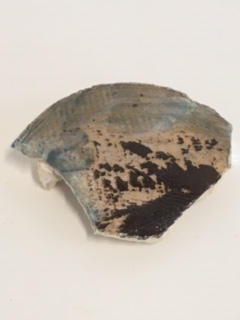
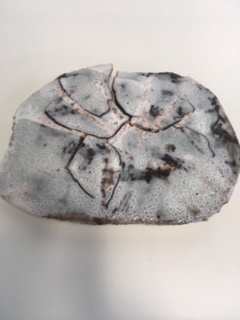
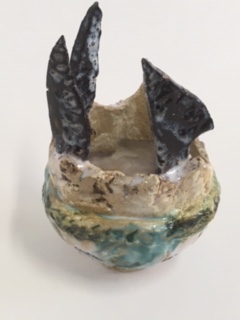
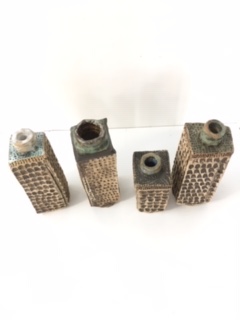
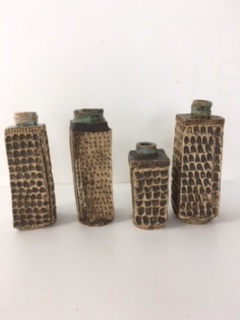
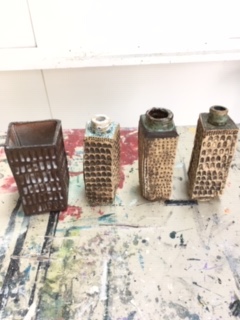
Bronze slip applied and Toms white applied on top and aramont blue green glaze applied by dipping. White glaze used inside and a clear glaze used in vase where bottom was difficult to see.
October 2020. Slab building module with Penny Ericsson. “Using The Land”.
Following on from last years “Clay as canvass”.
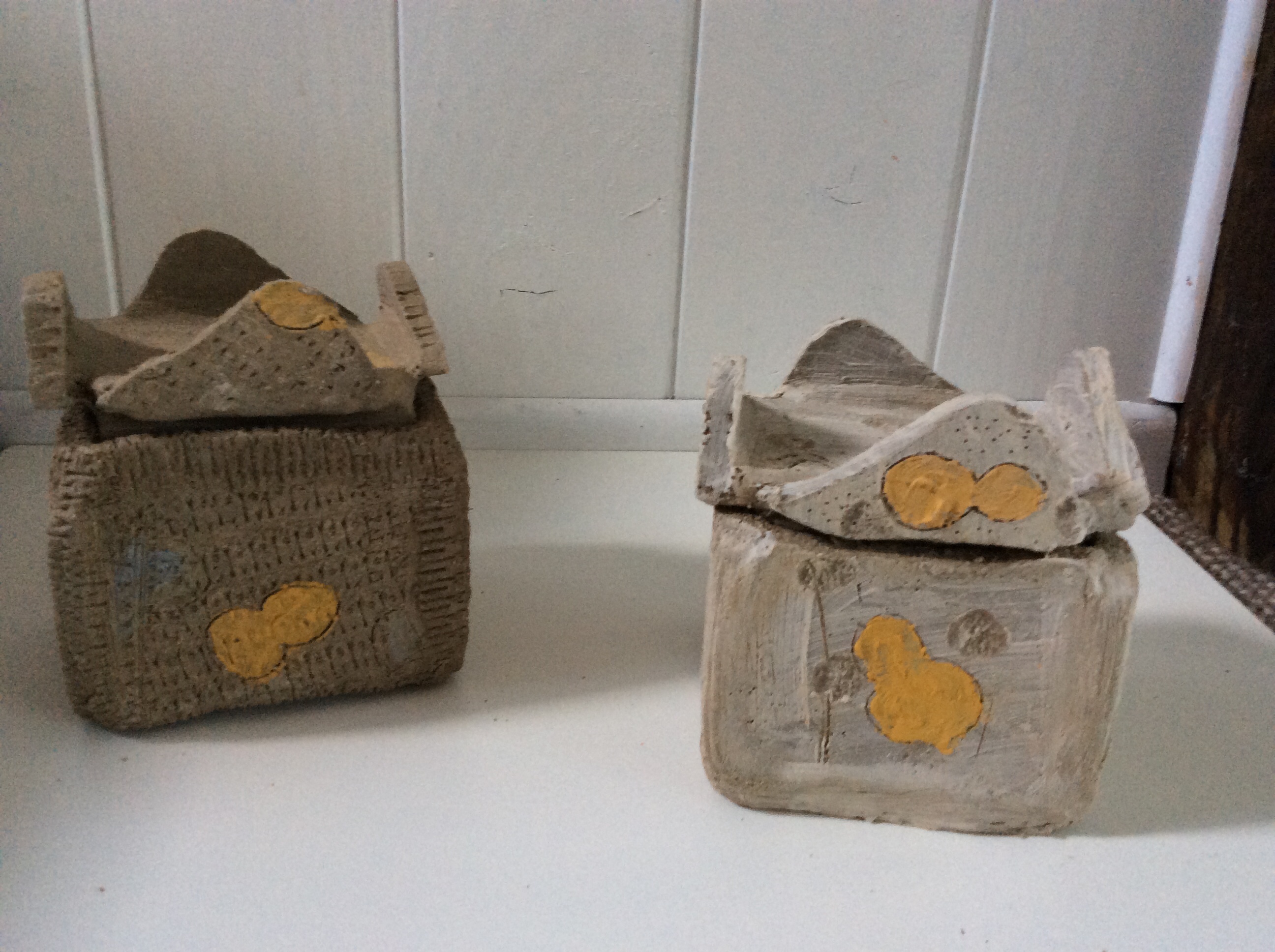
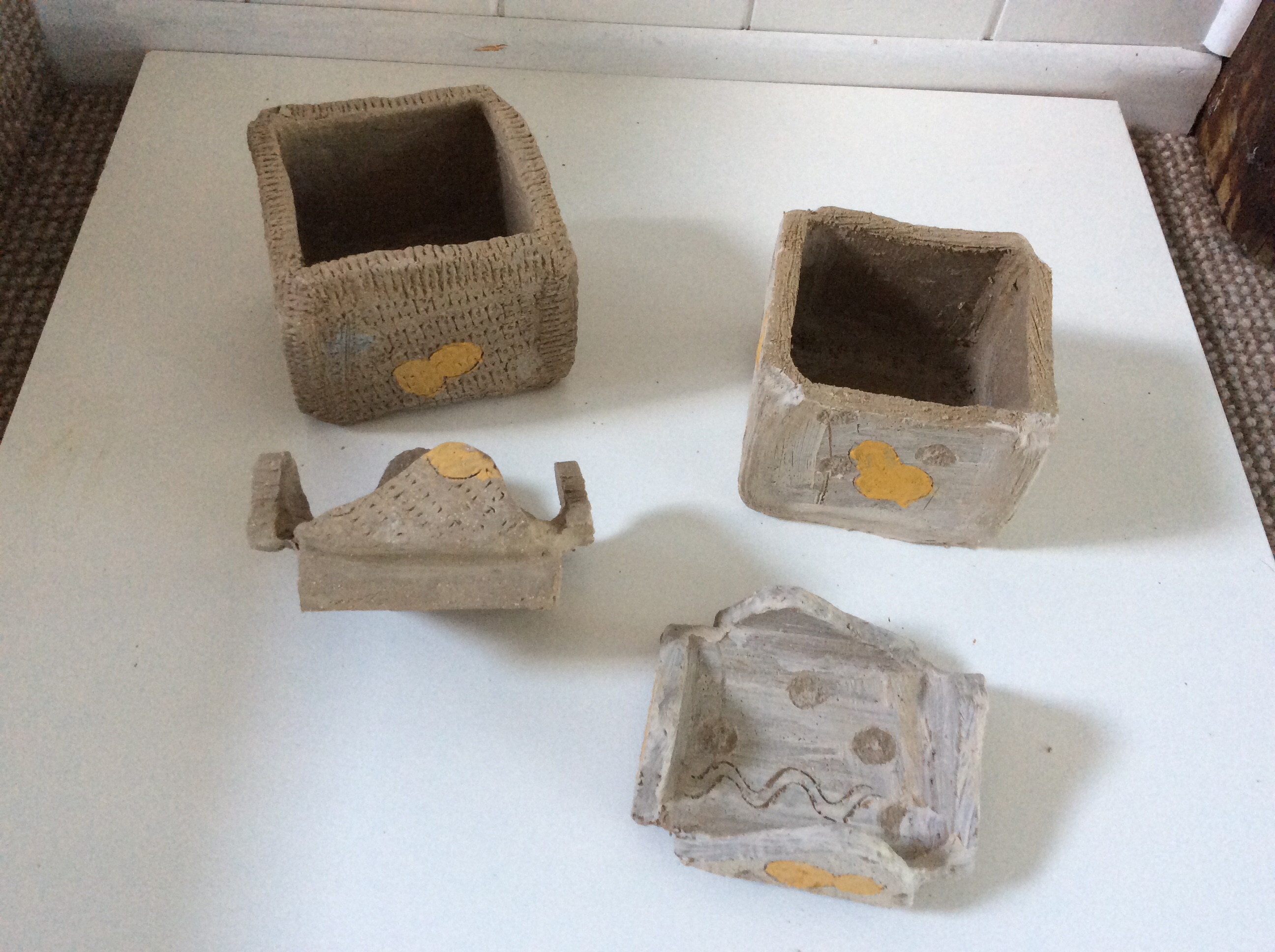
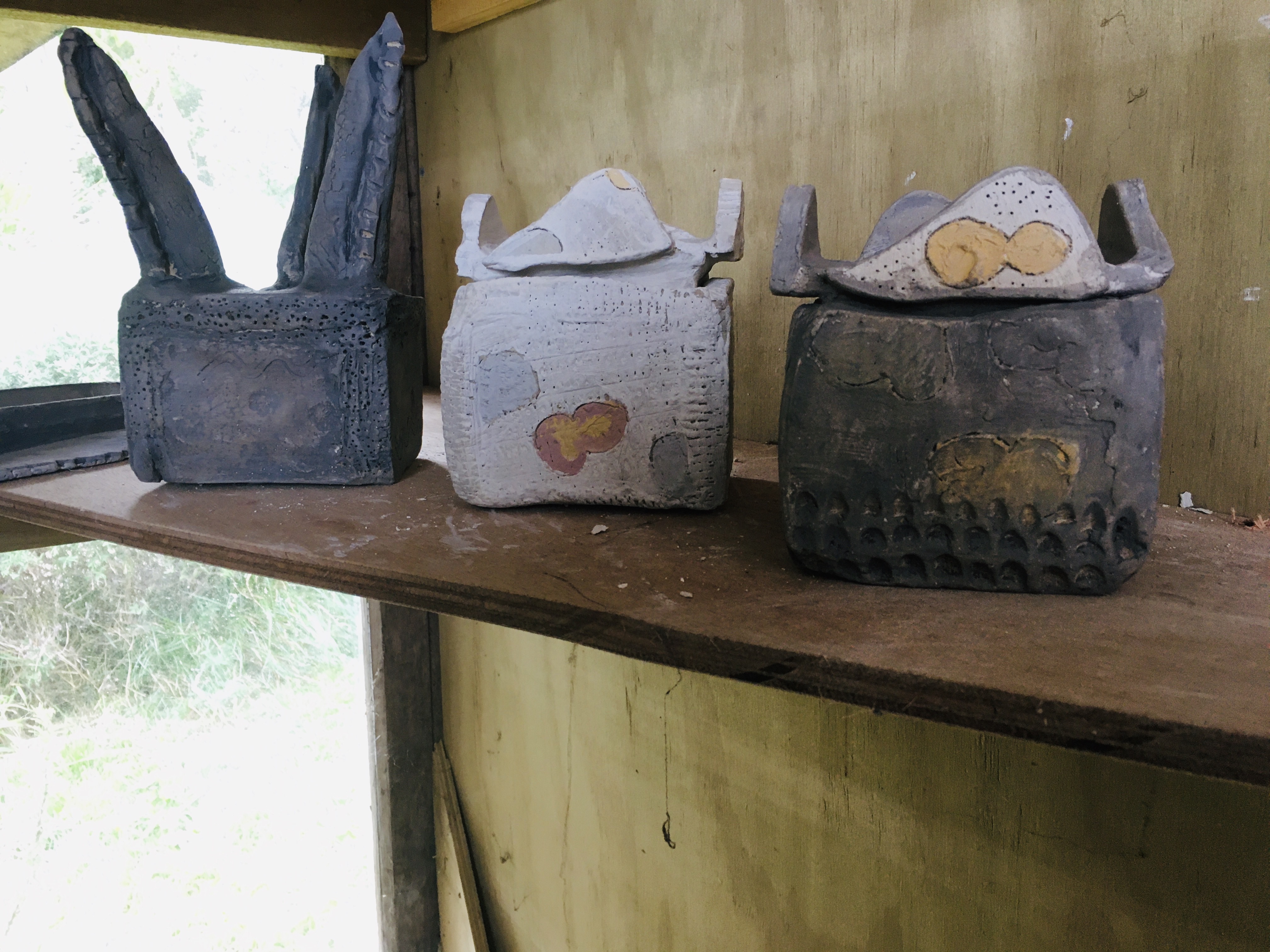
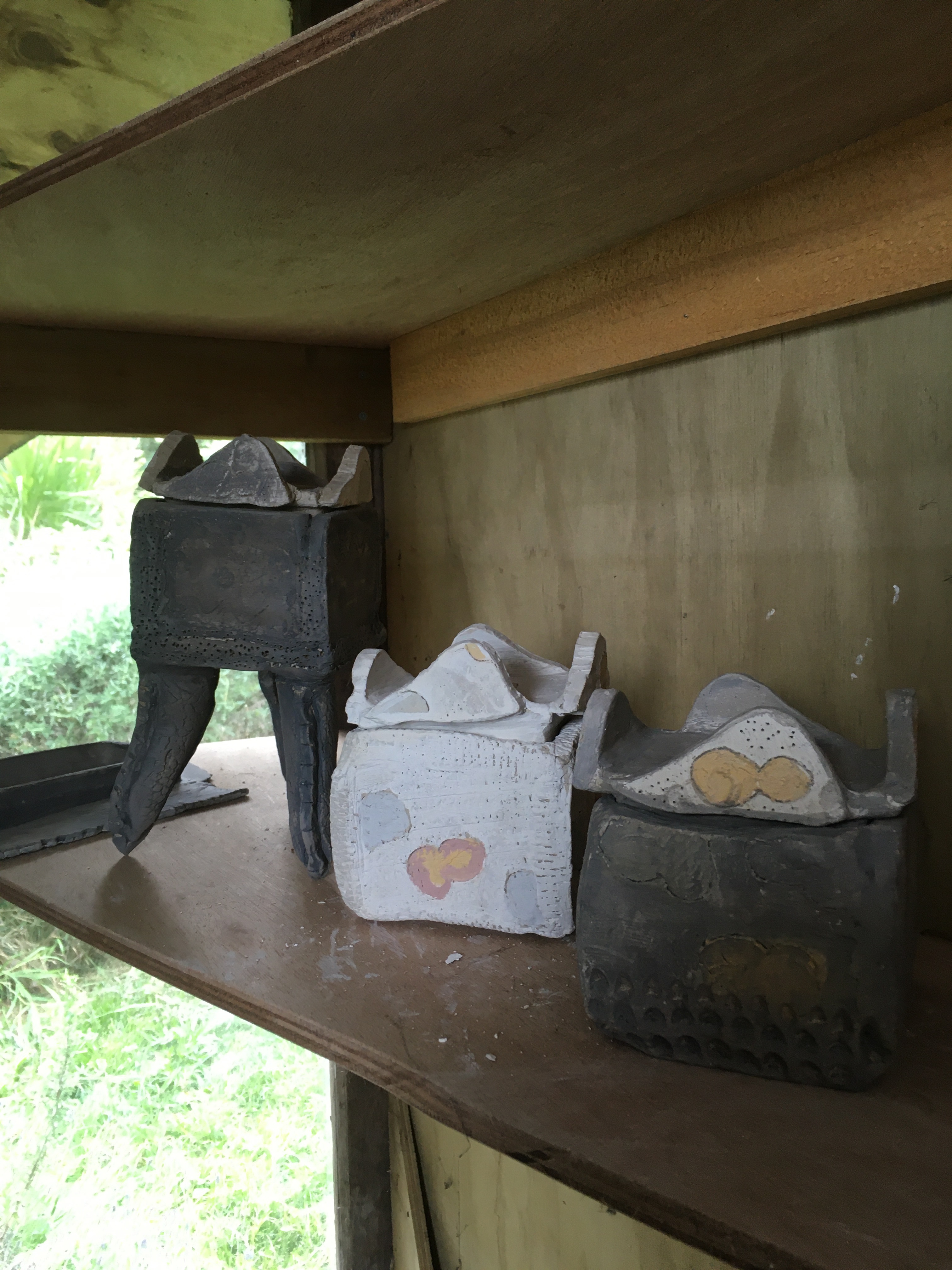
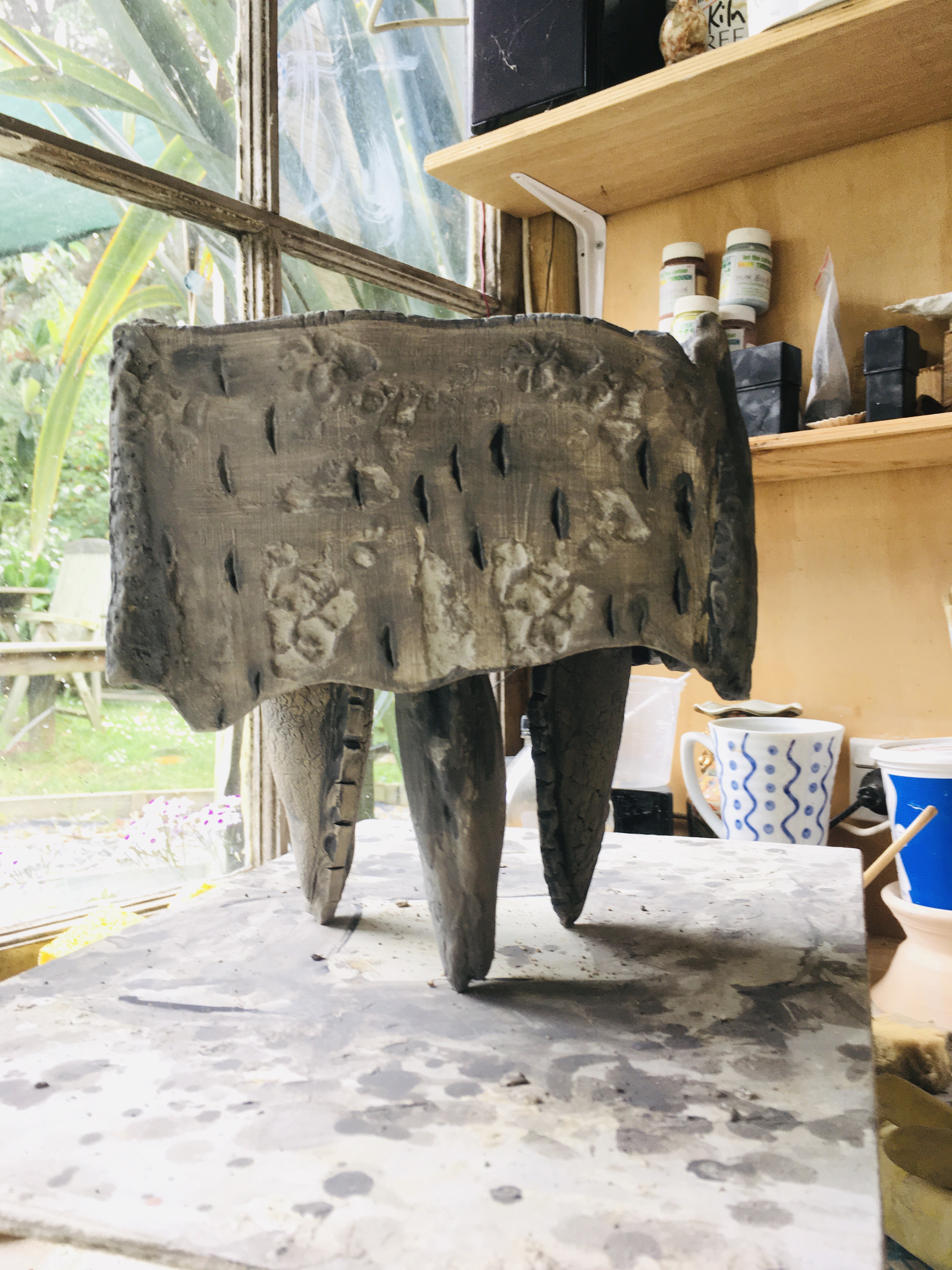
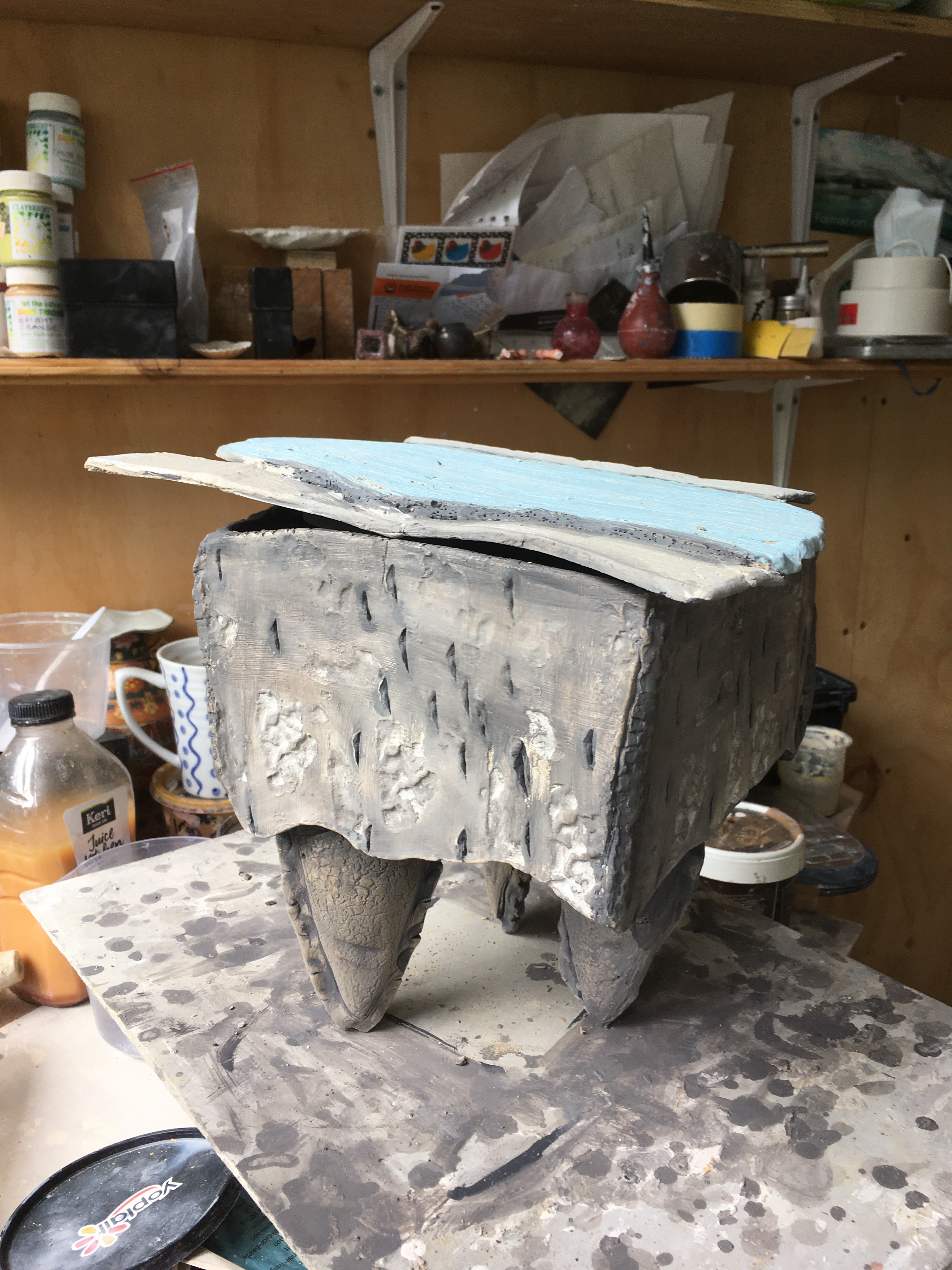
Our brief is to make a series of lidded multi sided boxes using hard slabs with surface treatment started at the time of building and based on imagery from our local environment.
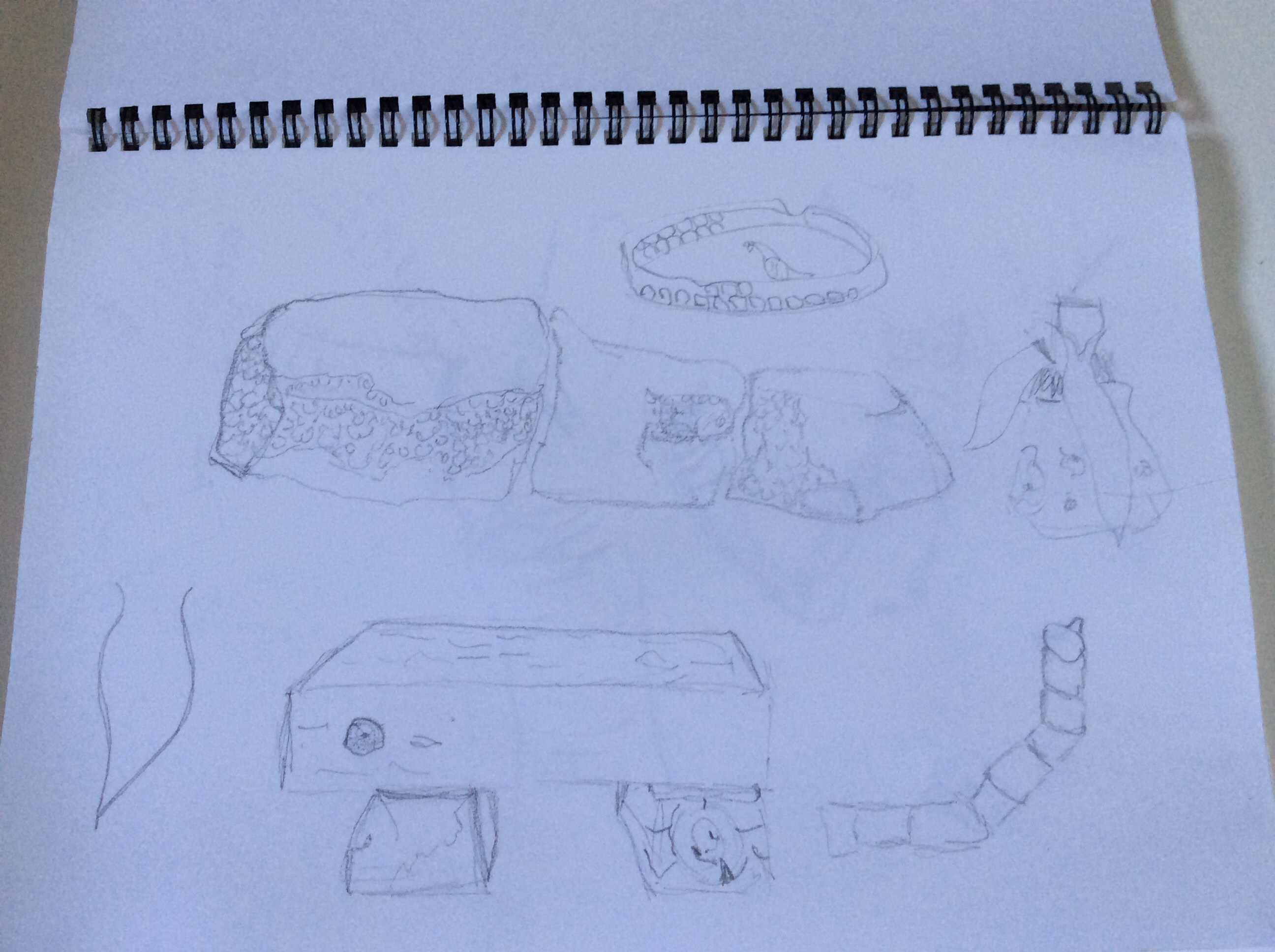
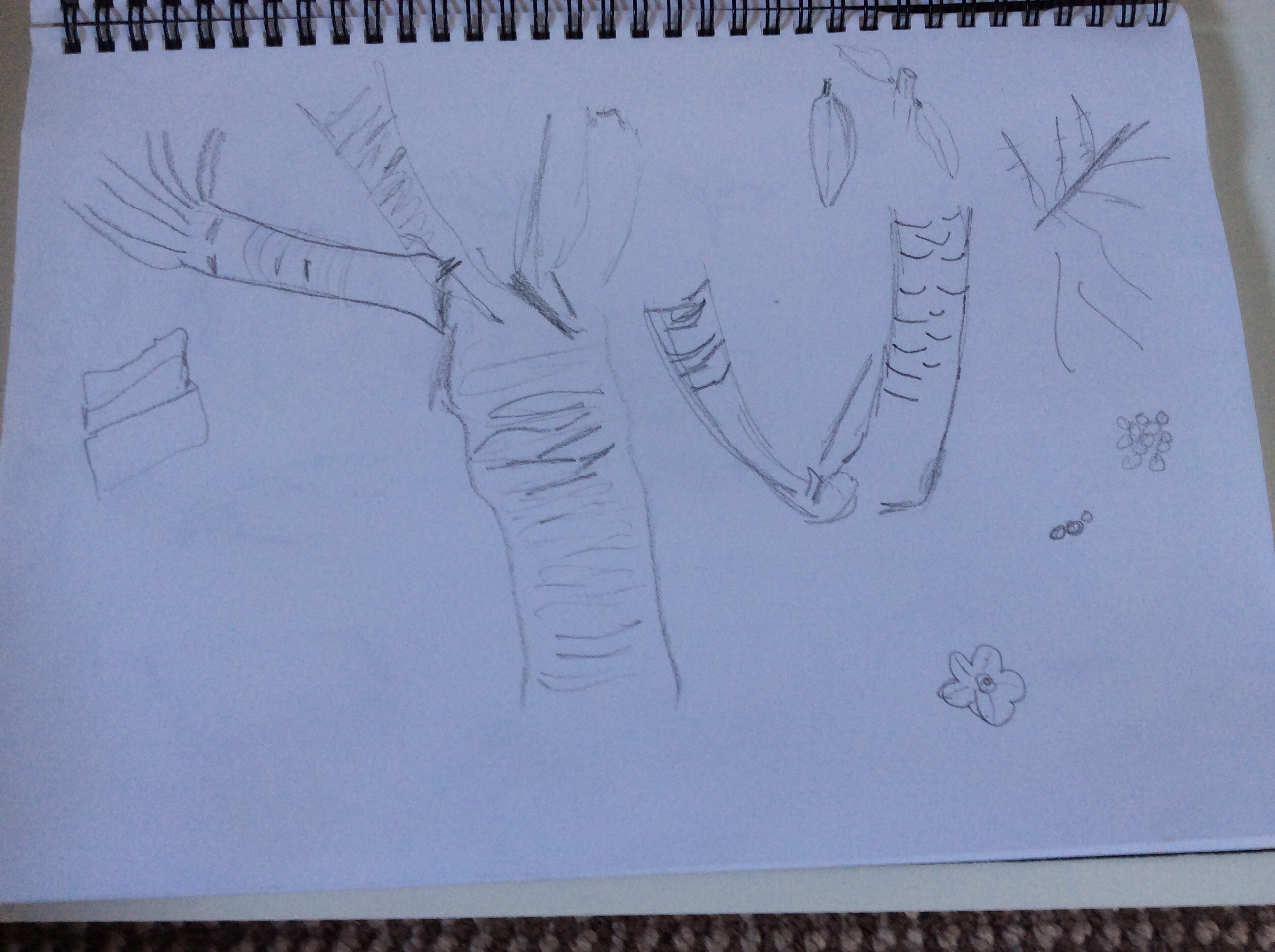
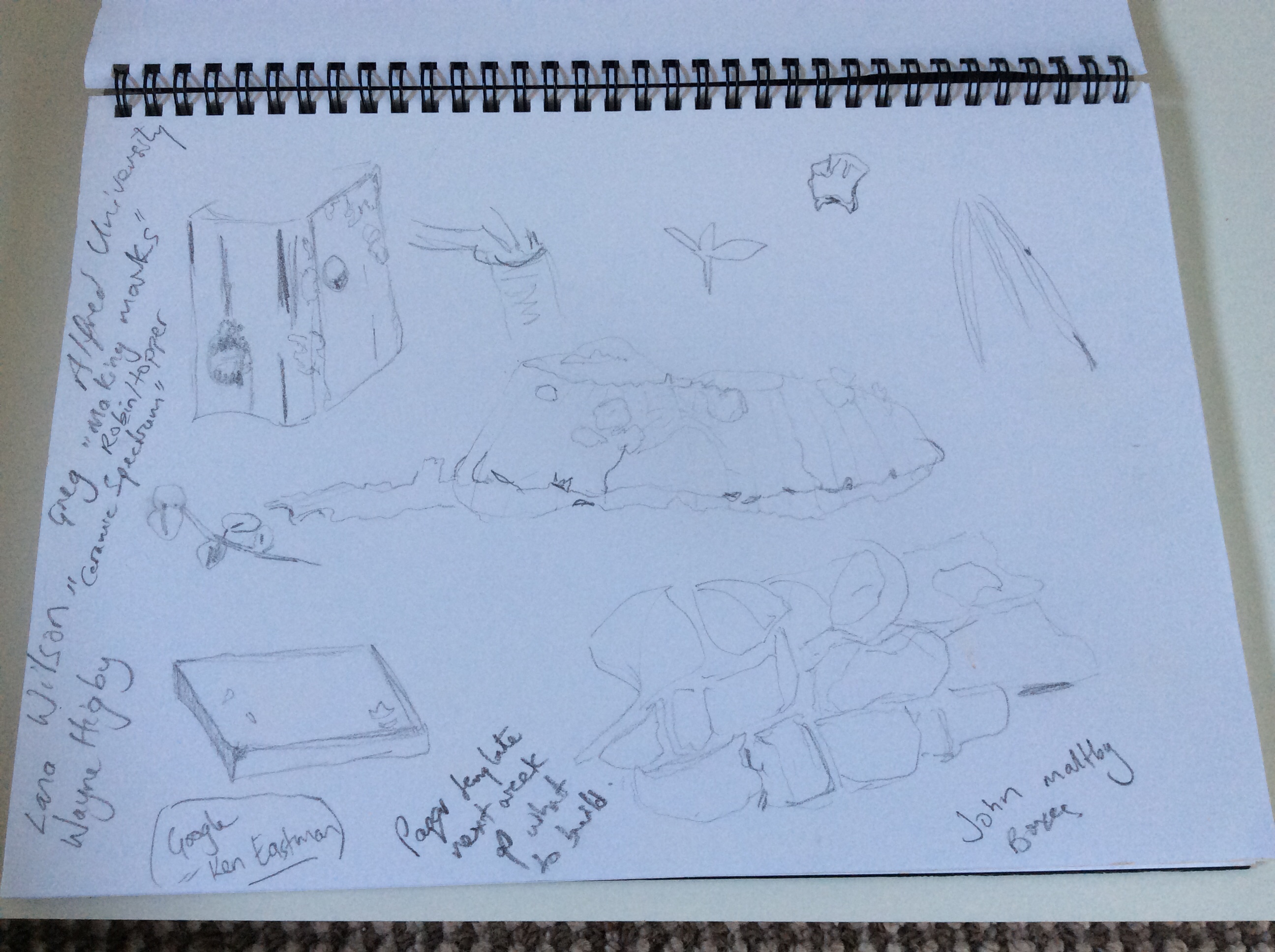
We Began the exercise by quickly sketching at least 10 visual forms from Penny’s garden of paradise and from the view. After rolling out the slabs of clay such as speckled buff in her rolling machine and then rolling with our own rolling pins until we got the correct thickness we started applying some surface treatments. We needed to carve and scrape, impress, wax resist, underglaze paint, use torn and cut stencils and stamps and roulettes.
Our next step was to work towards making some small examples of work to use for glaze testing.
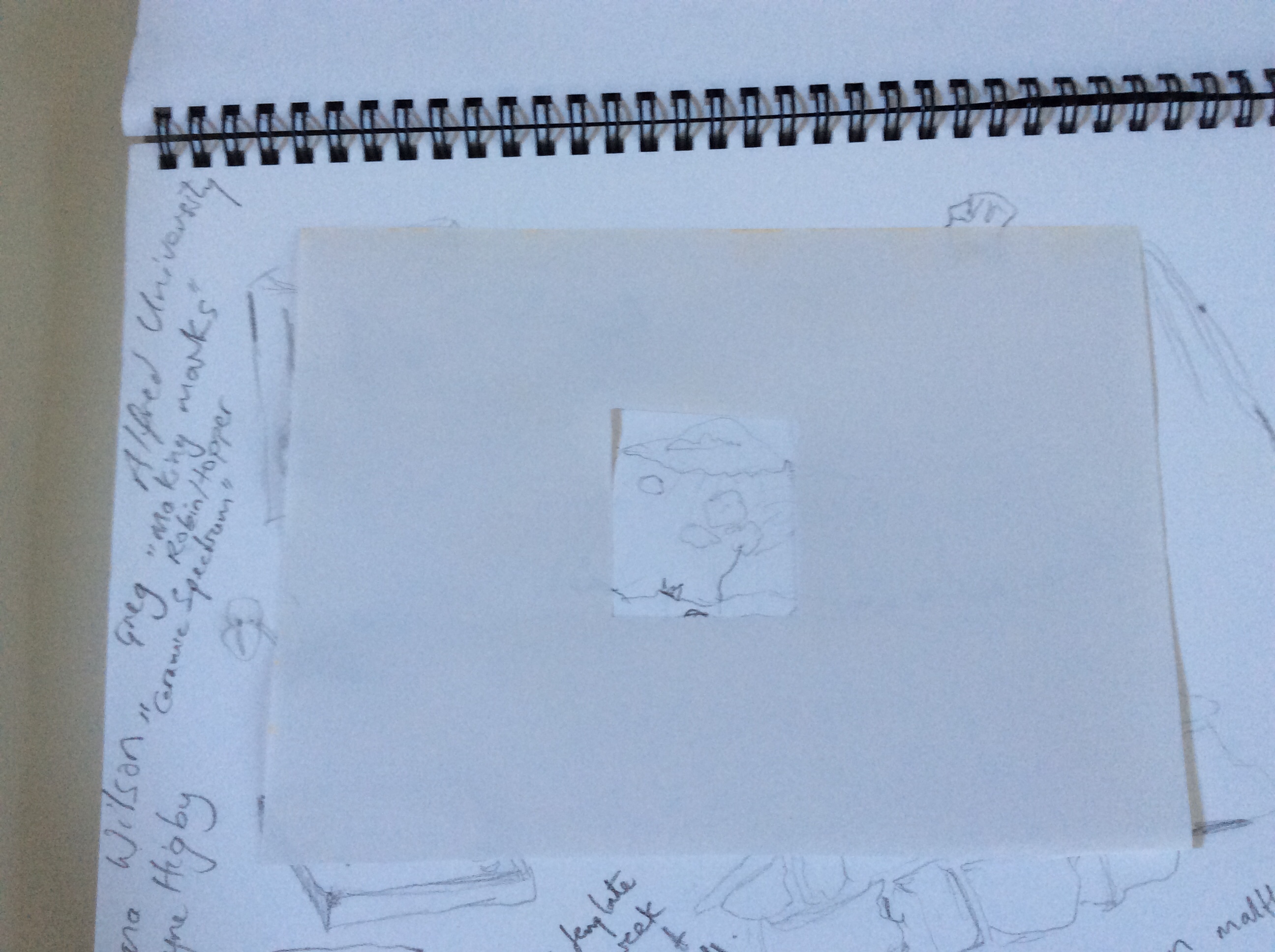
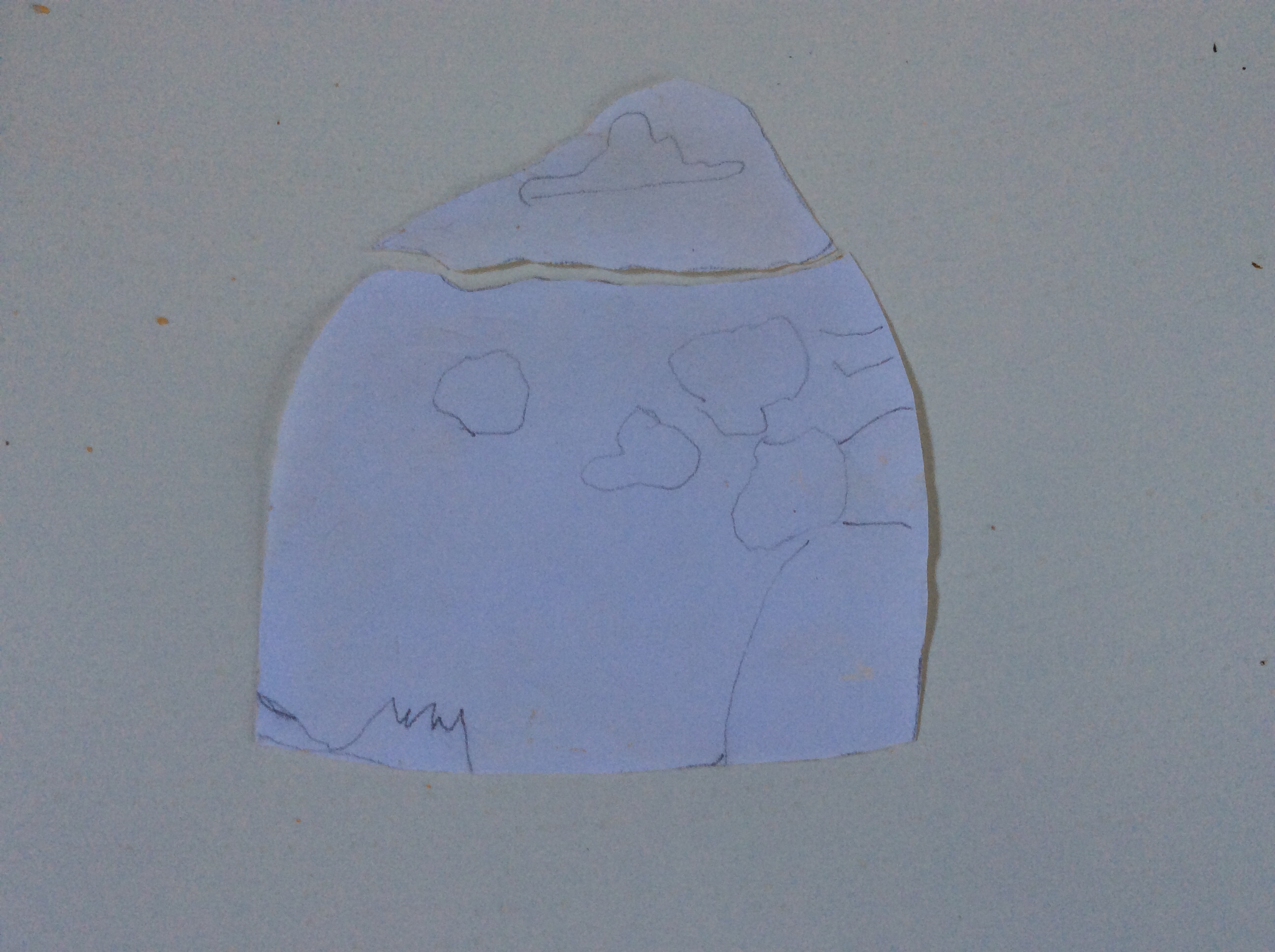
We had a square cut in some paper to put over a sketch to focus on an area which appealed and then we needed to draw a patten to be able to focus with hand building.
 Terrys Pottery