Mould making module 2019/2020

Brendon Adams workshop at 300 Pt Chev Rd, Point Chevalier, Auckland.
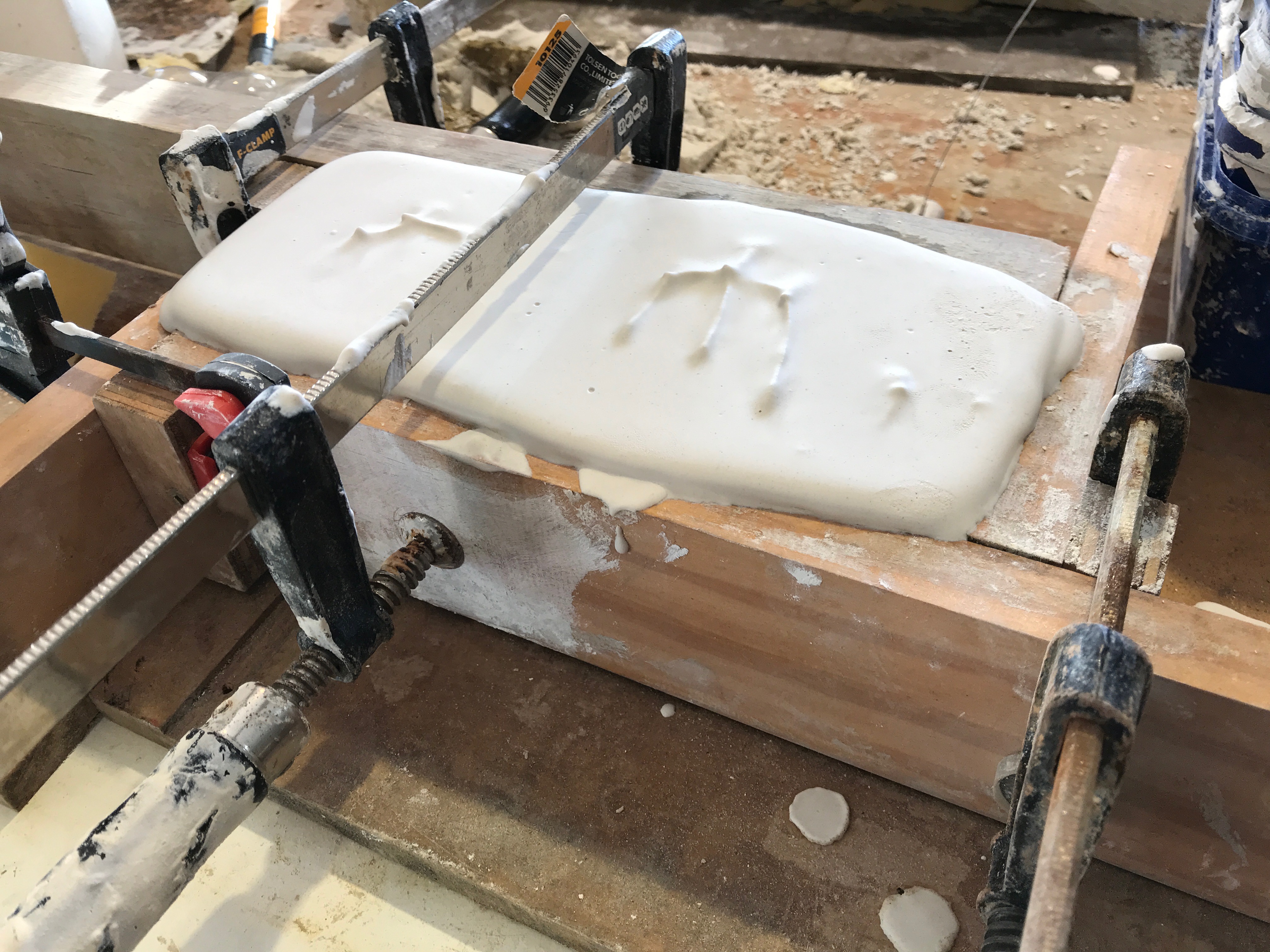
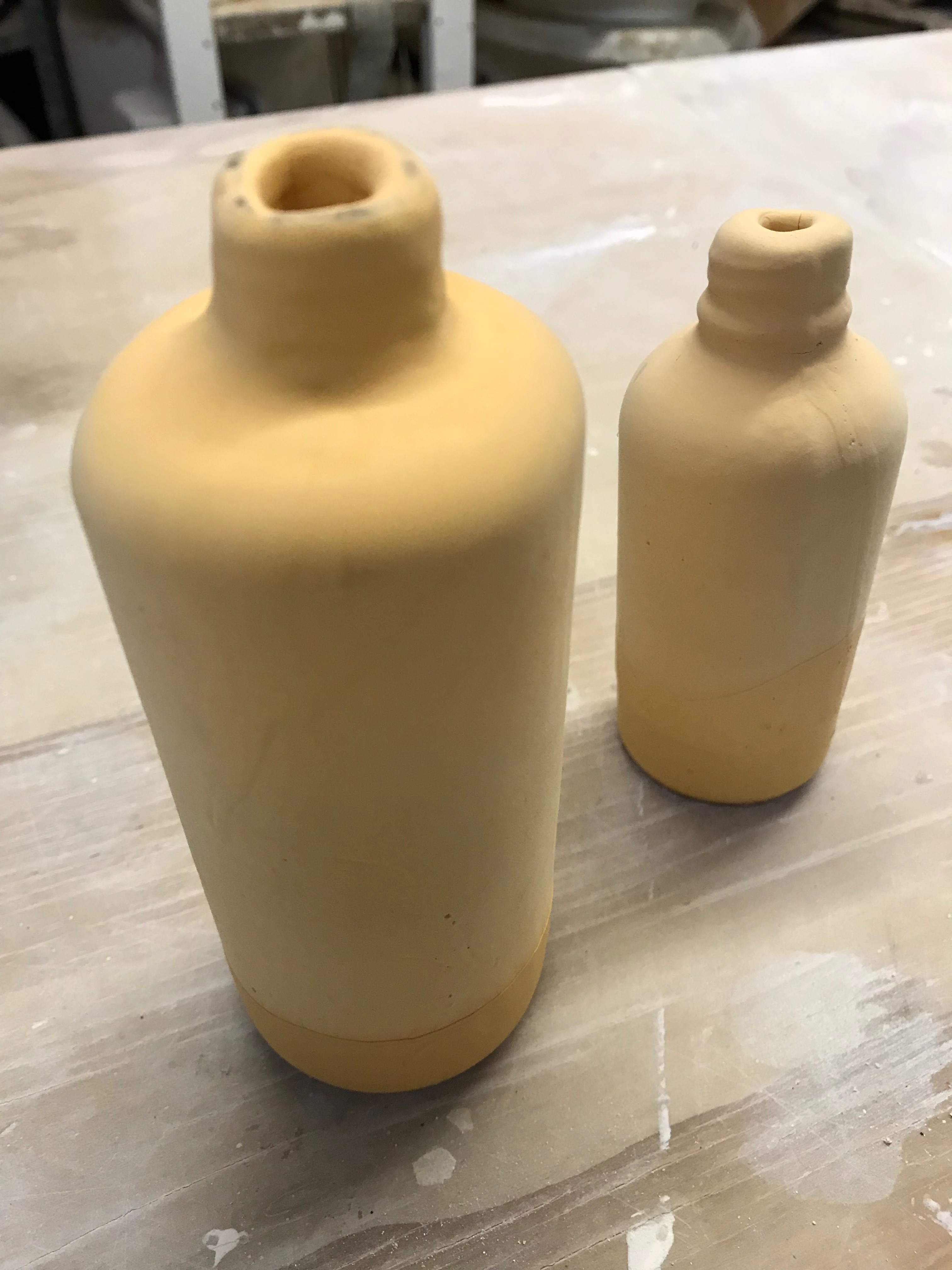
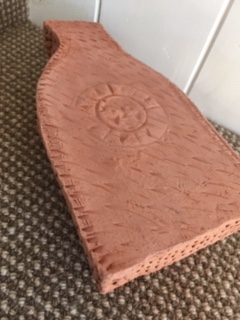
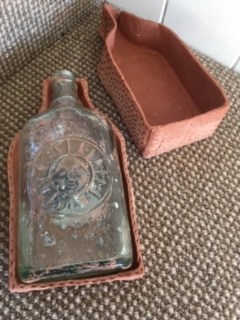
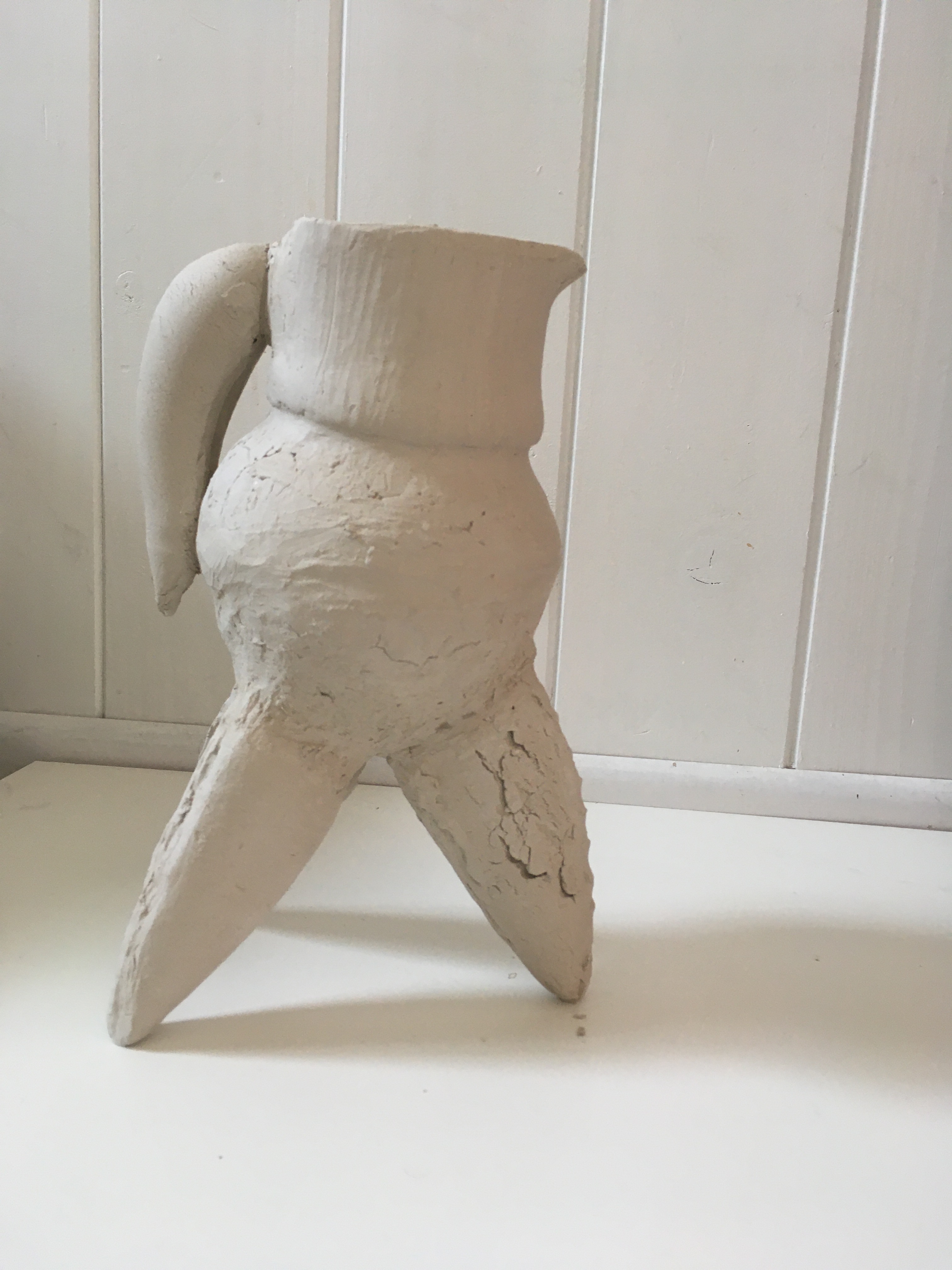
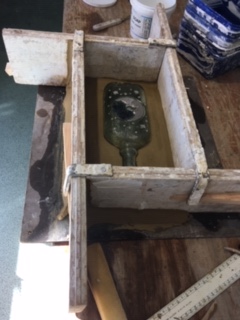
Slip mould for containment exercise.
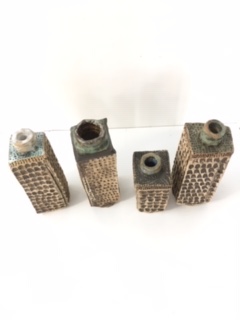
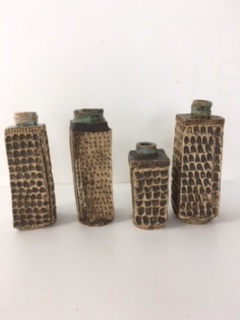
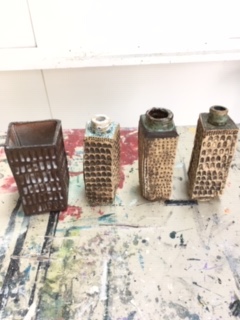
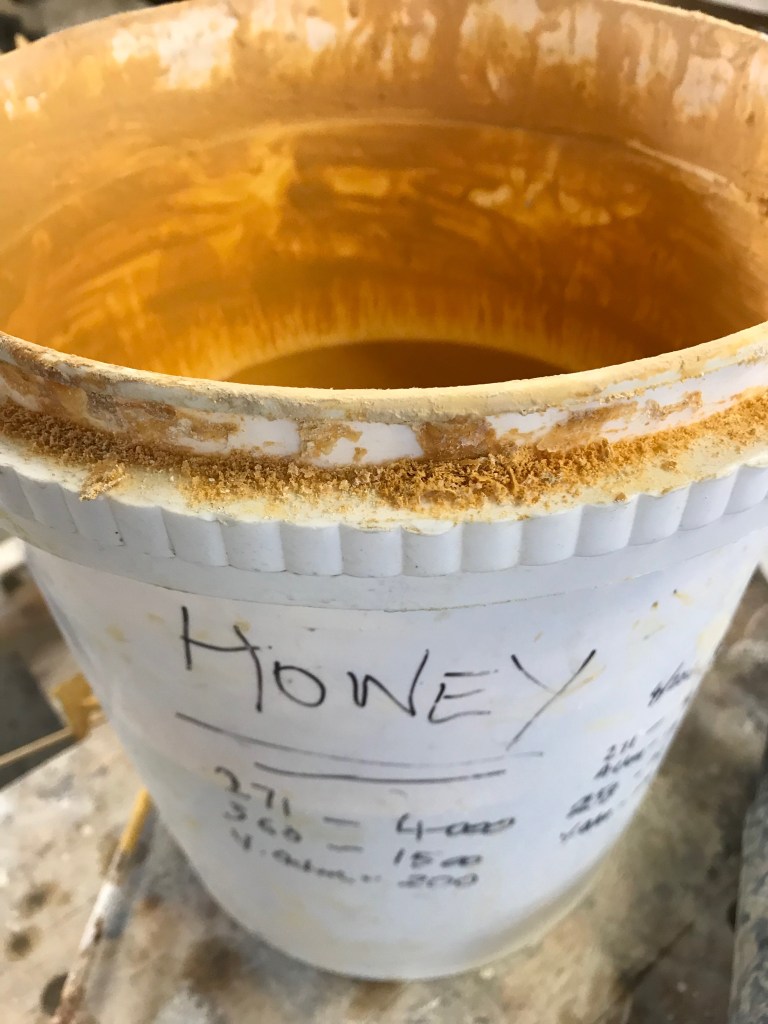
Honey glaze to use on some bottles over bronze slip etchings

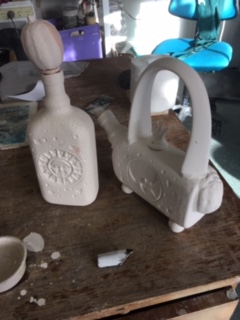
A random teapot was made by using the gin bottle slip ware, half a lemon slip ware and a handle I made using one of Brendon’s moulds with a lid and feet which were some of Brendon’s own slip ware. I needed some extra slip which was tipped onto some plaster to partially dry and then applied to cover the gap made by repositioning the spout.

The exercise was to experience the joining of slip ware . Vinegar was used for this as if magic water or more sodium was applied the slip ware would melt. A liquifaction moment occured when the holes under the spout were made. The slip just melted so to save the piece some dried plaster was pushed onto this spot to harden it up. I believe a chemical reaction occurs for this to work.

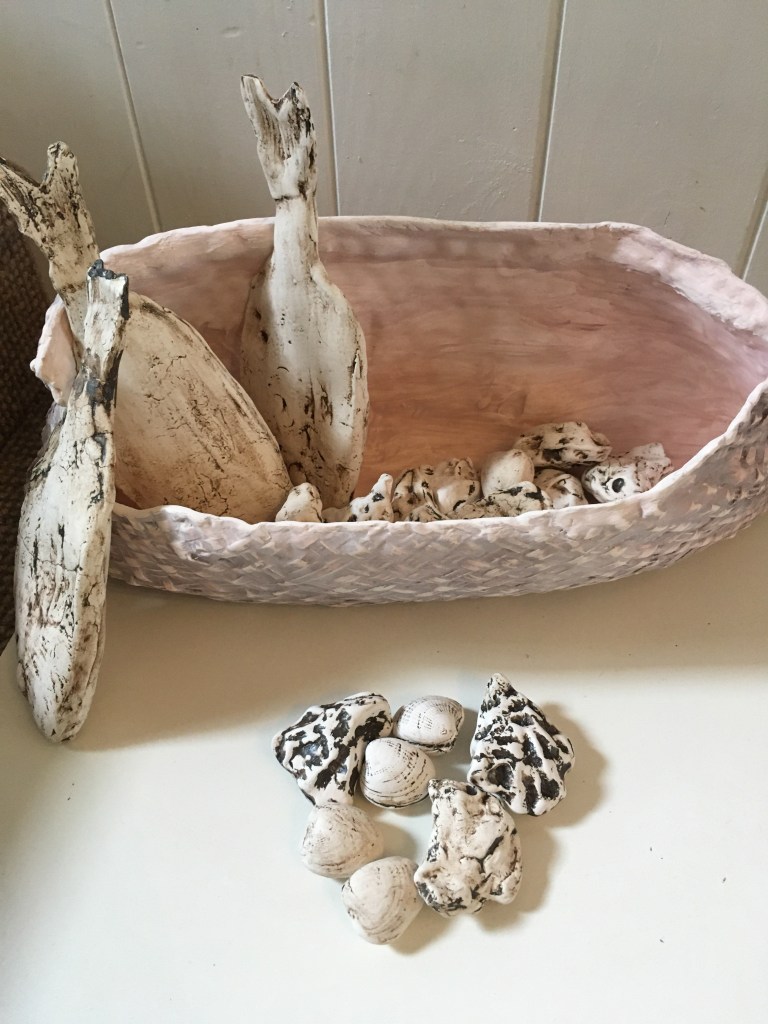
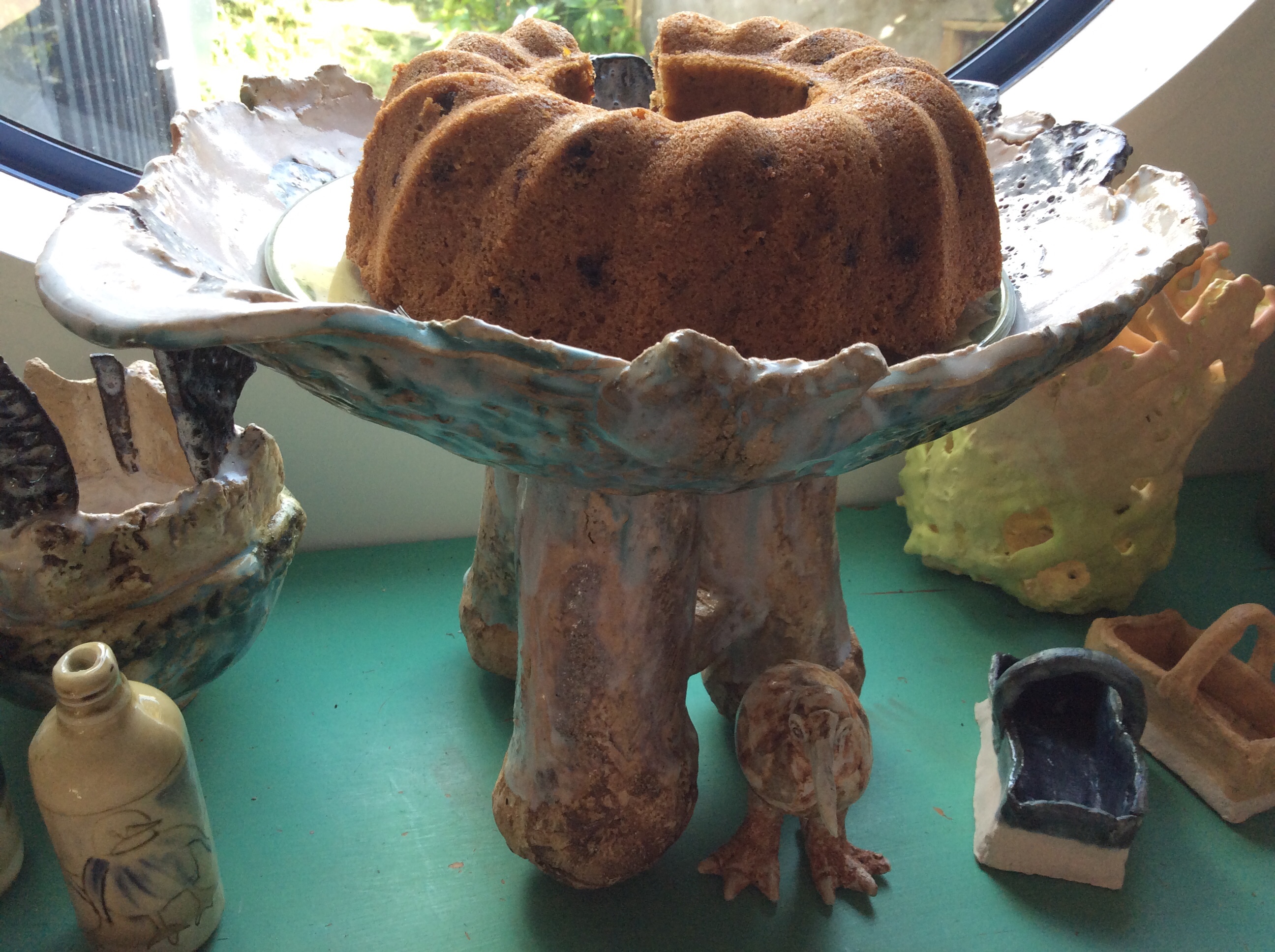
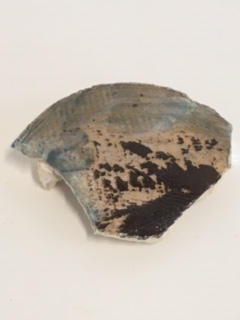
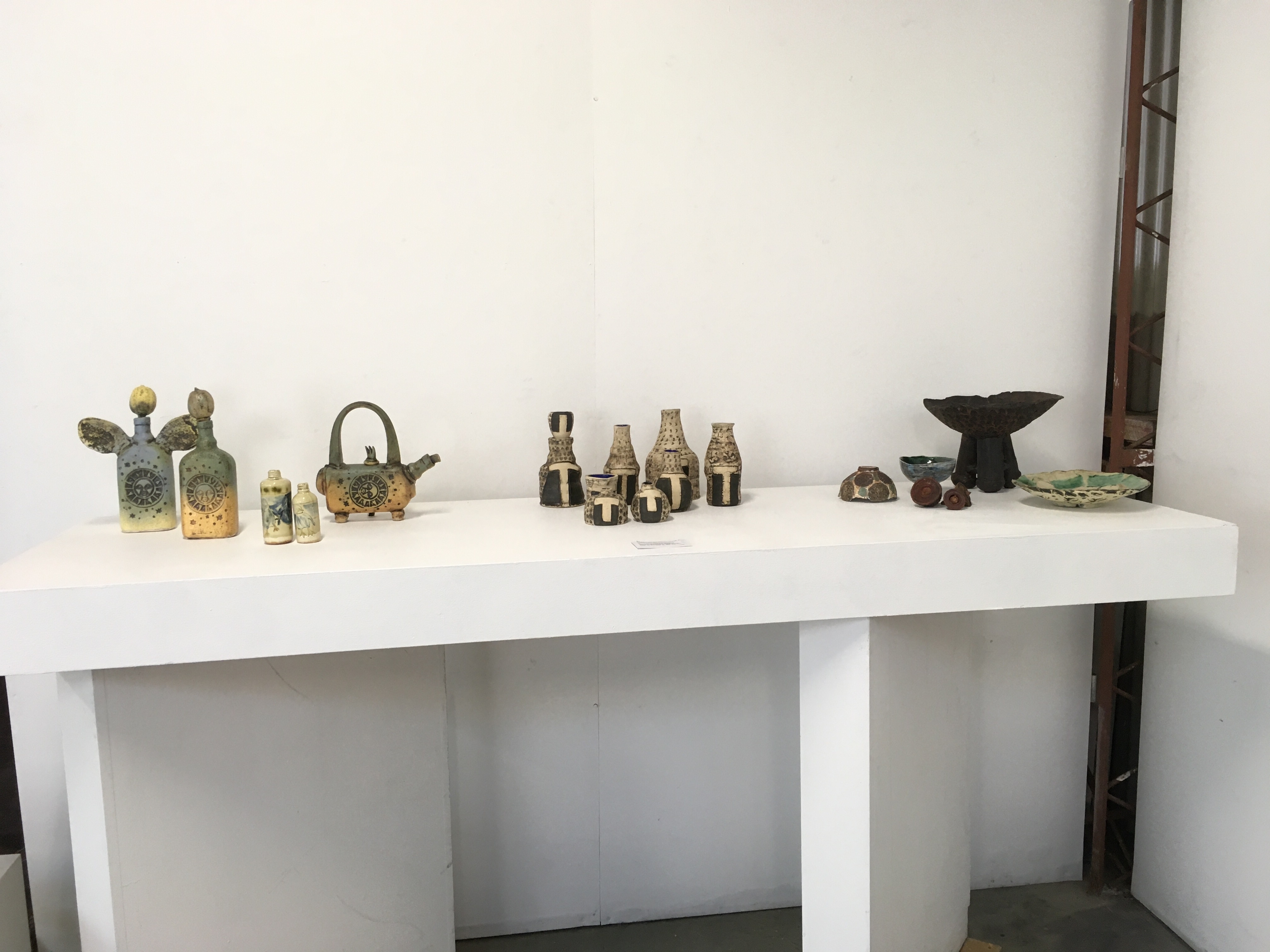
Some bisque ware from this module was glazed with Brendon Adams current glazes. The container was covered in bronze slip and wiped off and the inside had a stable white glaze tipped inside. As you can see a honey glaze was used on the small bottles which I initially tipped on the inside and then used a heat gun so the outside layer of glaze would stick.
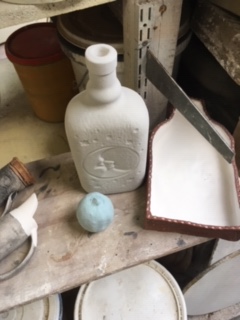
I filled the gin bottle and lemon with a white glaze after applying bronze slip on the outside and wiping off. After tipping it out I used the heat gun to dry the outside so the next outside layers of glaze would stick. I sprayed the glaze on these items and used aramont blue green on the bottle and turquoise glaze on the lemon.

These items apart from the container have been left with Brendon to fire at his work heat temperature which is over 1200 degrees celsius. The container which I slab worked will need to be fired at a lower temperature to keep the terracotta colour.

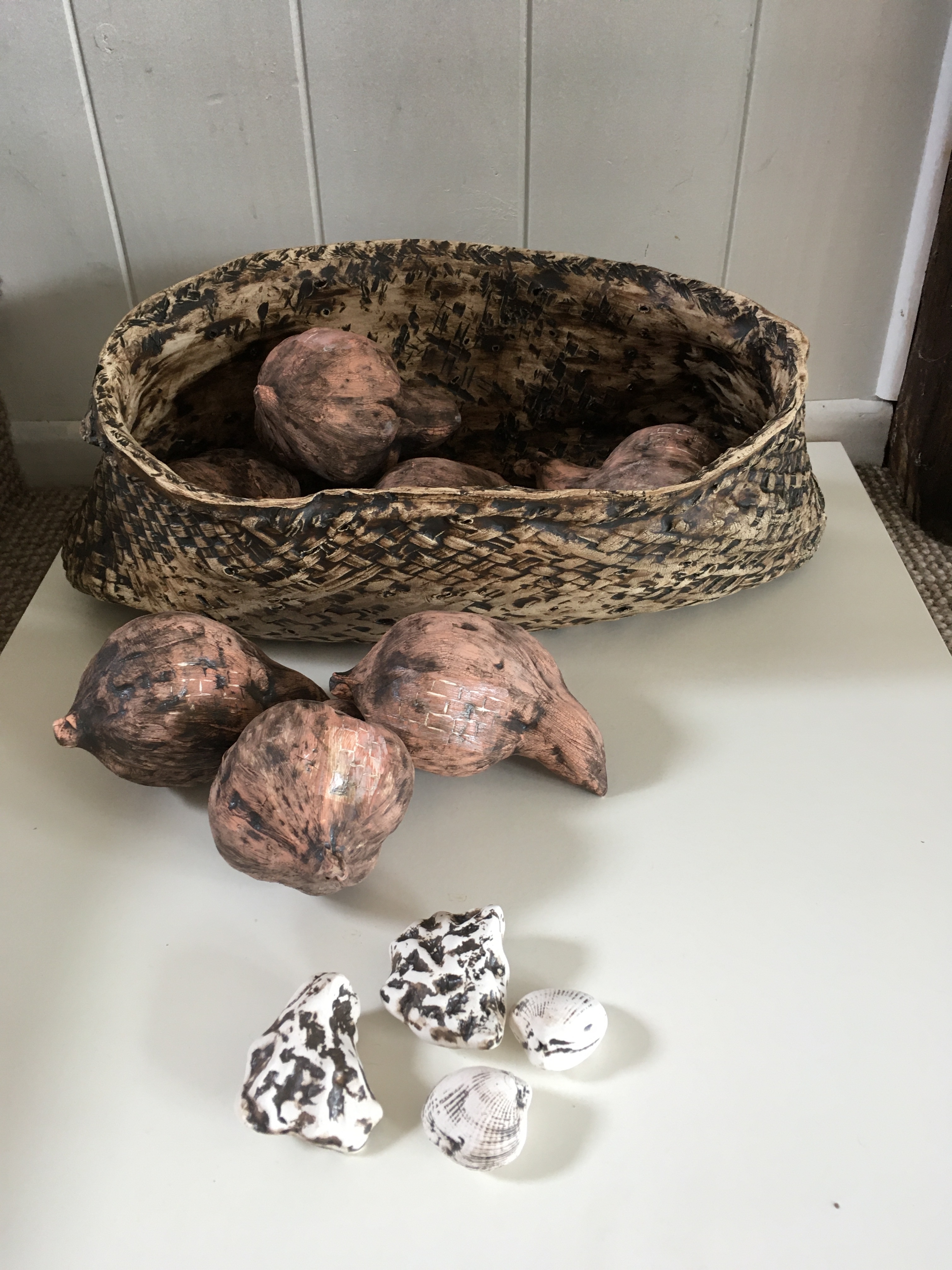
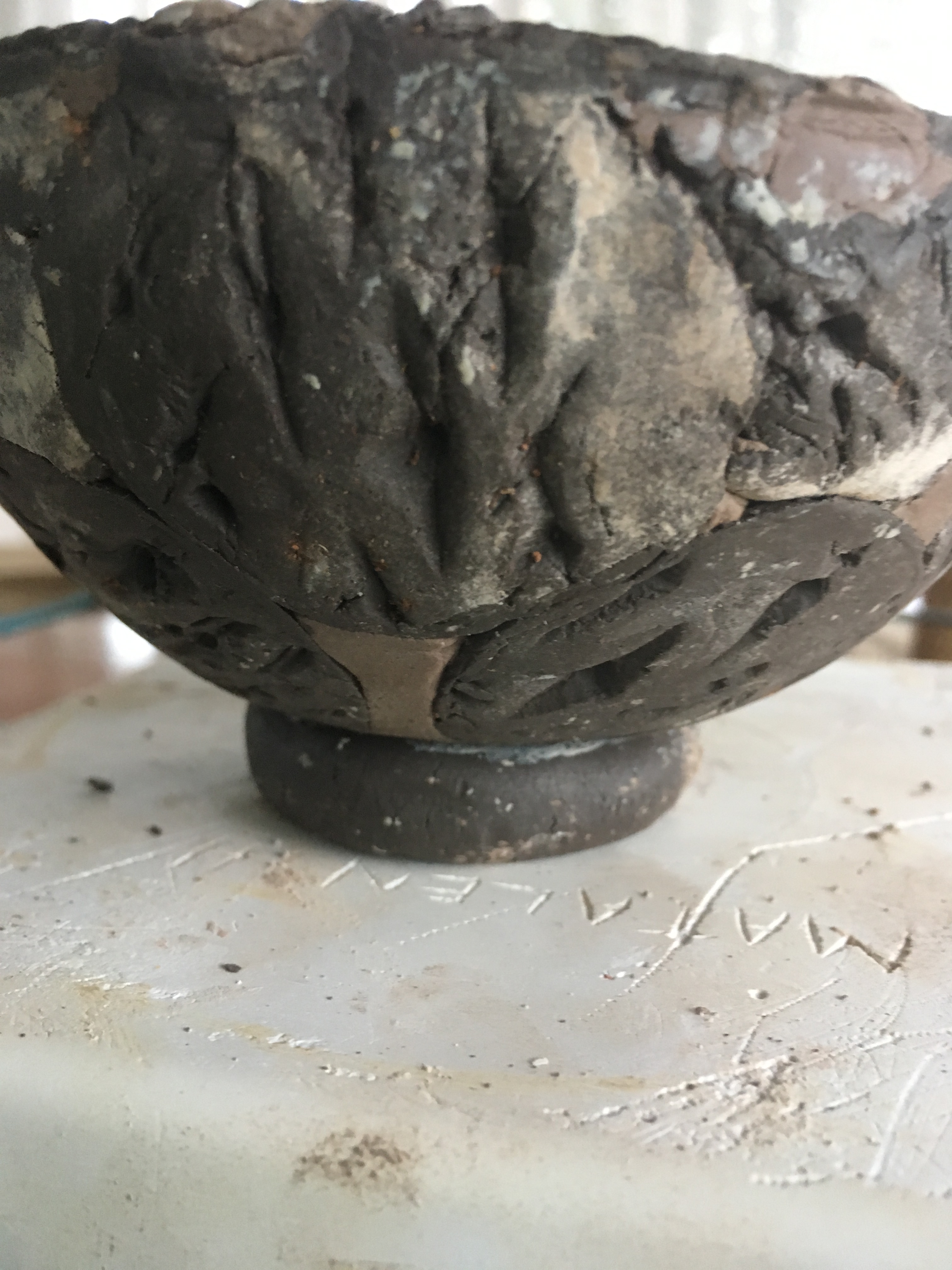
Slip mould for containment exercise for end of module. A gin bottle to be encased in slab container. This is a literal interpretation of containment but as gin can affect your mental and emotional processes it also covers psychological containment.

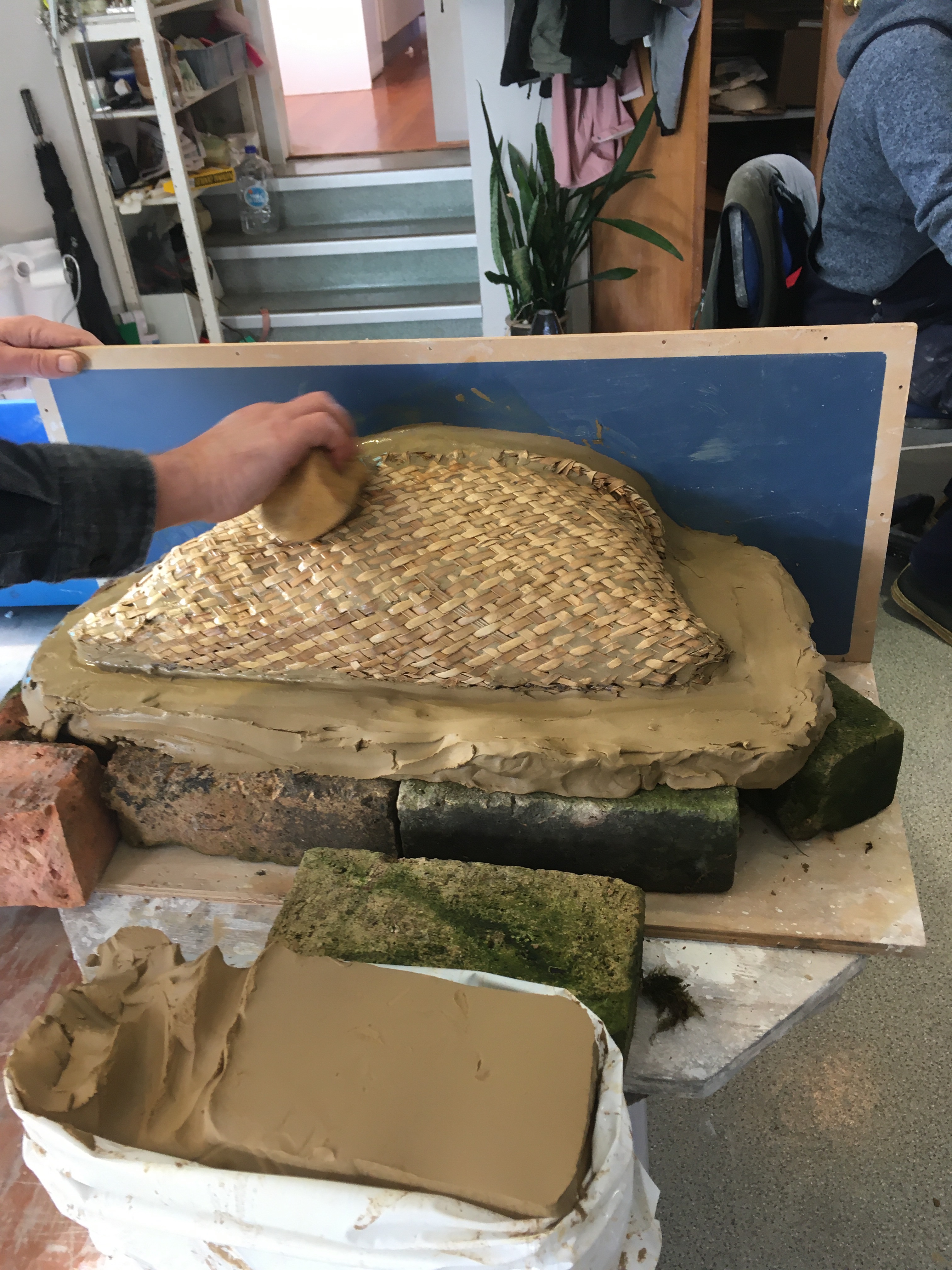
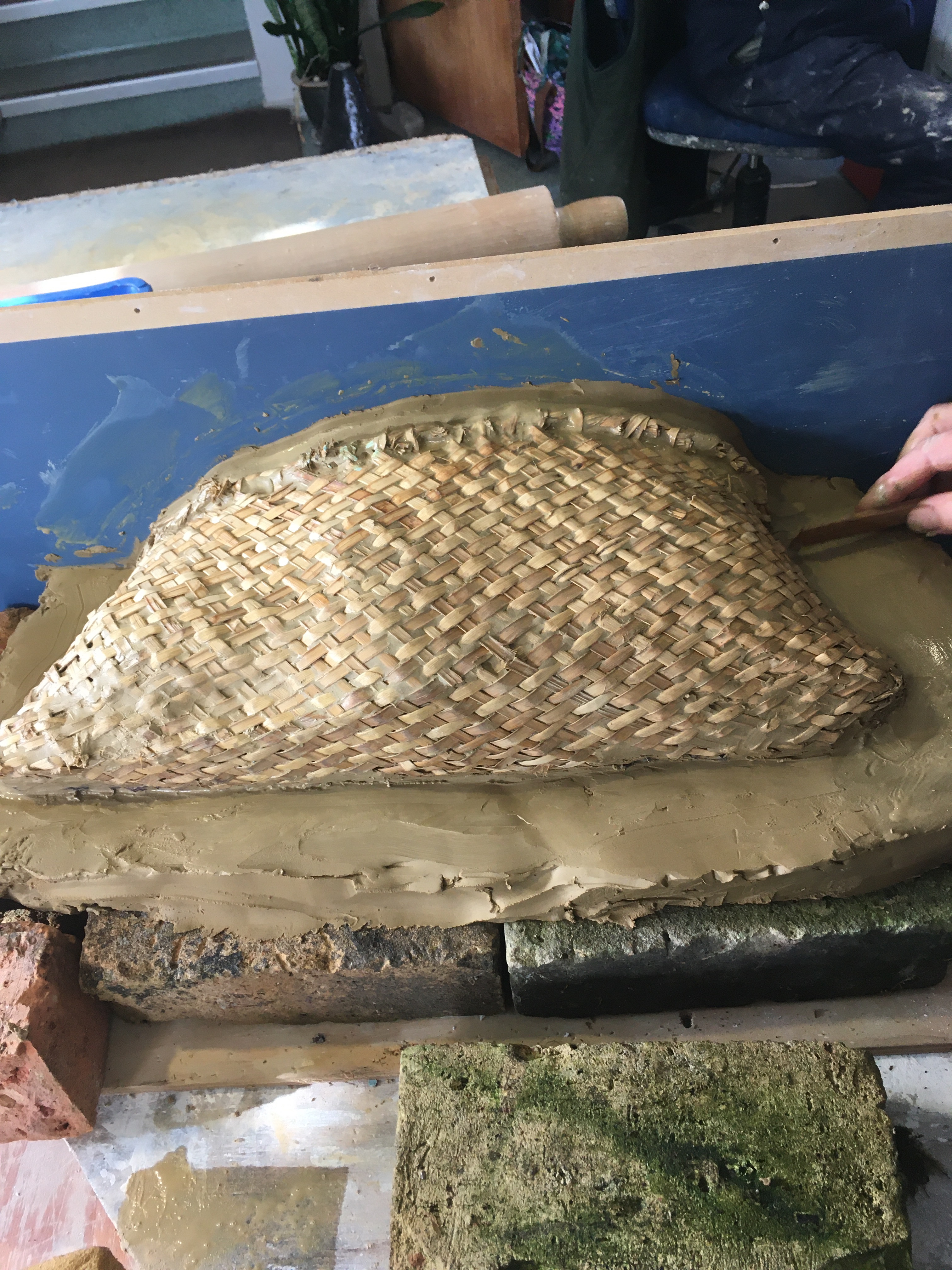
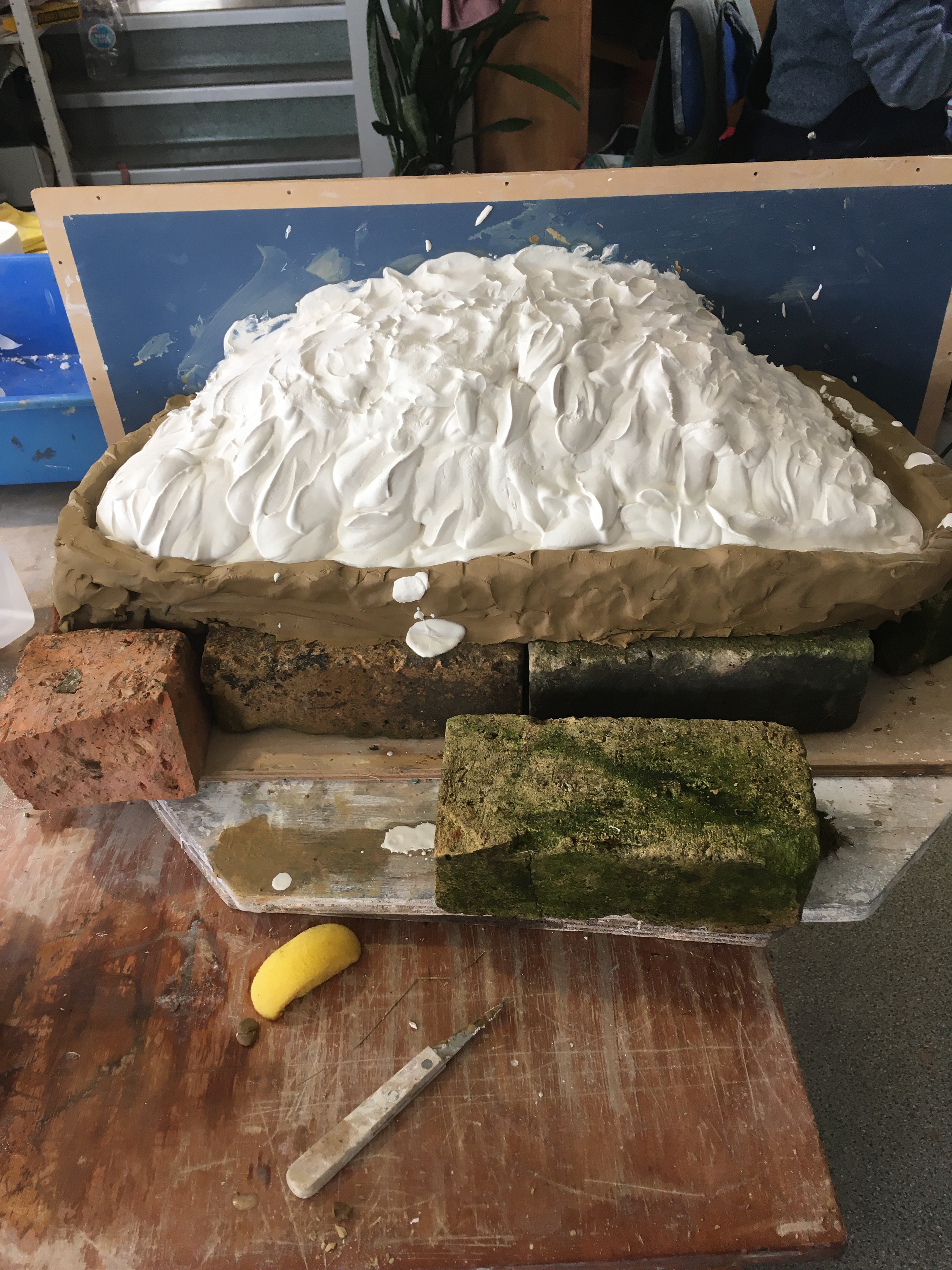
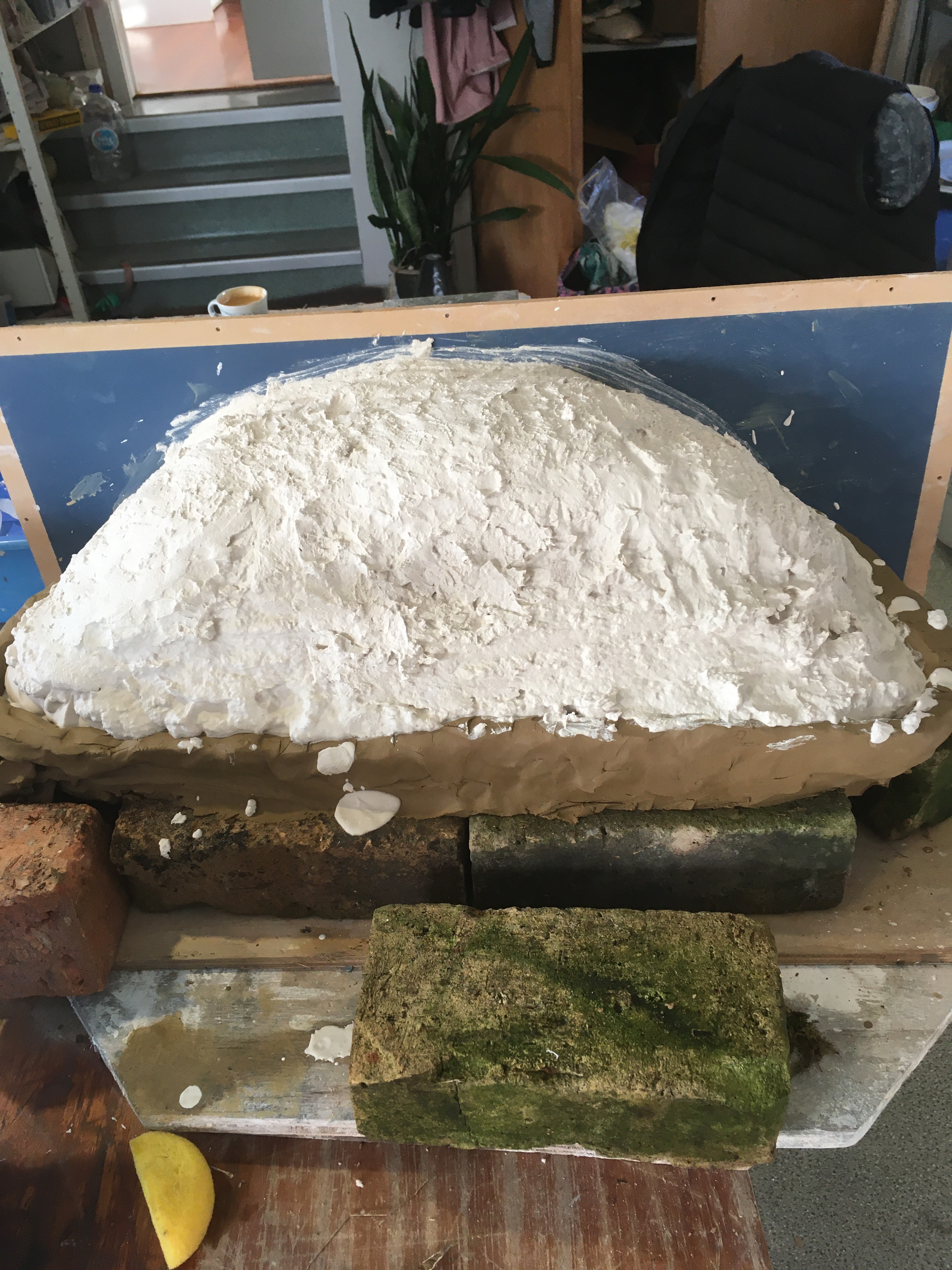
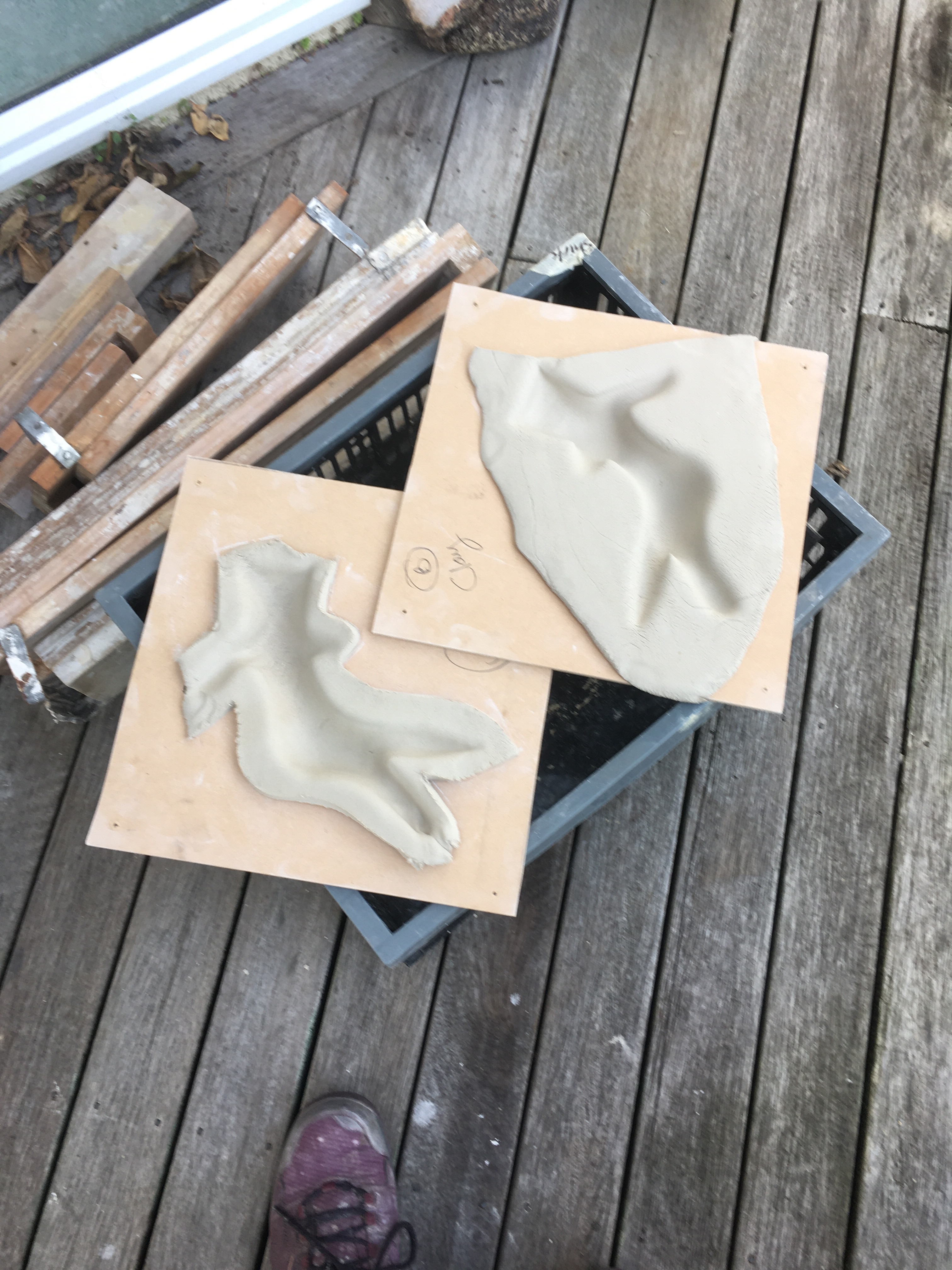
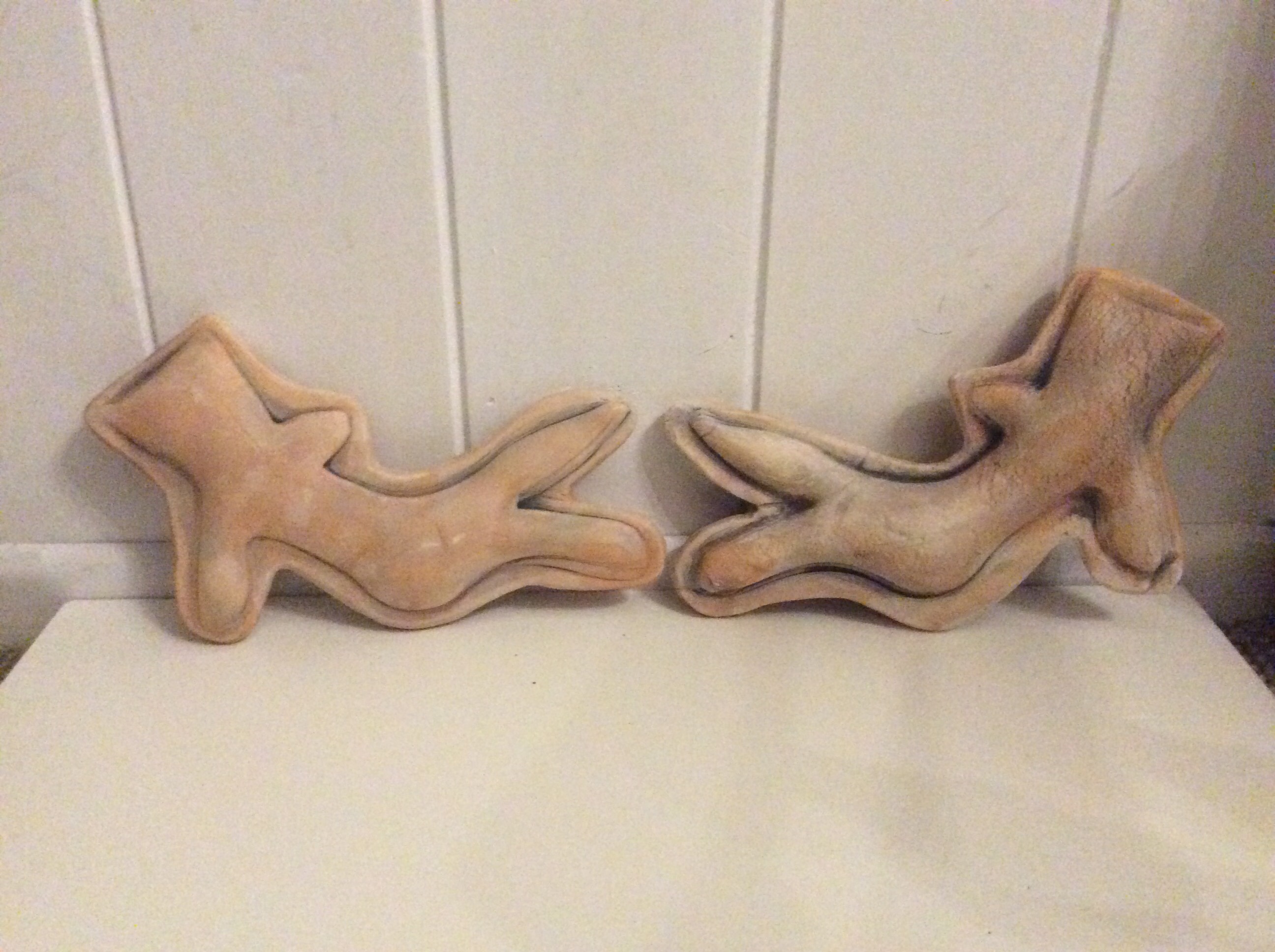
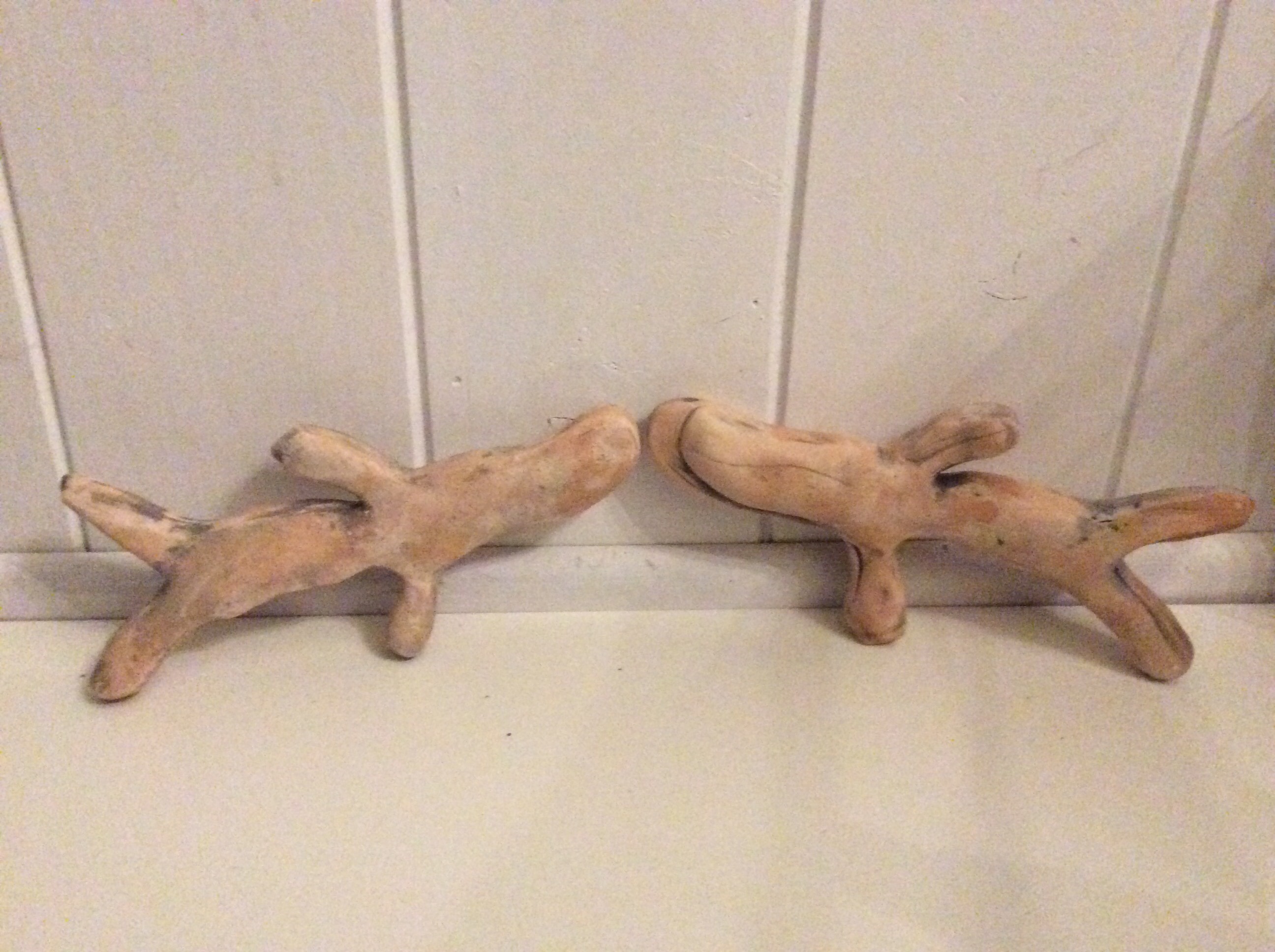
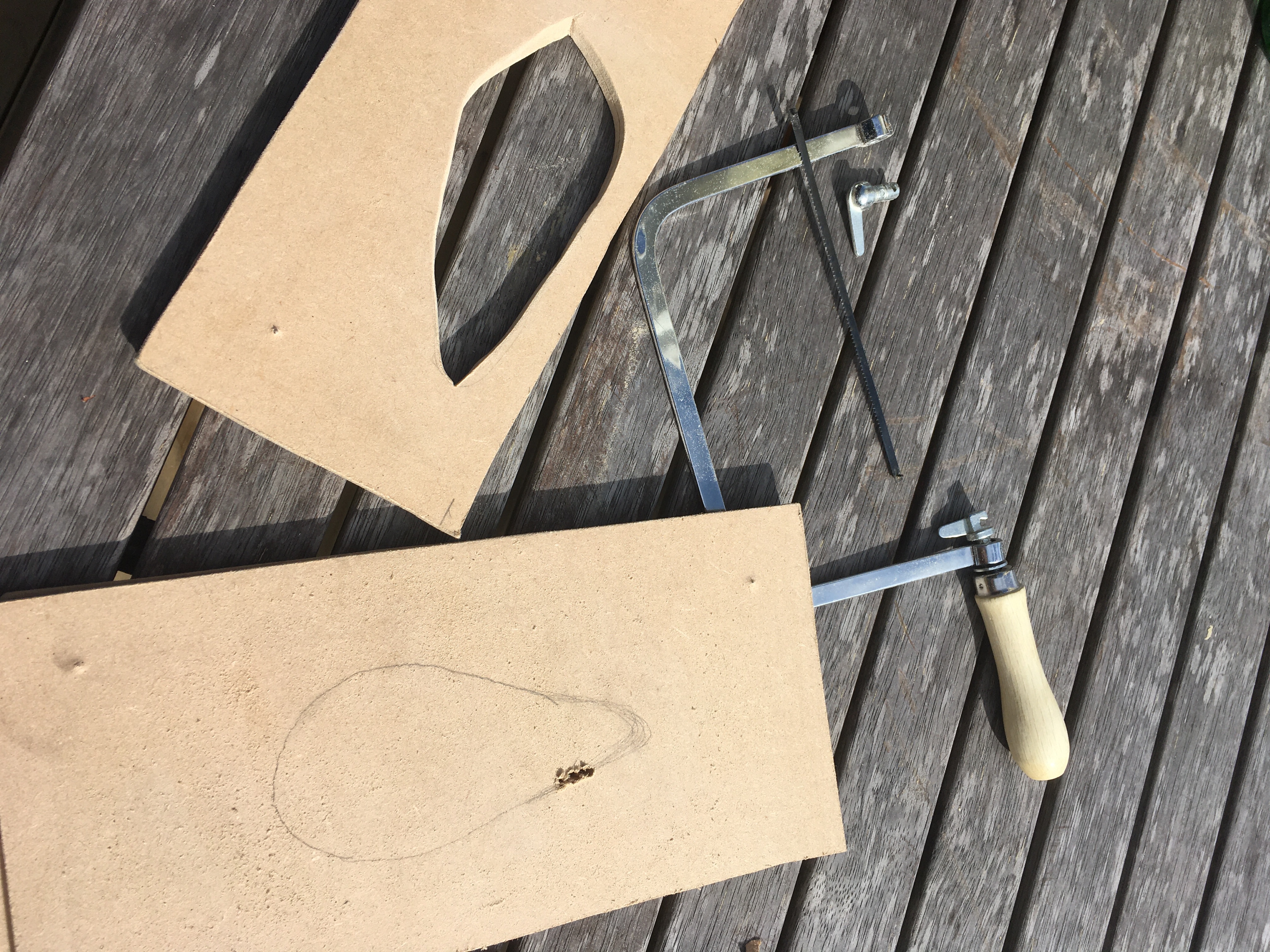
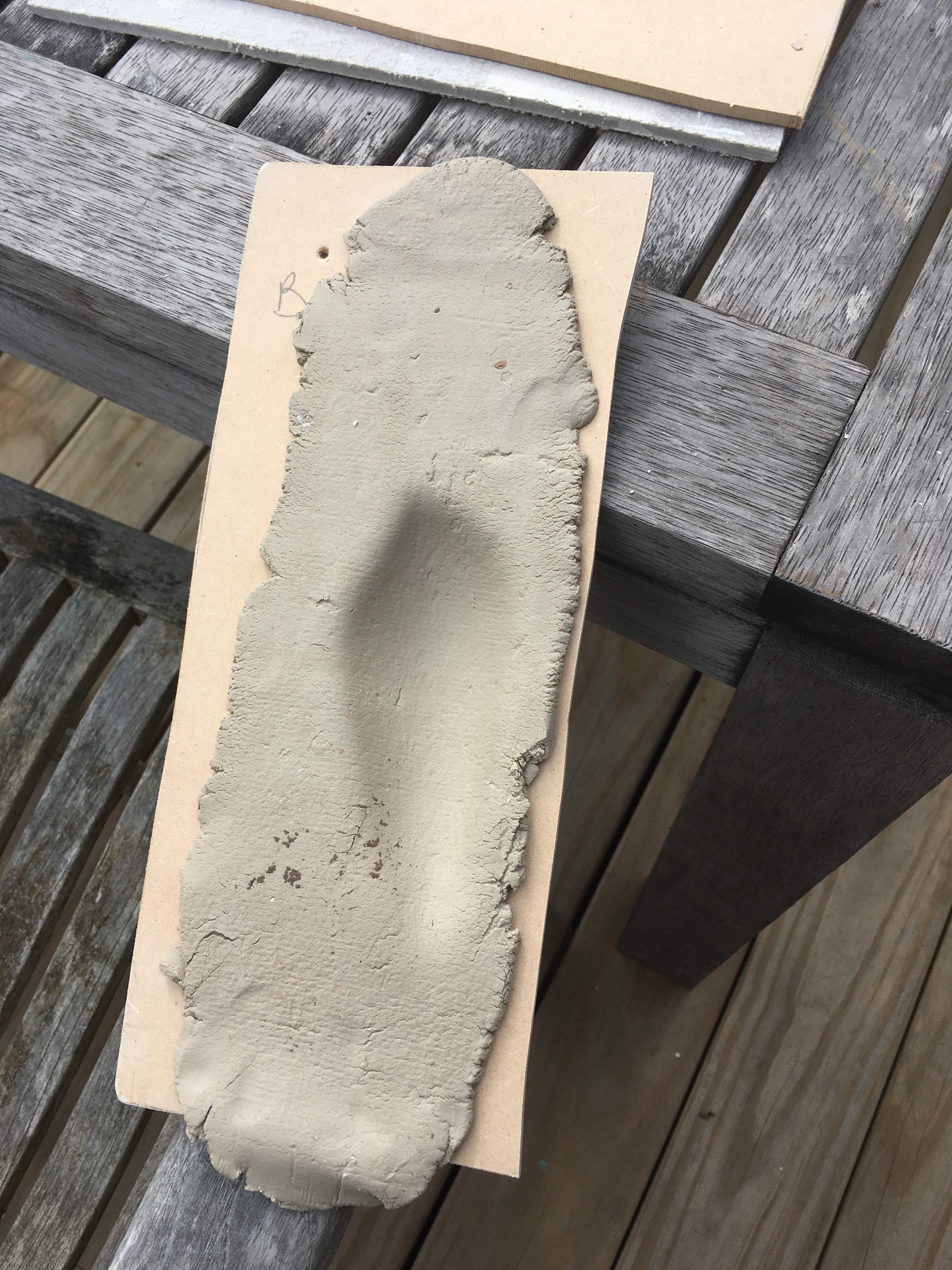
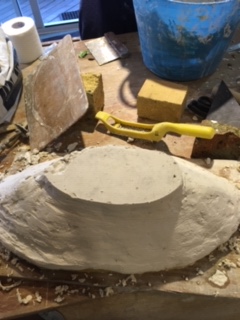
An example of a slump mould of a Waka made yesterday. Awaiting for it to dry and hopefully will have an opportunity to use it next week.

Workshop at Brendon’s and Katherine’s studio: from 15th July 2020.

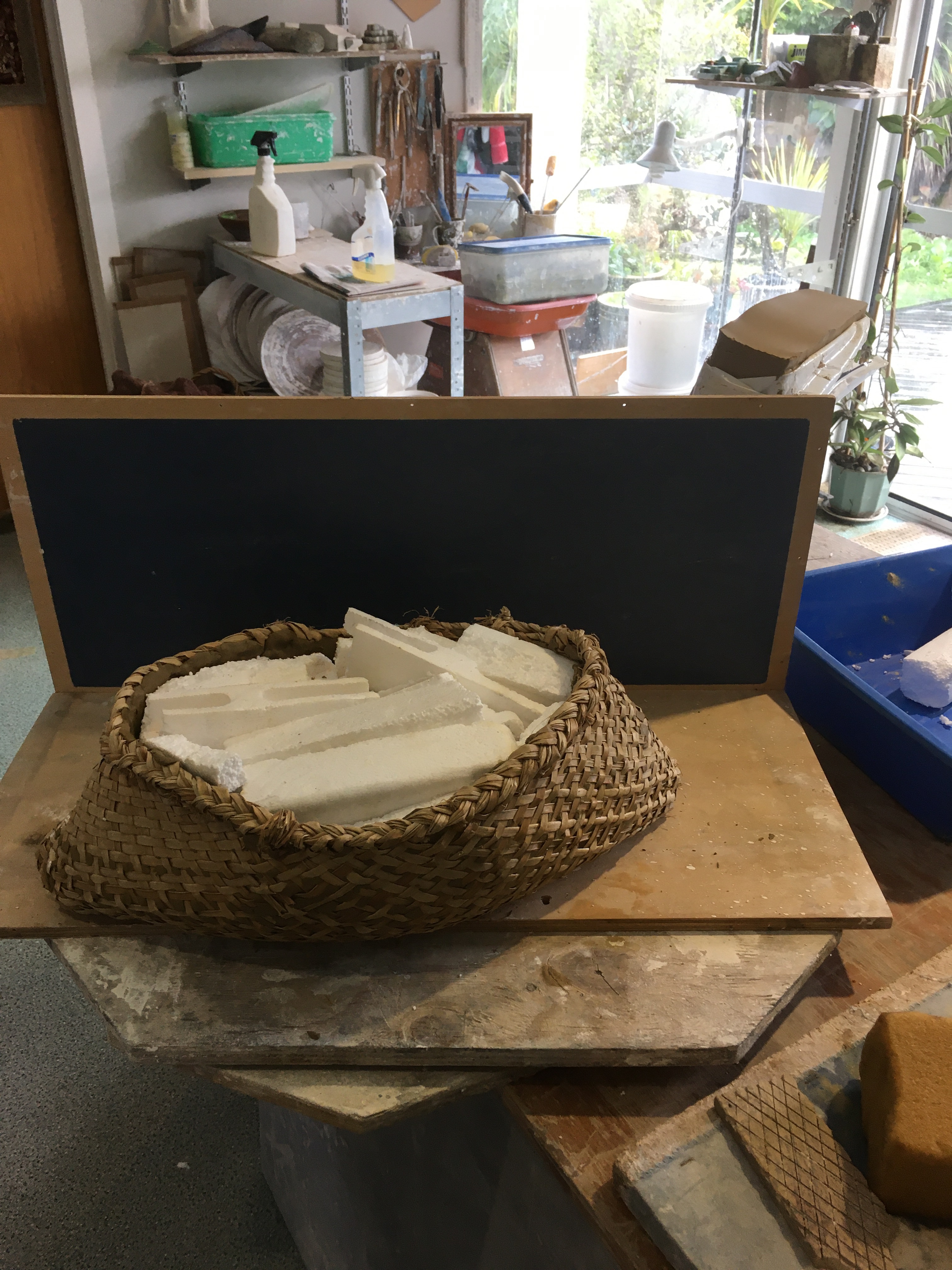
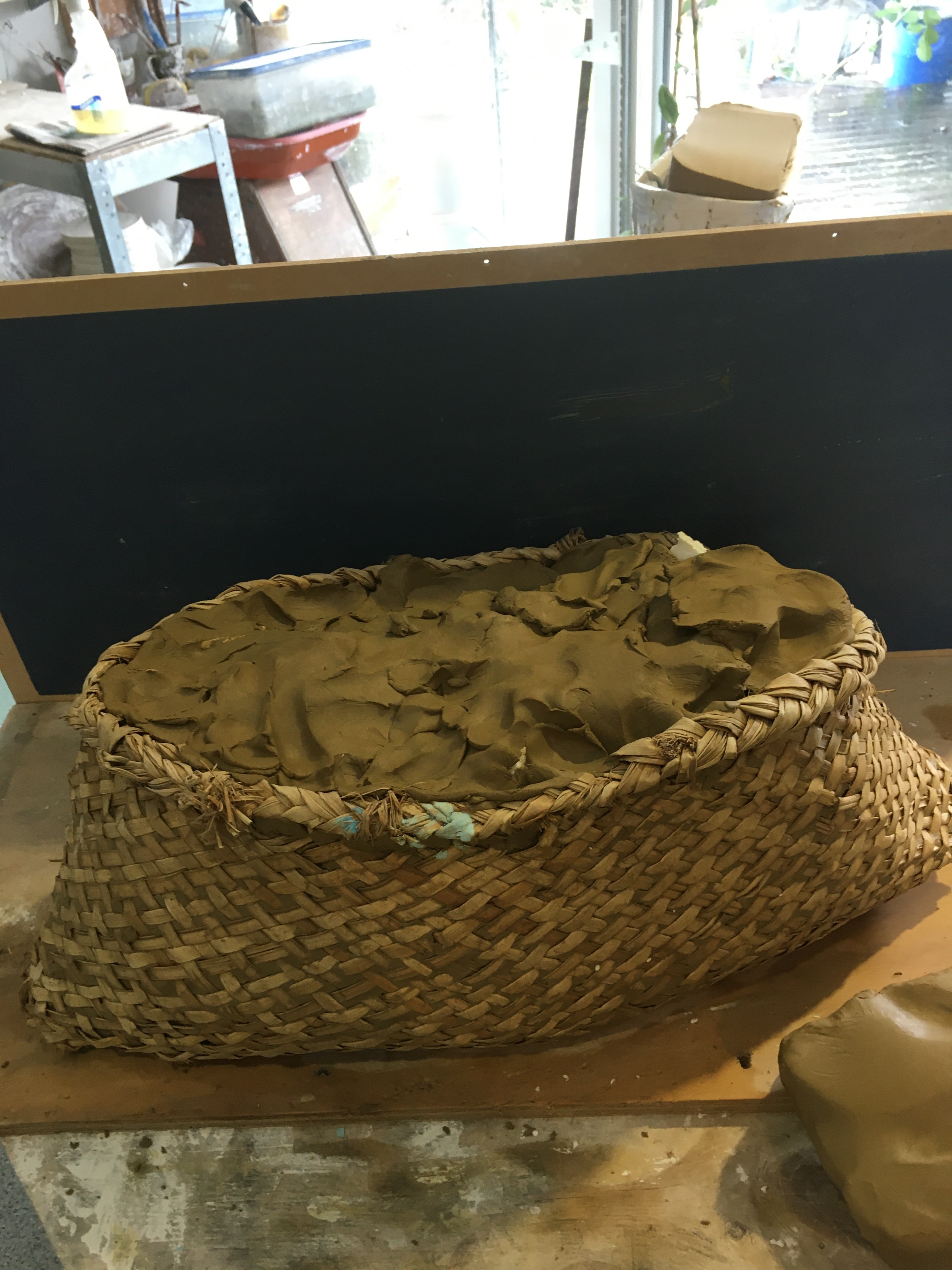
Discussion as to what our projects were. I am keen to make a food Kete mould. To prepare for next workshop by filling kete with polystyrene and used clay.

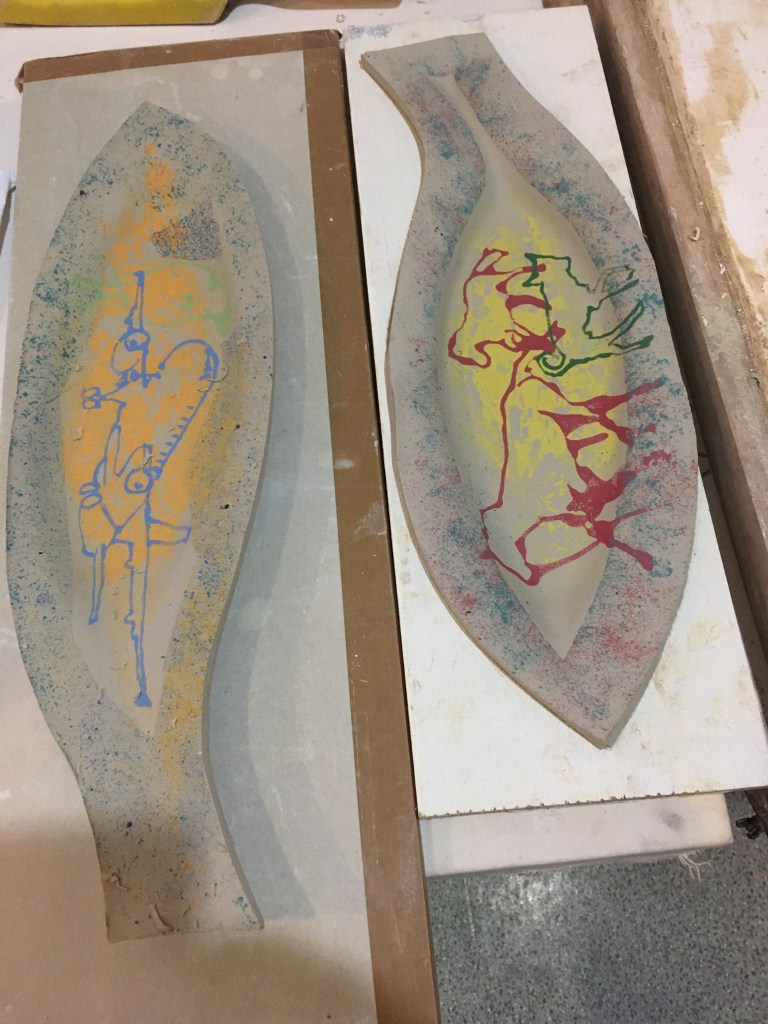
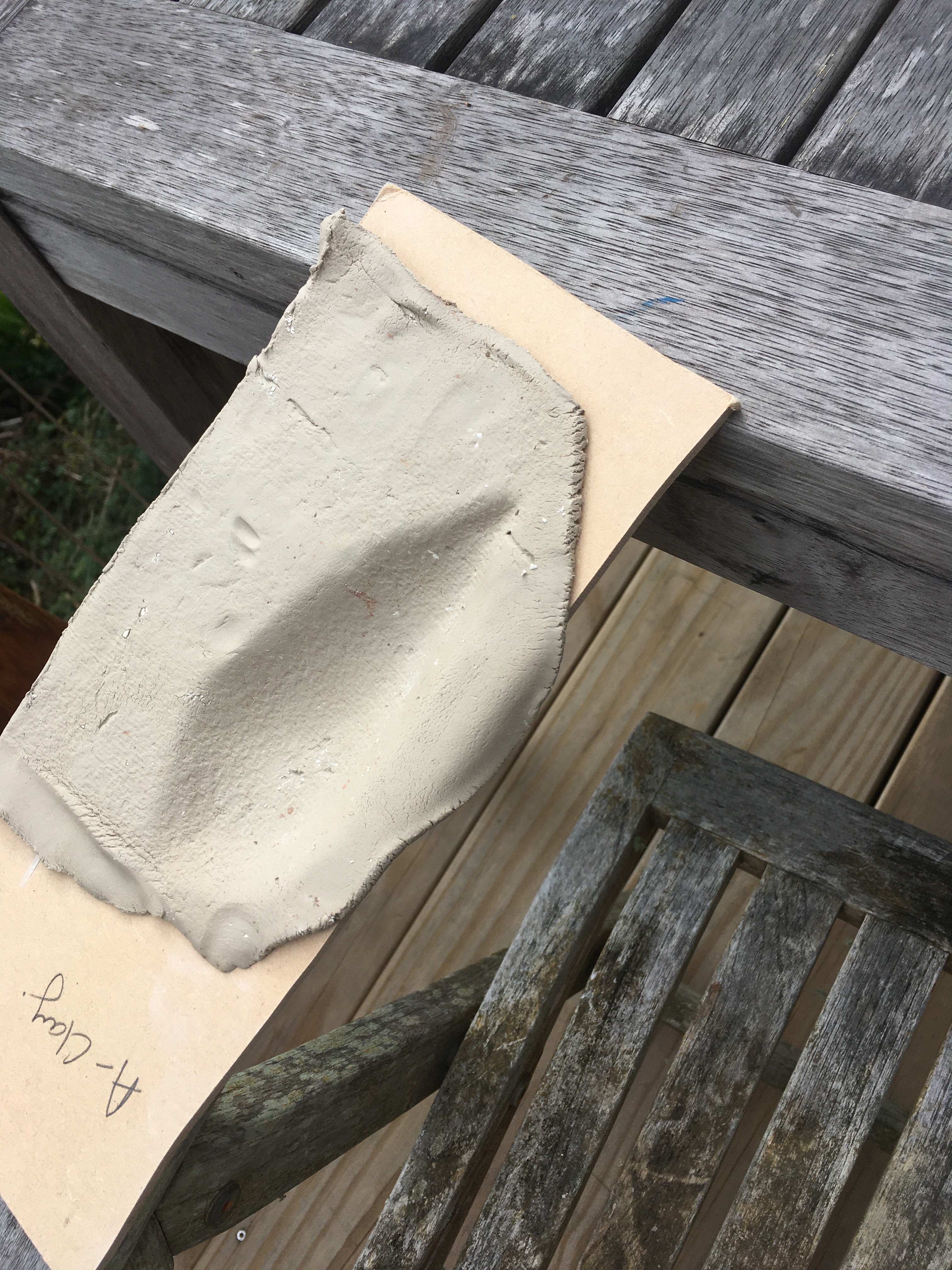
Workshop time spent making slip trail slab pictures in wood frame moulds. Clay rolled and cut to place over wood mould. Slip trail to slab on fish and chip paper or around photo on news paper. Once slip trail shiny turn over and roll on slab. Place slab over wood slab and place on something so it can be dropped from a low height to encourage the clay to drop into frame. Cut excess clay and tidy up edge and place foot or handles as you want. Clean up rims and place to dry for a bisque firing.
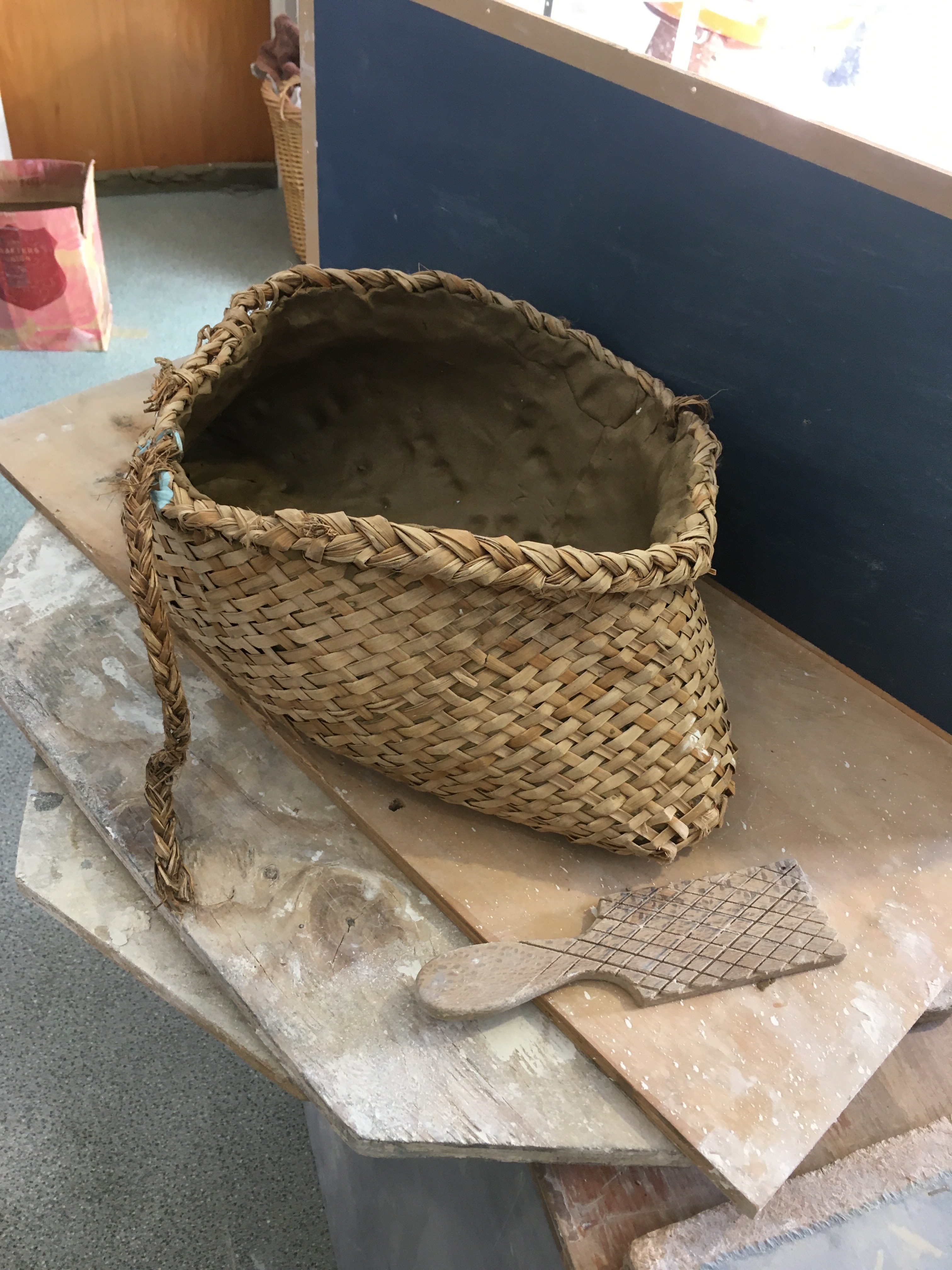
Slip trailing using newspaper images.
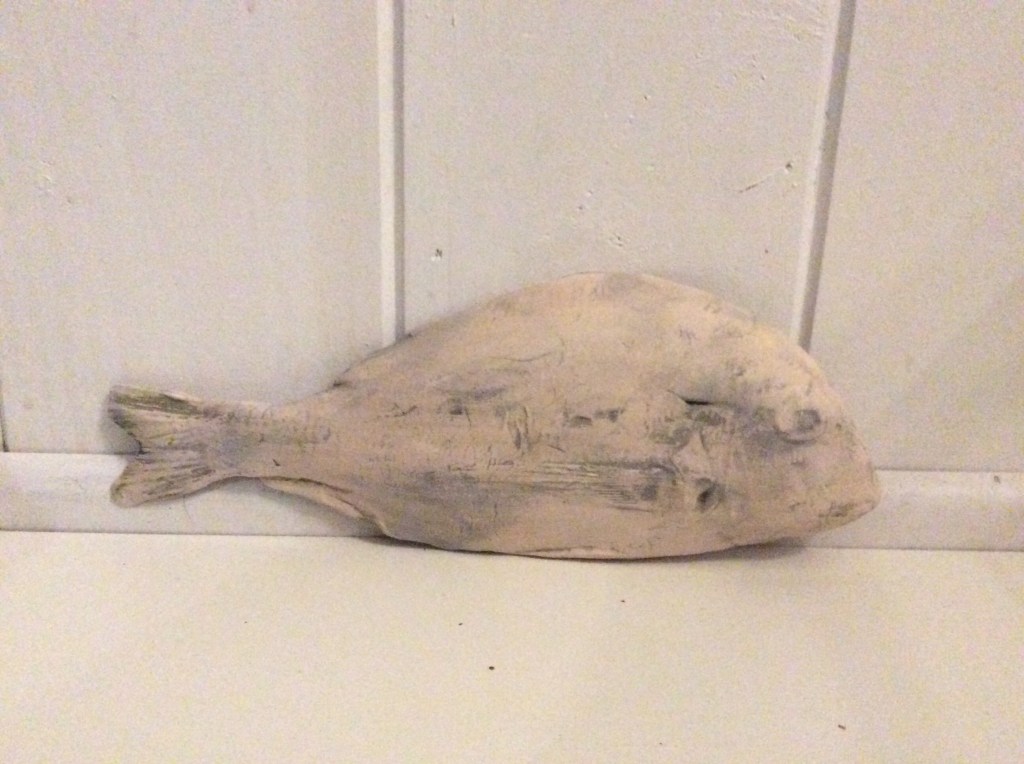
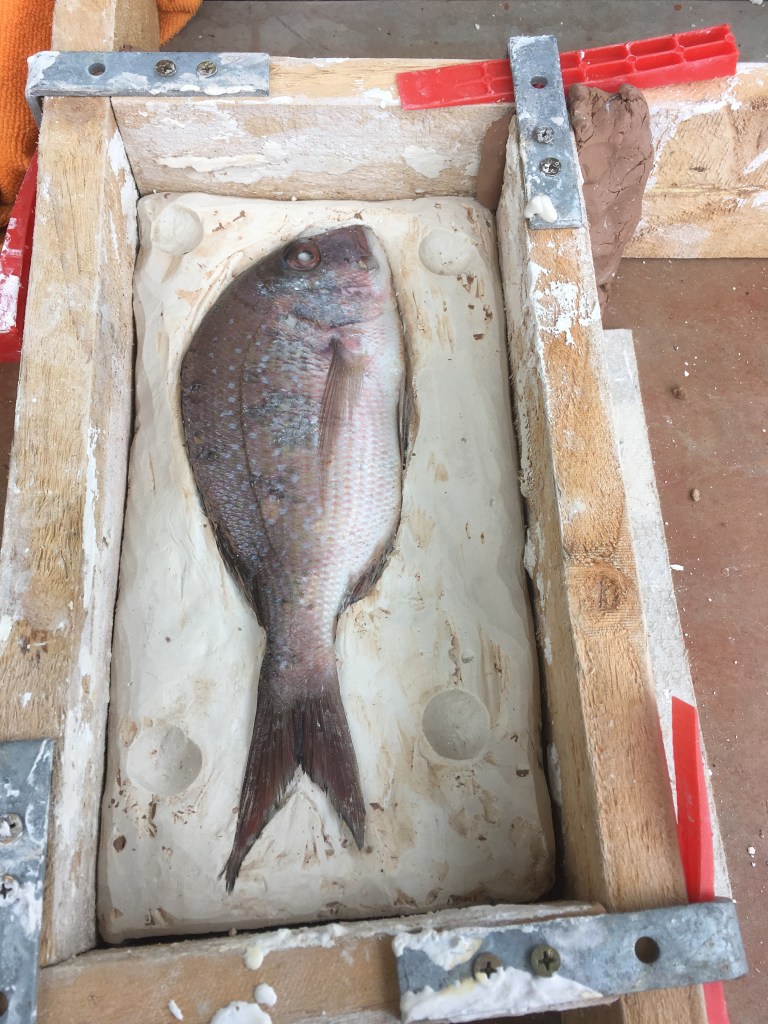
Bisqued snapper
Kai moana
Snapper mould
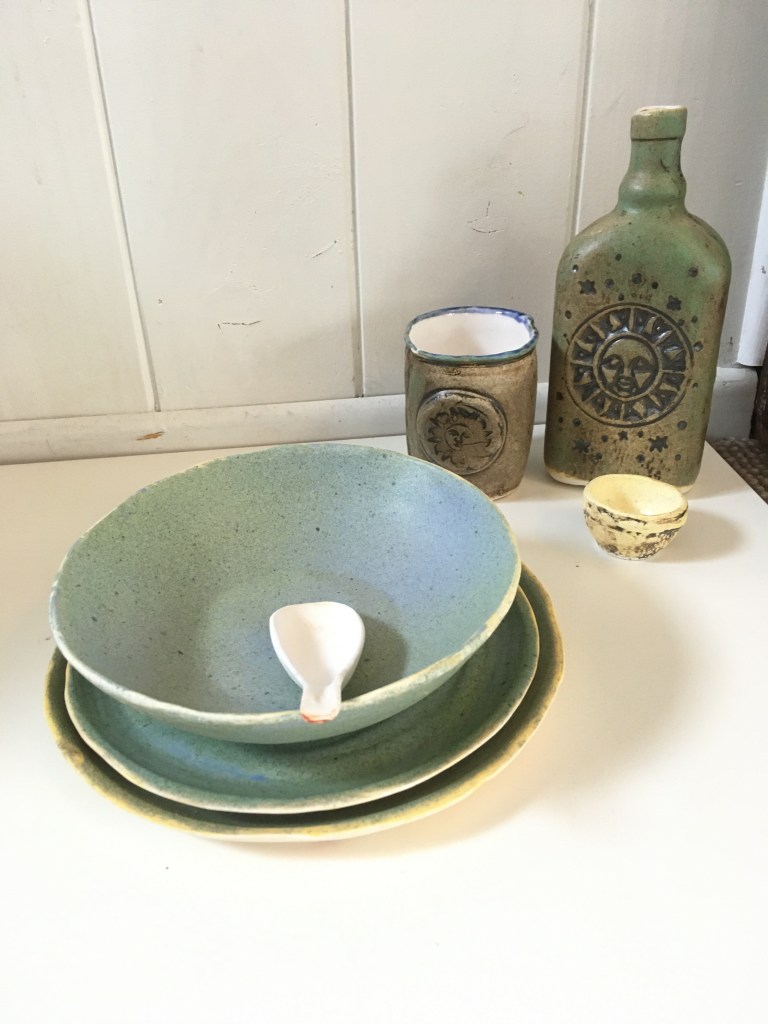
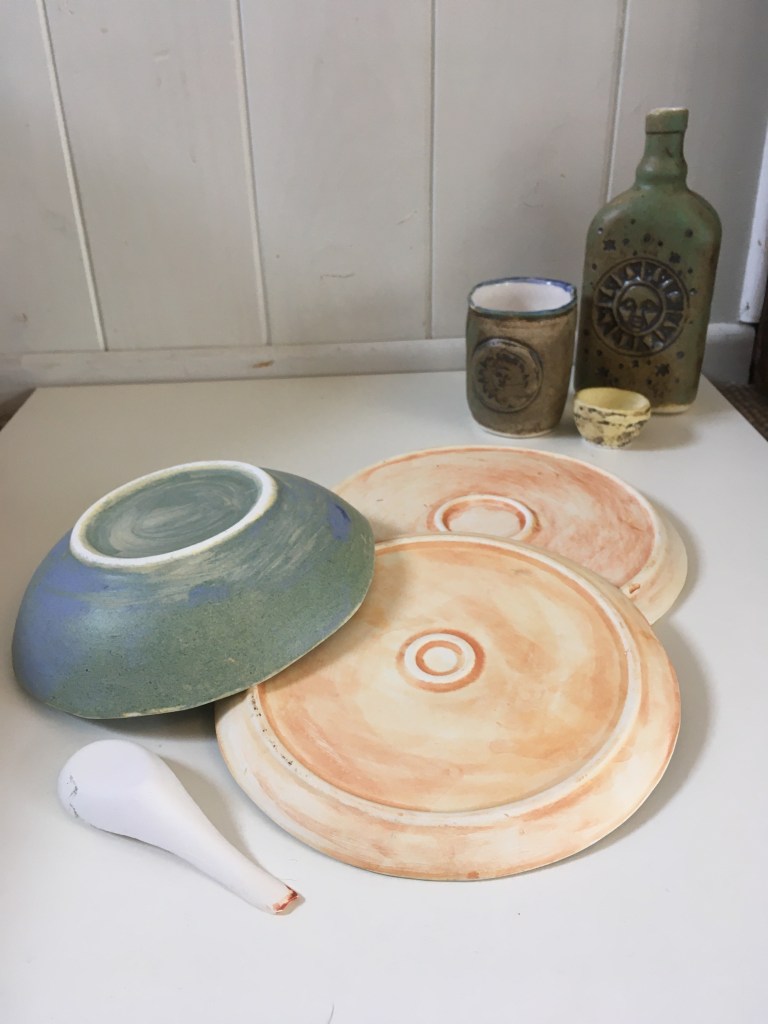
Dinner set made from moulds

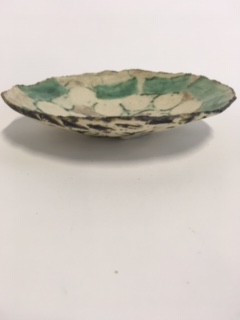
Porcelain slip poured into moulds. Bisqued at 900 degrees centigrade. Bronze slip applied to textured areas and wiped back. Buttercup slip sprayed on first and aramont blue green sprayed on top. Red terracotta terra sigillata painted on bottom of plates prior to bisque fire. This has burnt off at 1200 degrees centigrade.
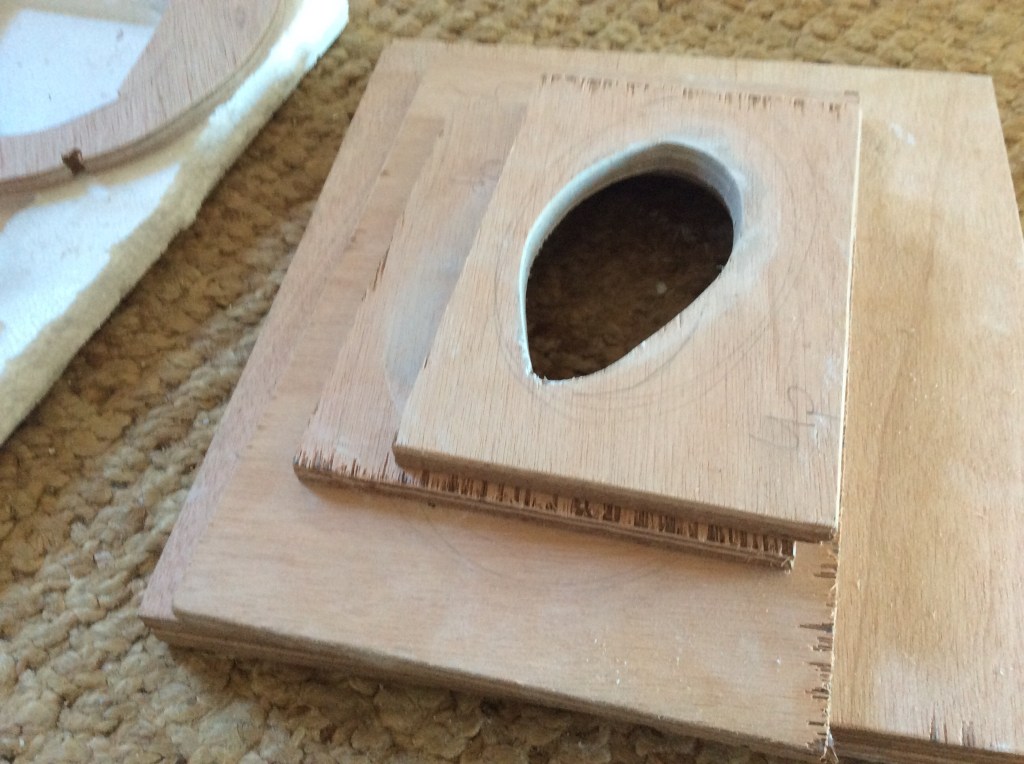
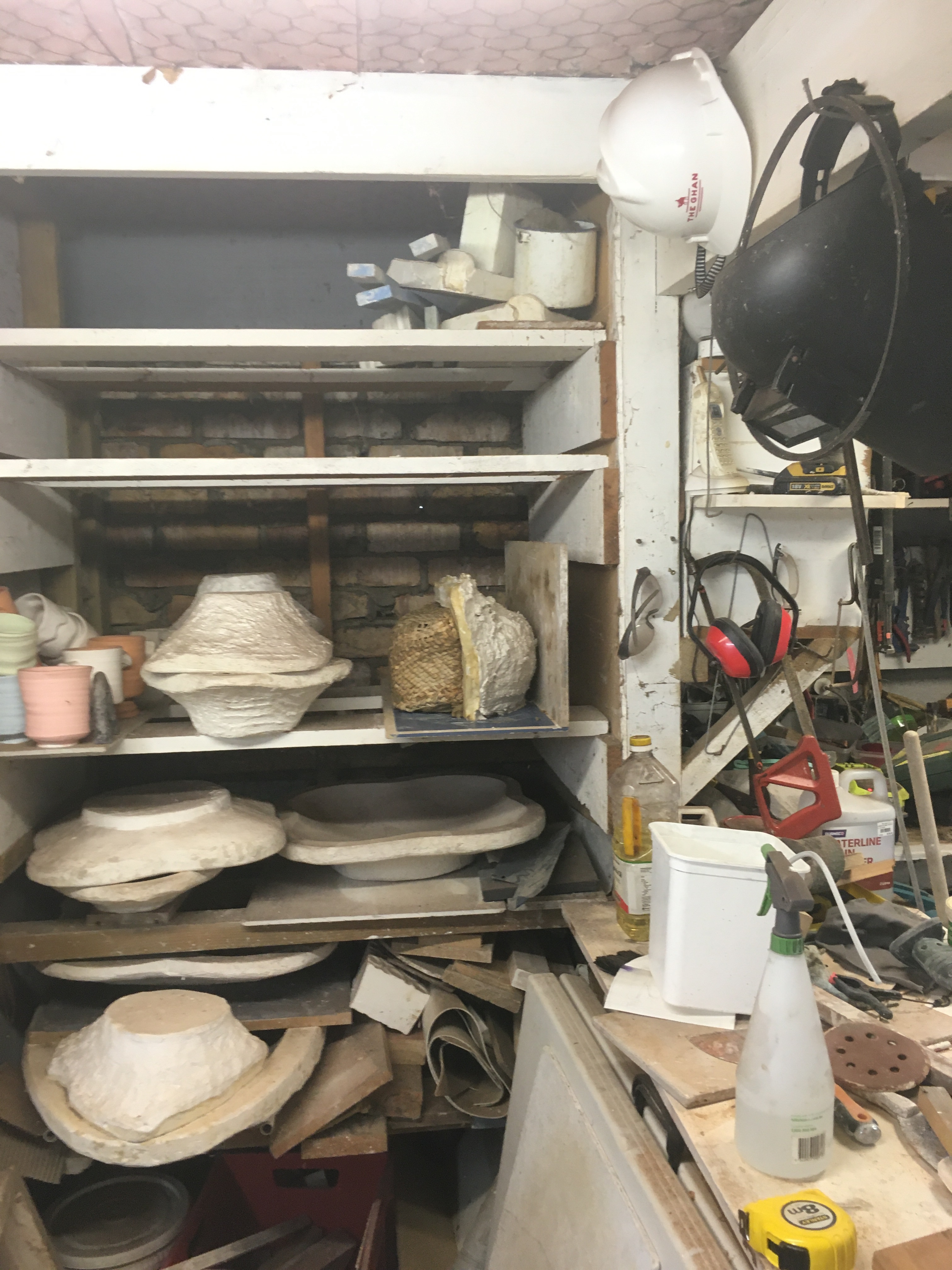
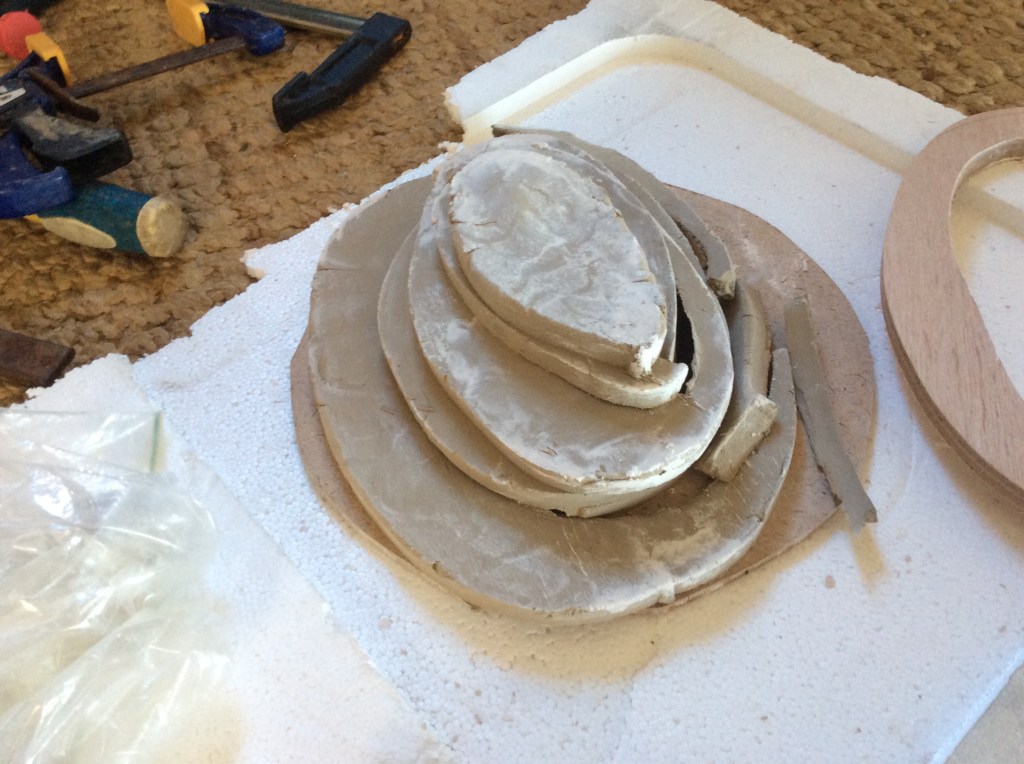
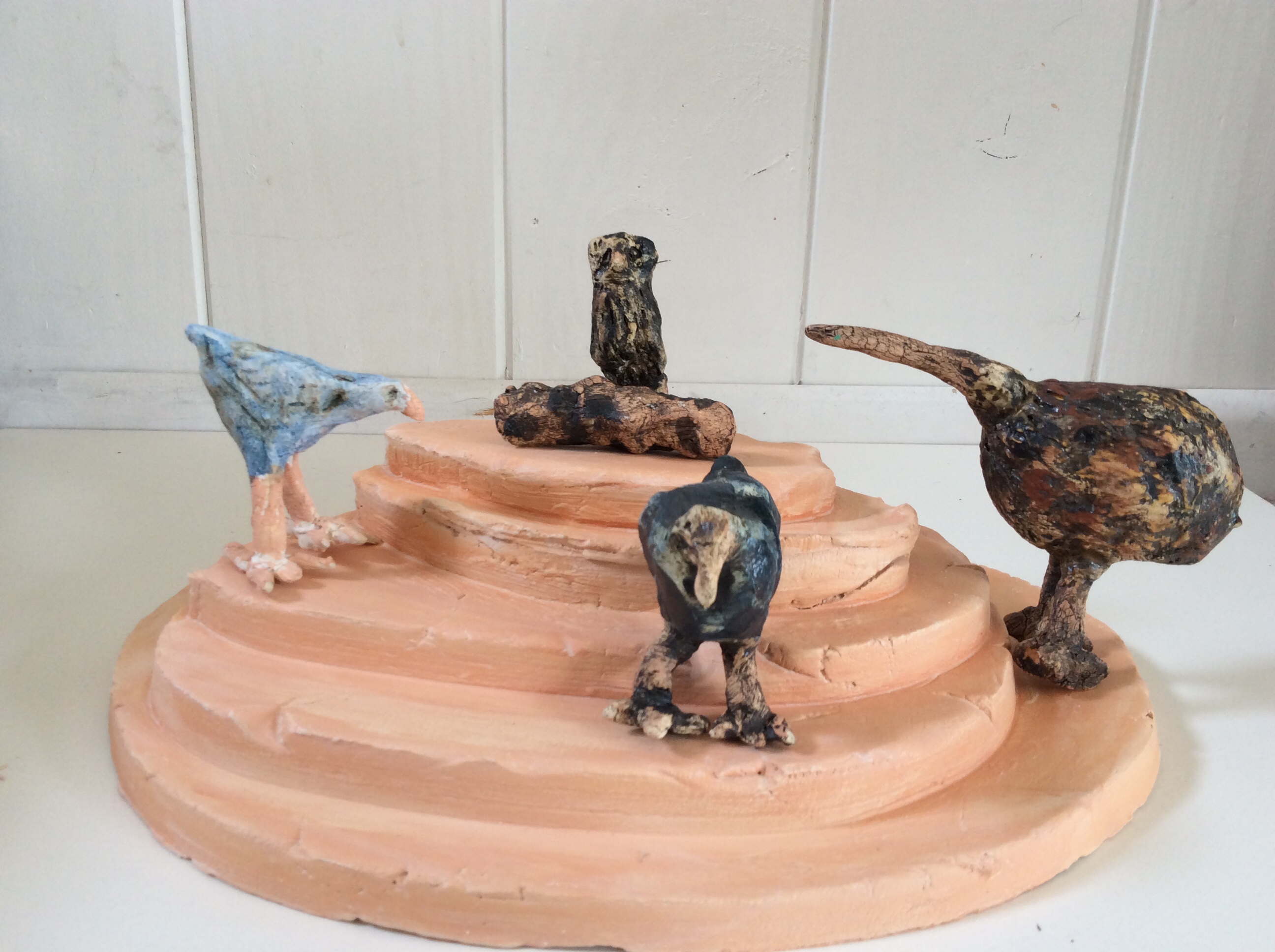
Stepped mould
Step mould broken so new step mould made out of stoneware paper clay.

White stoneware clay applied to inside of mould with the wood pieces clamped together. Taken apart once clay dried.
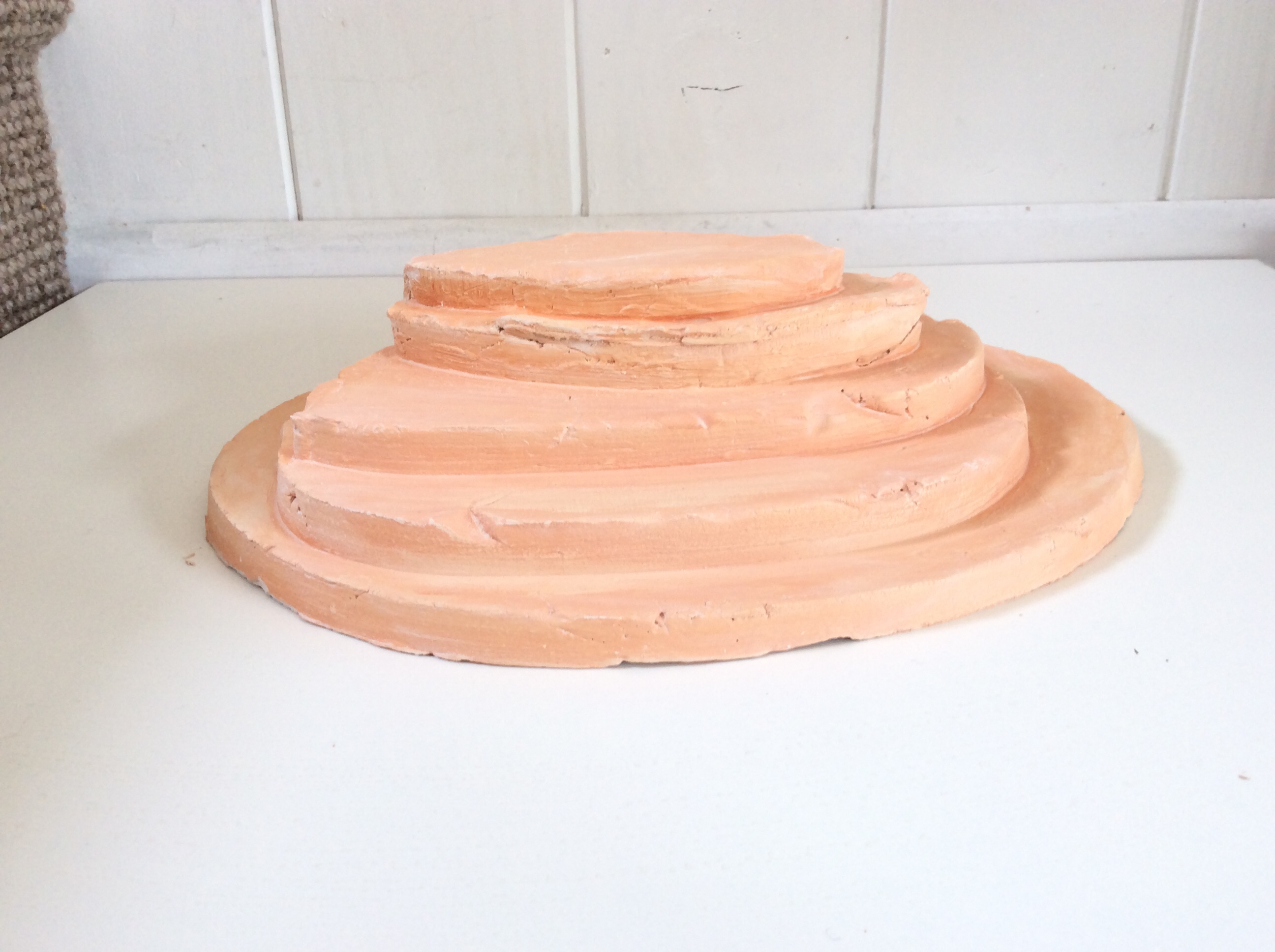
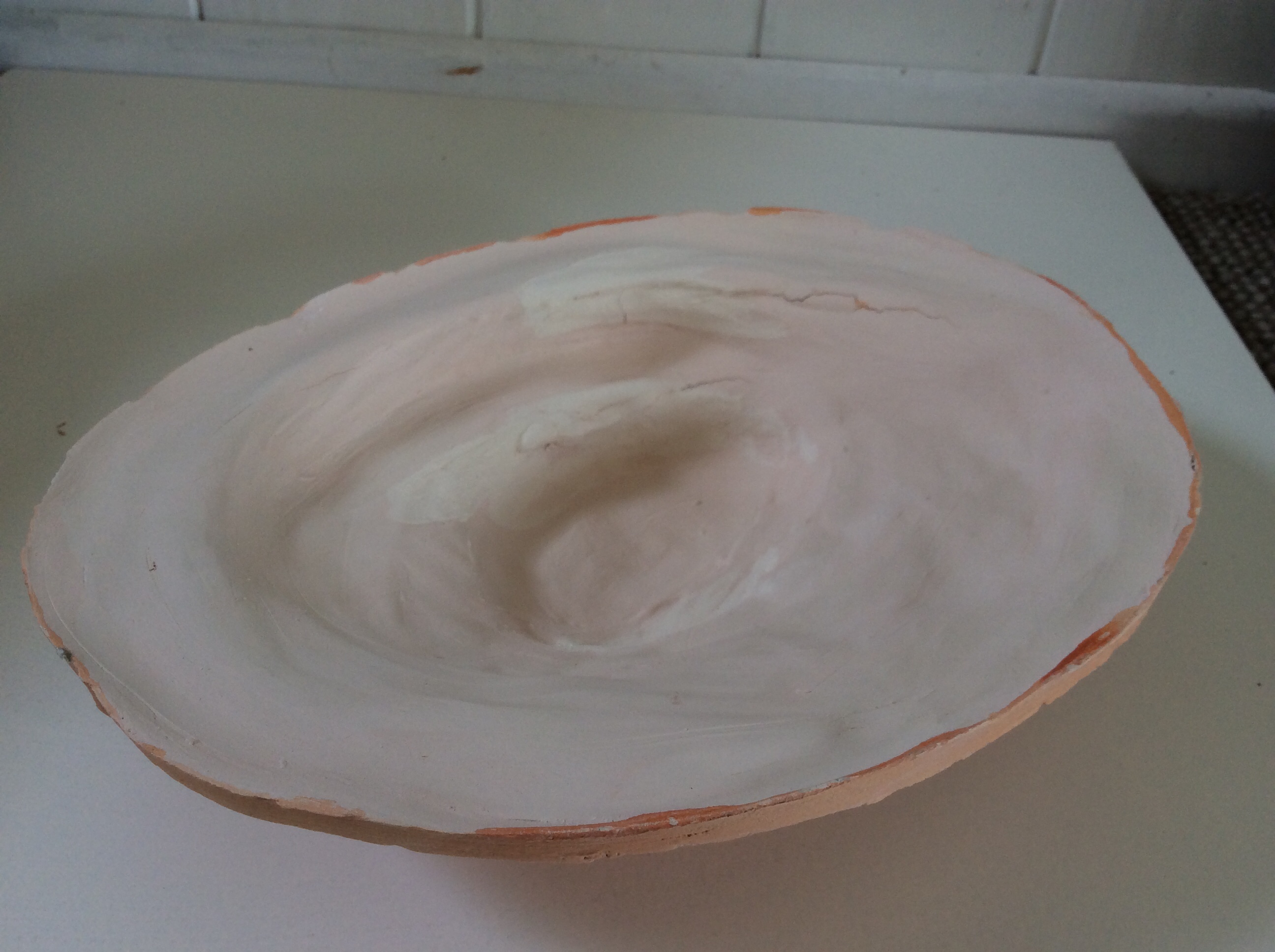
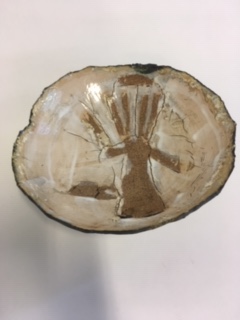
Red terracotta sigillata applied to green ware before bisque fire at 900 degrees centigrade. Coloured slip on top of bronze slip applied to squished native birds.
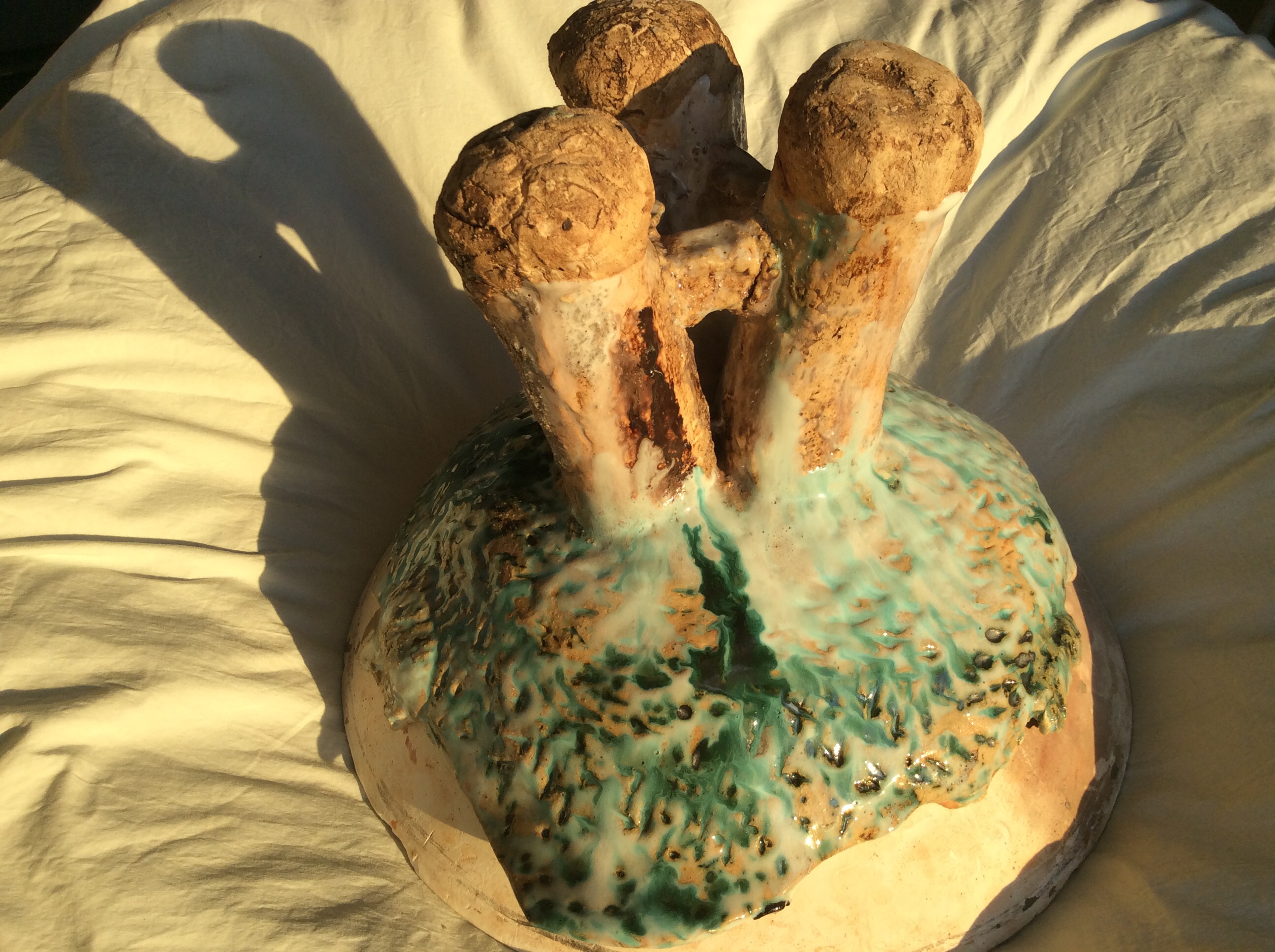
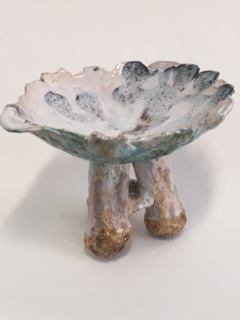
Slab building With Penny Ericson, 2019/2020

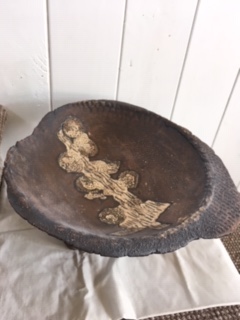
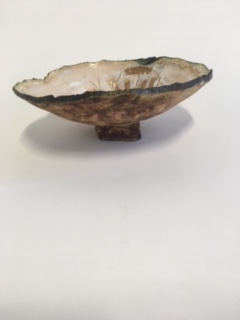
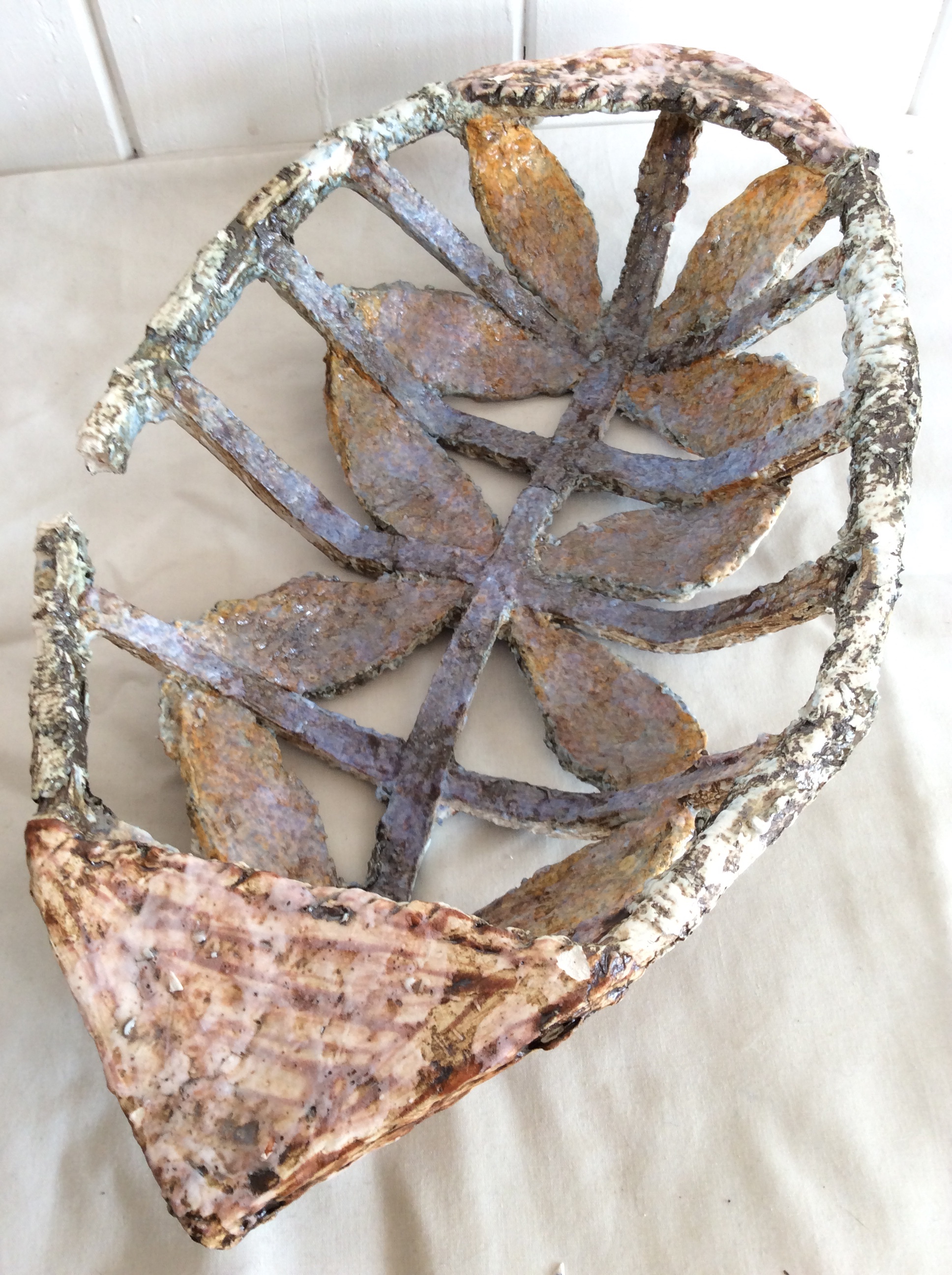
Tree Bowl. Toms white engobe with oxides. Frit applied on inside accidentally. Clear glaze expected.
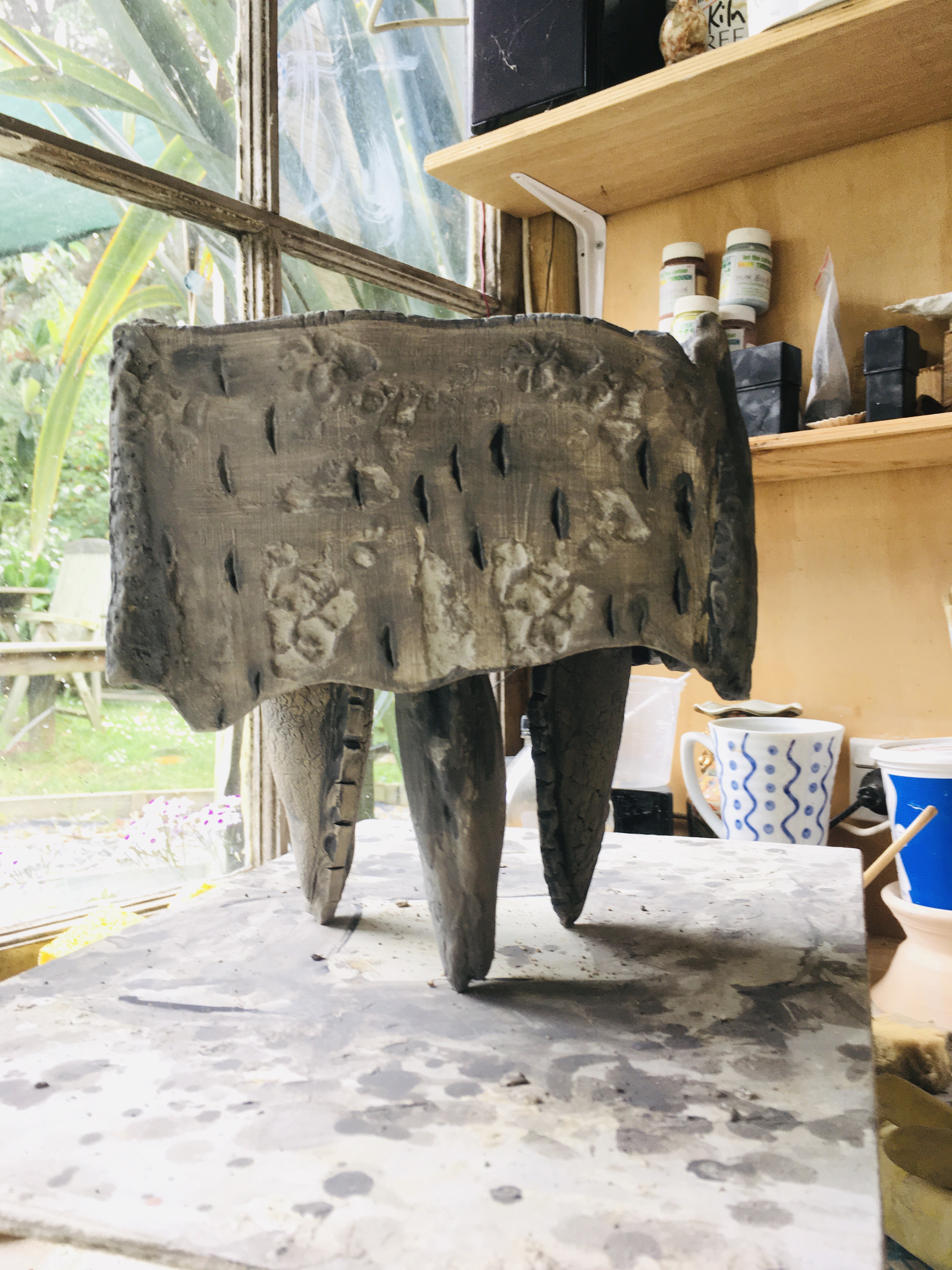
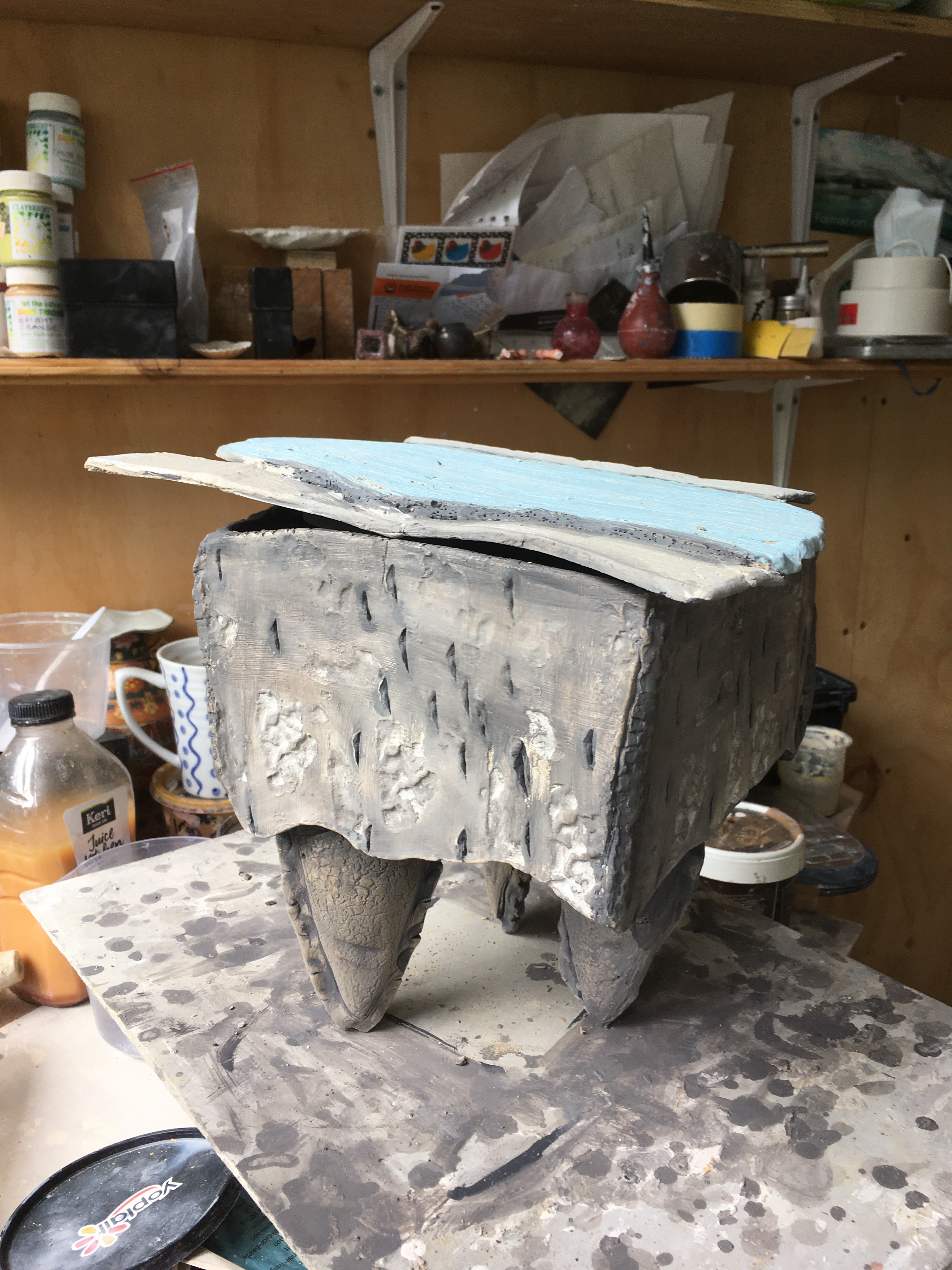
Tree bowl
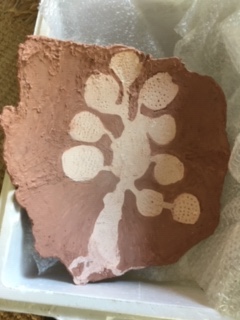
Bronze slip applied and Toms back engobe outlined around tree to help hold the 2 clays together. Black clay and red terracotta.
Tree bowl from hump mould I made.
Bronze slip applied and Toms black engobe outlined around tree to stop the clays from pulling apart. Whitestone clay and red terracotta used.
Tree bowl of Whitestone clay with black clay.
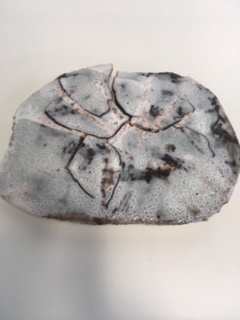
Tree bowl fractured in Kiln. Fired at 1200 degrees Celsius. 1160 degrees Celsius may be a temperature to try next time.
Bronze slip applied and Toms black slip outlined around tree to stop the clays from pulling apart.
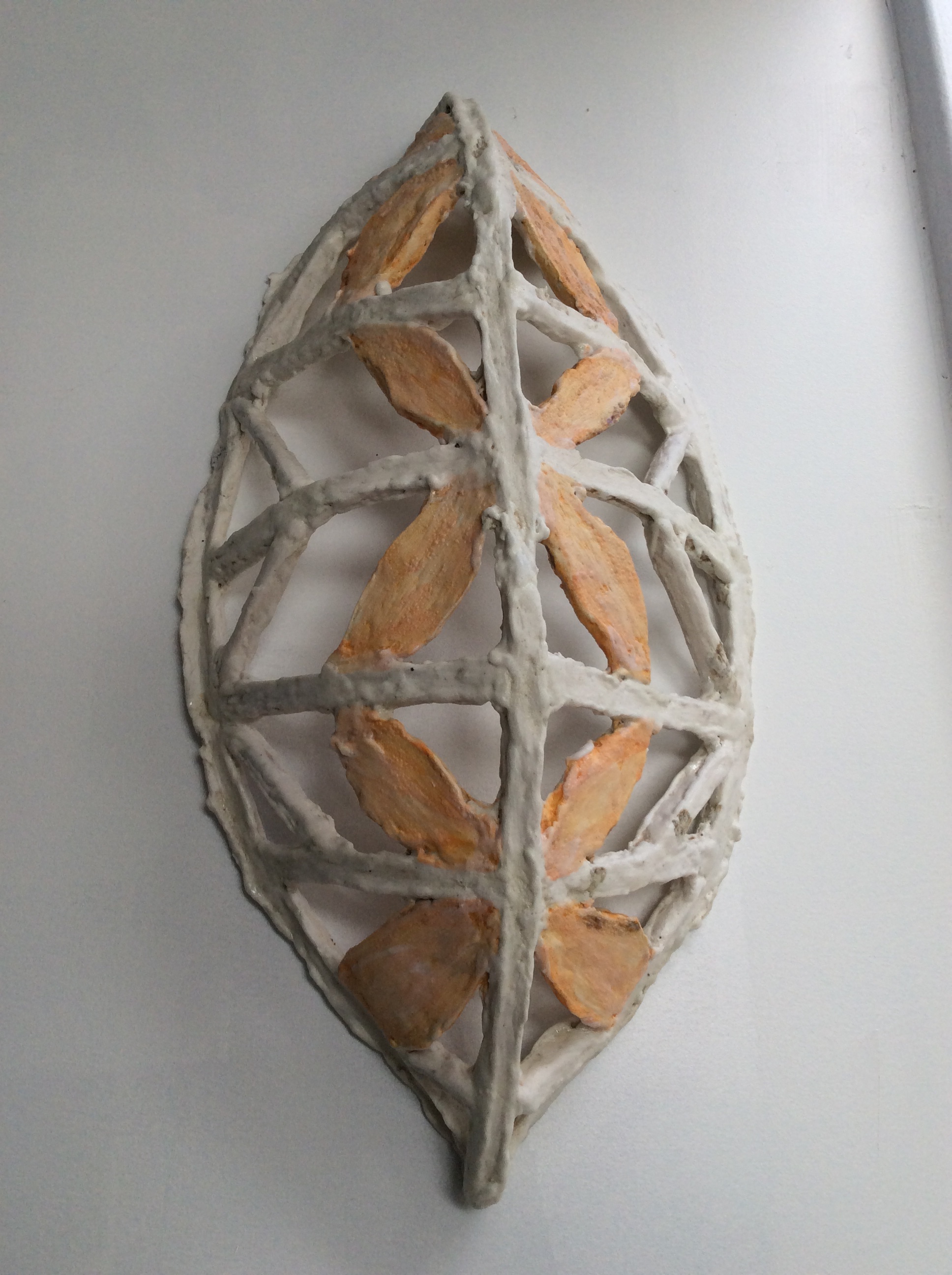
Small tree bowl
Tree Bowl

The theme for slab building has been Rakau (trees). The larger tree bowl was hard slab work and the smaller bowls were made of soft slab .

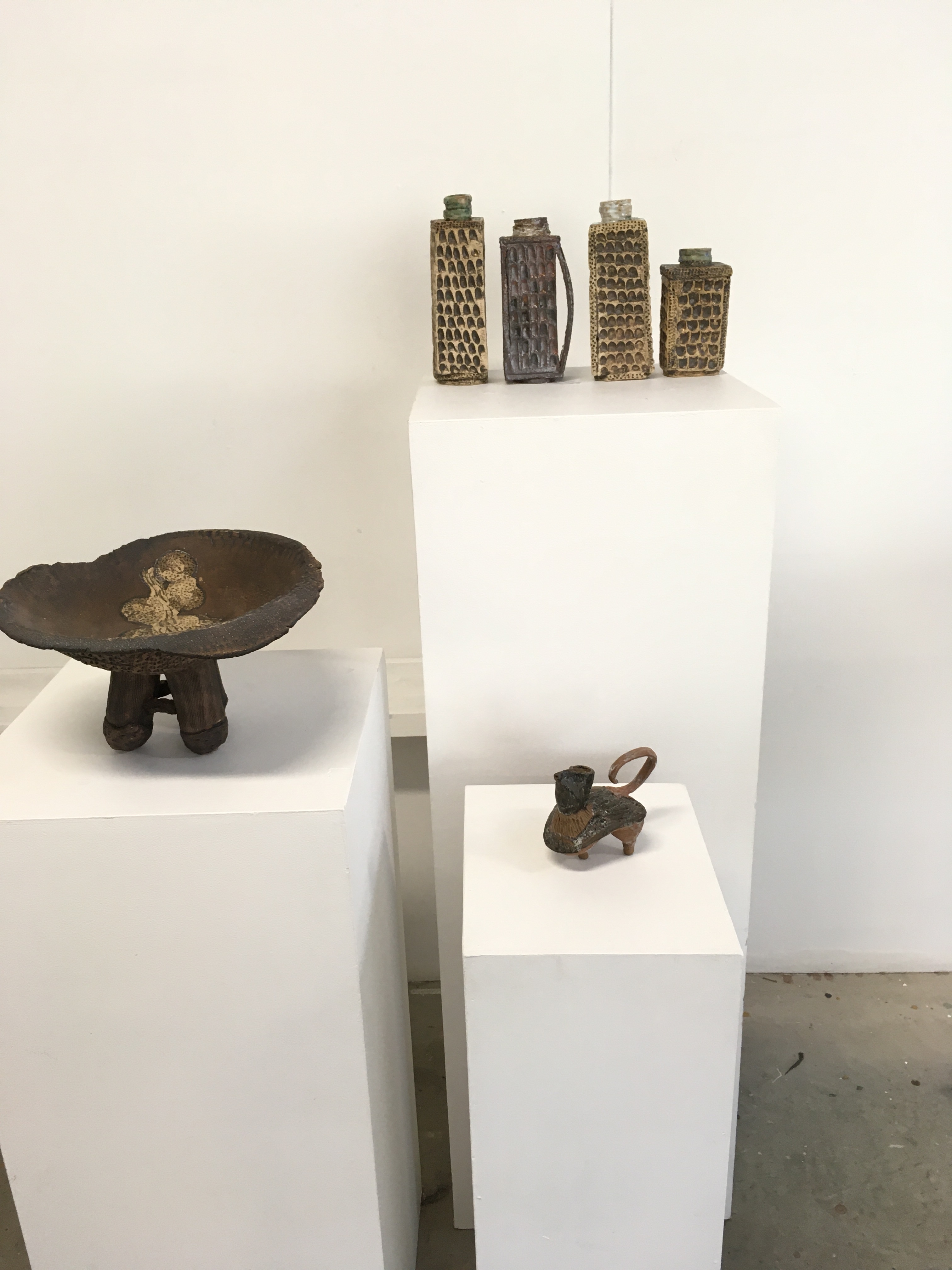
A hump mould was used to form the hard slab tree bowl and the essence of the tree on the inside was cut out of black clay and a groggy clay was used for the bowl. Cardboard rolls were used to form the trunk like legs which were joined to small pinch pots. The idea of the legs came from a 1965 book written by Carlton Ball and Janice Lovoos titled Making Pottery without a Wheel, texture and form in clay. The inspiration for the tree bowls came from being in Penny Ericsons studio who has been our tutor for this module. The Glazing was a bit of a surprise On the top photo of the bowl as I had used some of Toms white engobe with a mixture of oxides ie. copper oxide and cobalt and manganese and what I thought was a clear glaze now appears to be a frit which has run off some of my pieces. I actually like the result on the big bowl as think the coloured clay tree may have been too intense for my concept of tree essence. I have learnt now that it is important to test the glazes first.

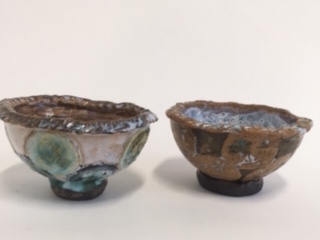
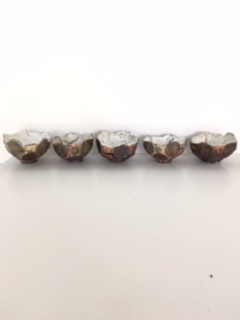
The smaller tree bowls were made in a mould. I cut out small circles and placed them in the shape of trees and then used some wet stoneware clay to fill in the gaps and have the appearance of tree trunks. The circles were given some texture so they would take up some of the oxides.

Tree bowls bisque fired and taken to Dunedin and put in wood fire which fired to 1300 degrees Celsius.
Clays have pulled apart in the high firing kiln but the cone 10 white and celadon
glazes have kept them intact.
  • Further examples of slab work.
Coloured slip with oxides pushed through some ripped newsprint paper to make shapes.
Stone and flower shape pressed on slab. Copper oxide applied on bisque ware.

Coloured slip applied to shapes cut out and assembled on a hump mould.
Tree bowl
Tree bowl of white stoneware with cut out terracotta shape of tree . Toms black engobe outlined around tree shape to stop the clay from pulling apart. Clear glaze applied. Iron oxide rubbed over bottom and copper oxide rubbed on the edge.
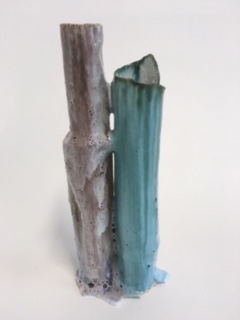
Vase made using cardboard roll
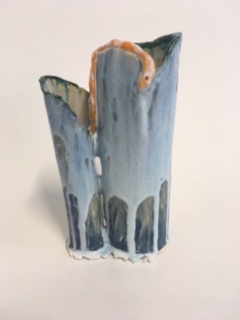
Vase made using cardboard roll and joining . Snake as connection of the two.
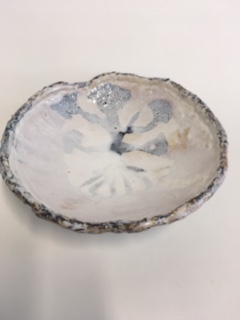
Tree bowl and frit accidentally applied instead of clear glaze.
Definition expected with using a clear glaze.
Frit applied rather than clear glaze. Different clays used in construction which made it difficult to hold together in the glaze firing.
Tree bowl landscape. Token pine trees, cliff and trees.
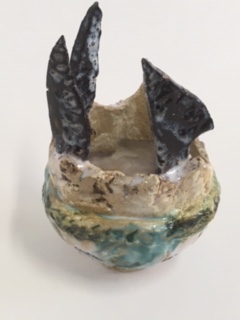
Slab boxes covered in oxides and fired in high salt fired kiln in Dunedin.
Building vases made after a trip to Surfers Paradise.
Bronze slip applied and Toms white applied on top and aramont blue green glaze applied by dipping. White glaze used inside and a clear glaze used in vase where bottom was difficult to see.

Red terracotta pot made to hold a bamboo plant. Majolica glaze applied inside by tipping in and out.

October 2020. Slab building module with Penny Ericsson. “Using The Land”.

Following on from last years “Clay as canvass”.

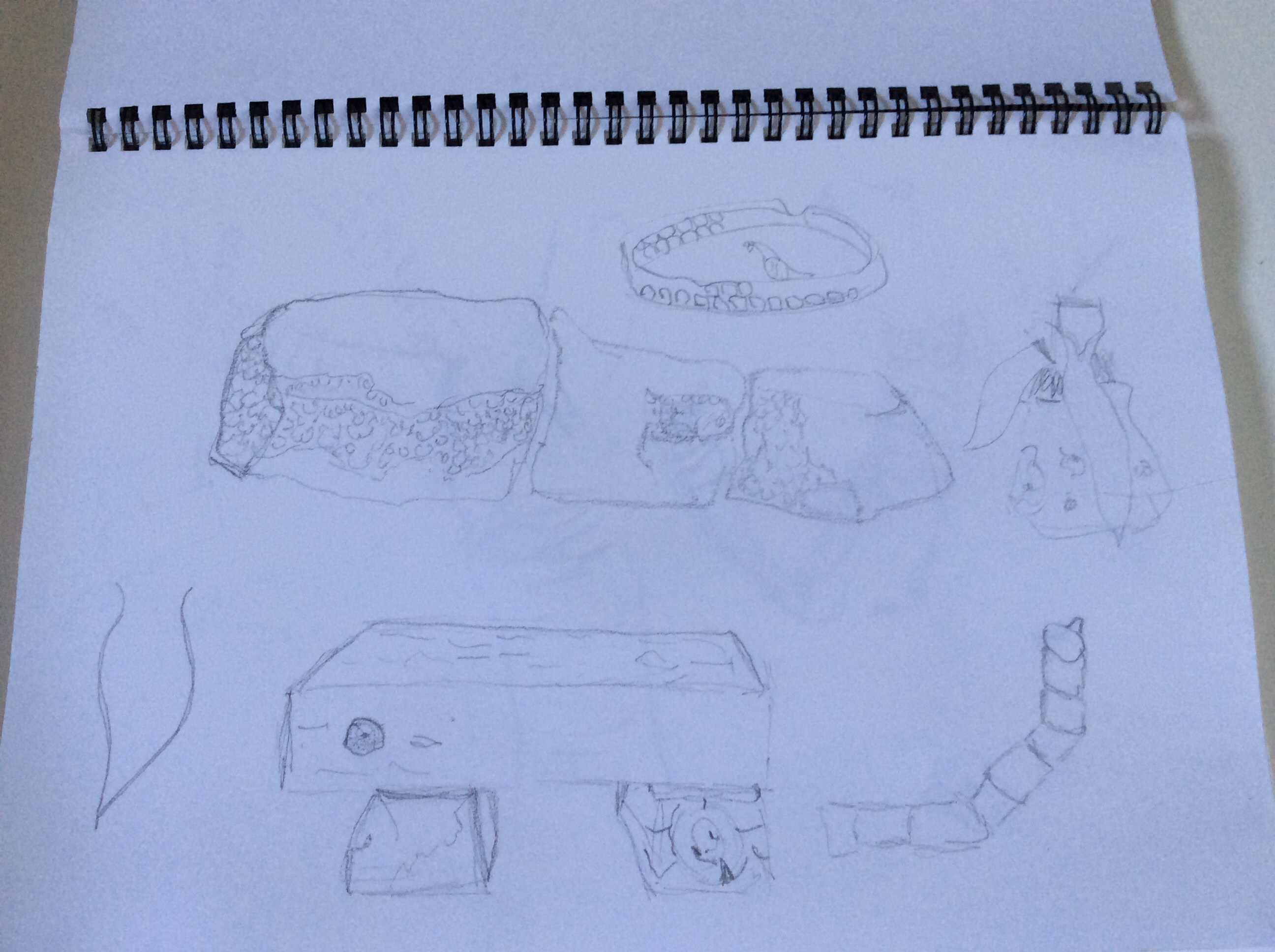
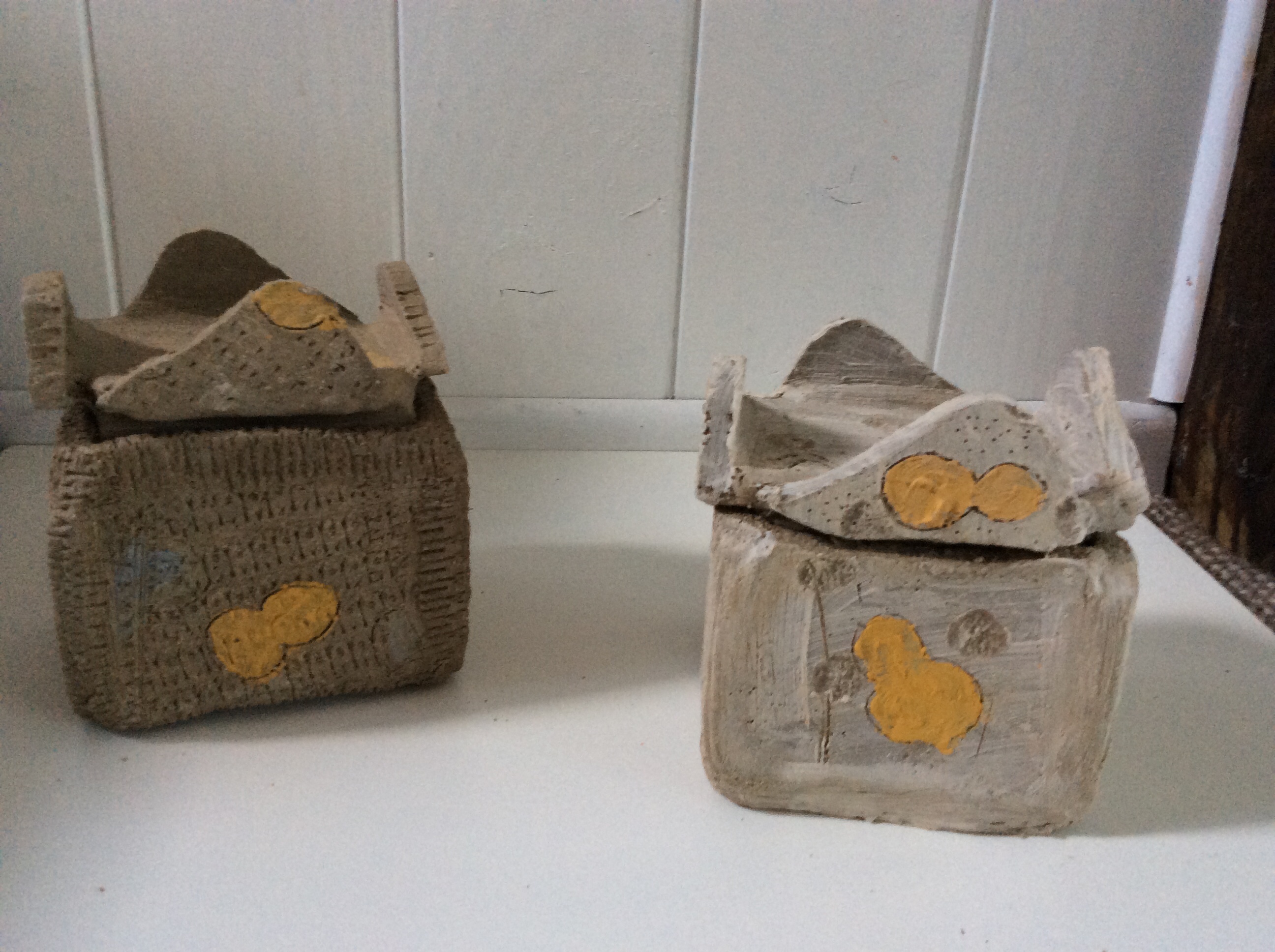
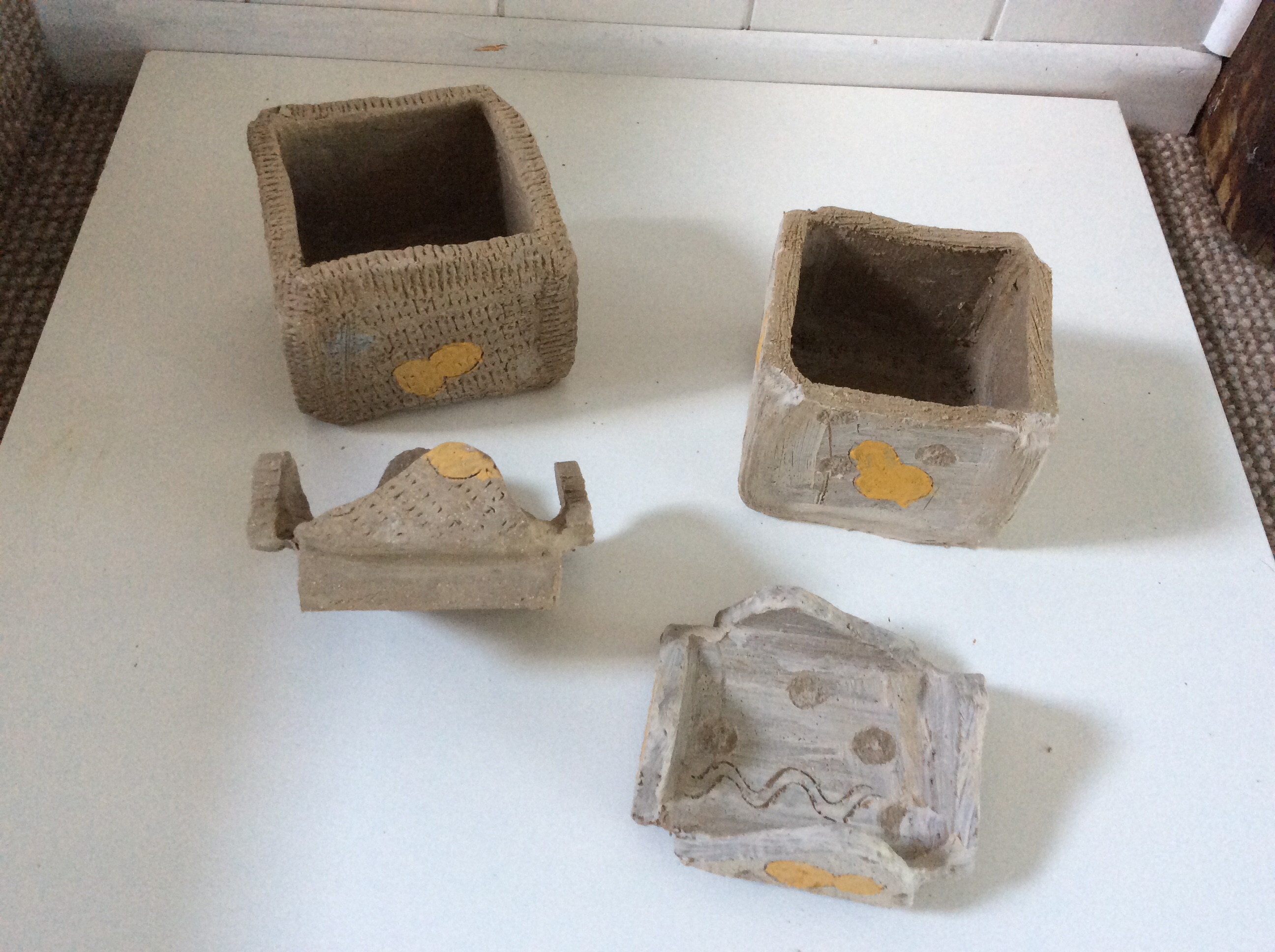
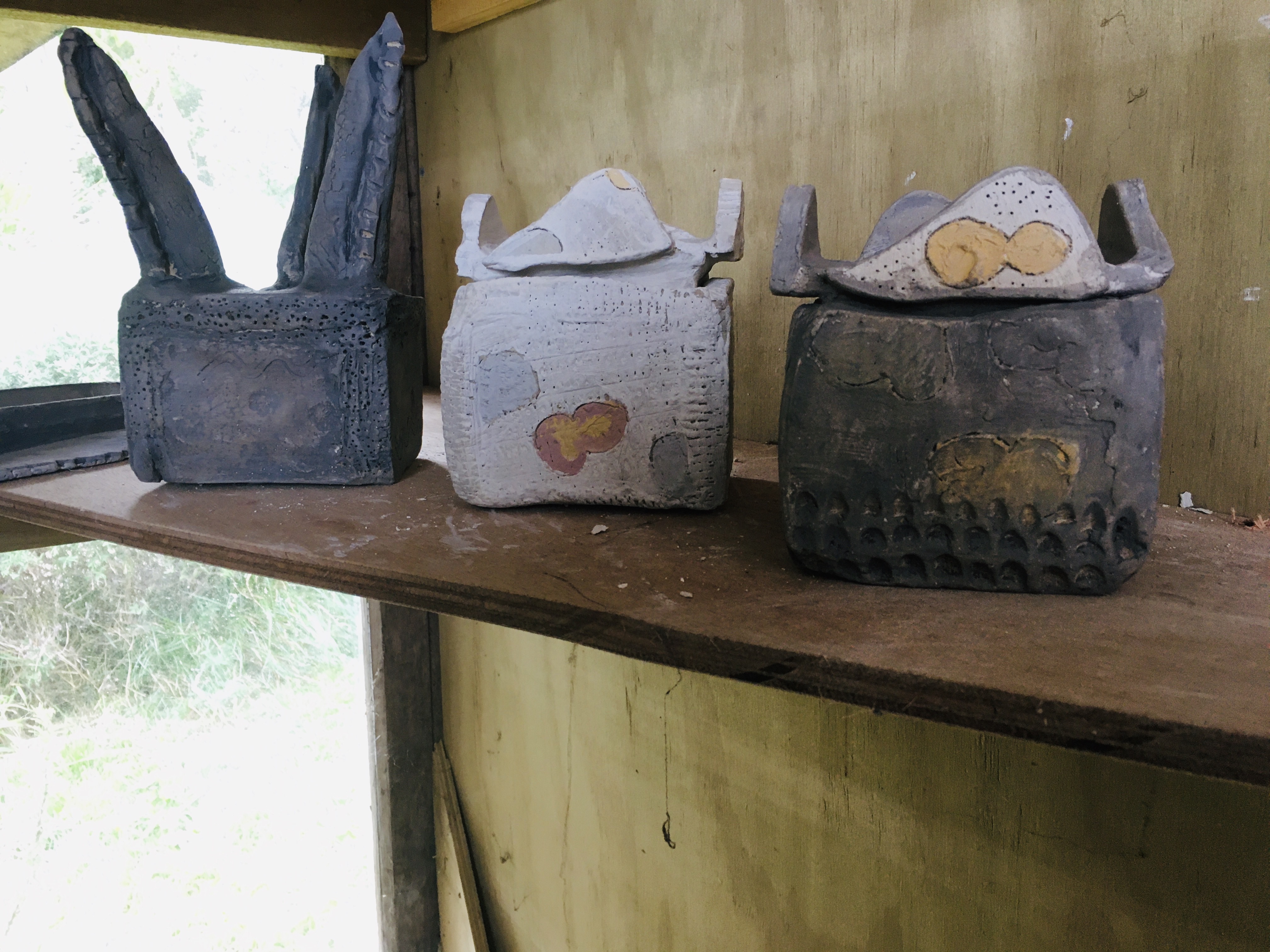
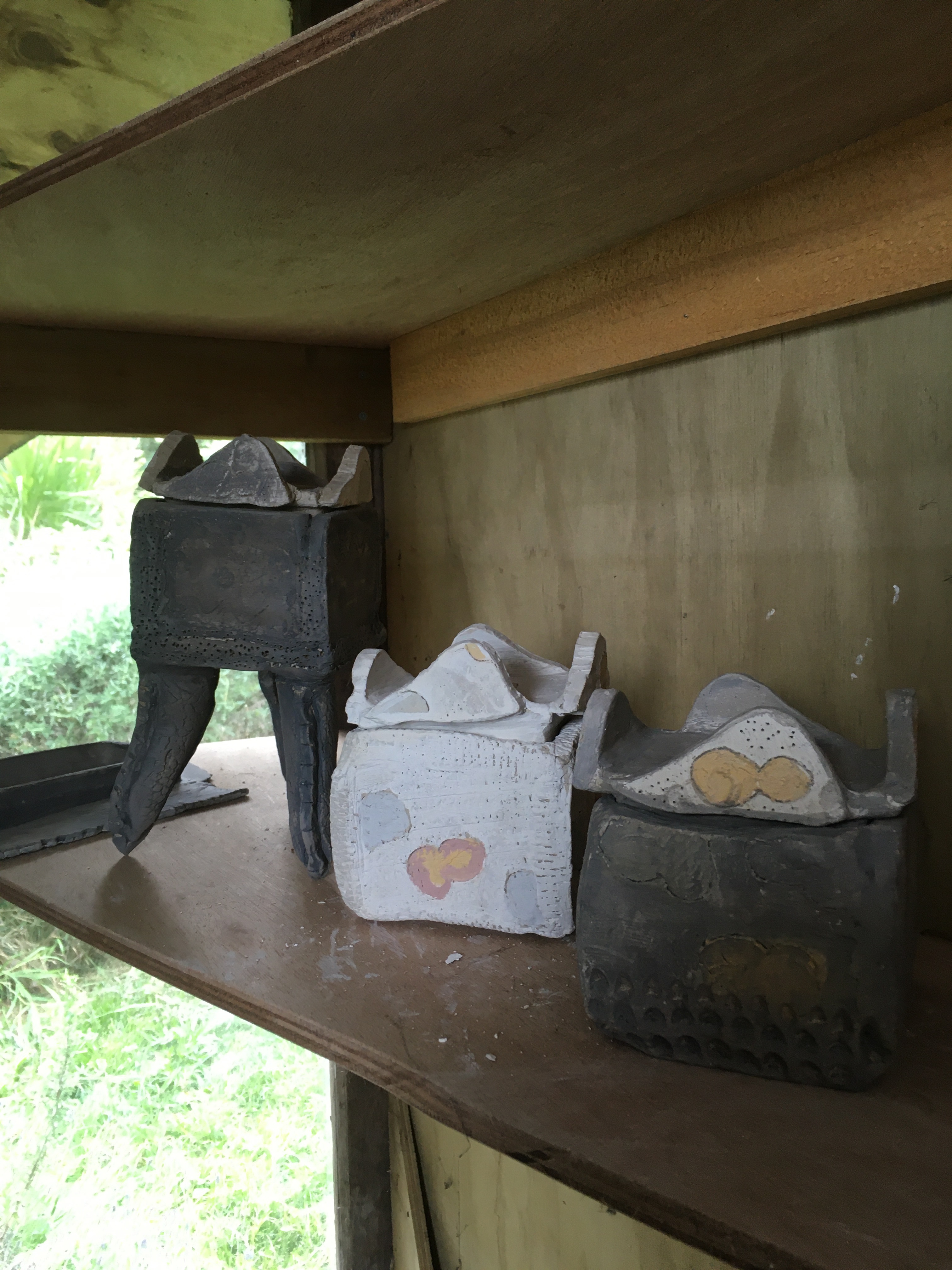
Our brief is to make a series of lidded multi sided boxes using hard slabs with surface treatment started at the time of building and based on imagery from our local environment.

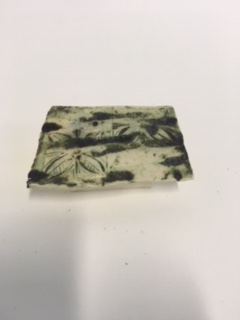
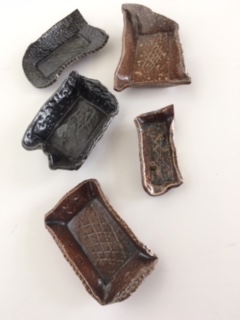
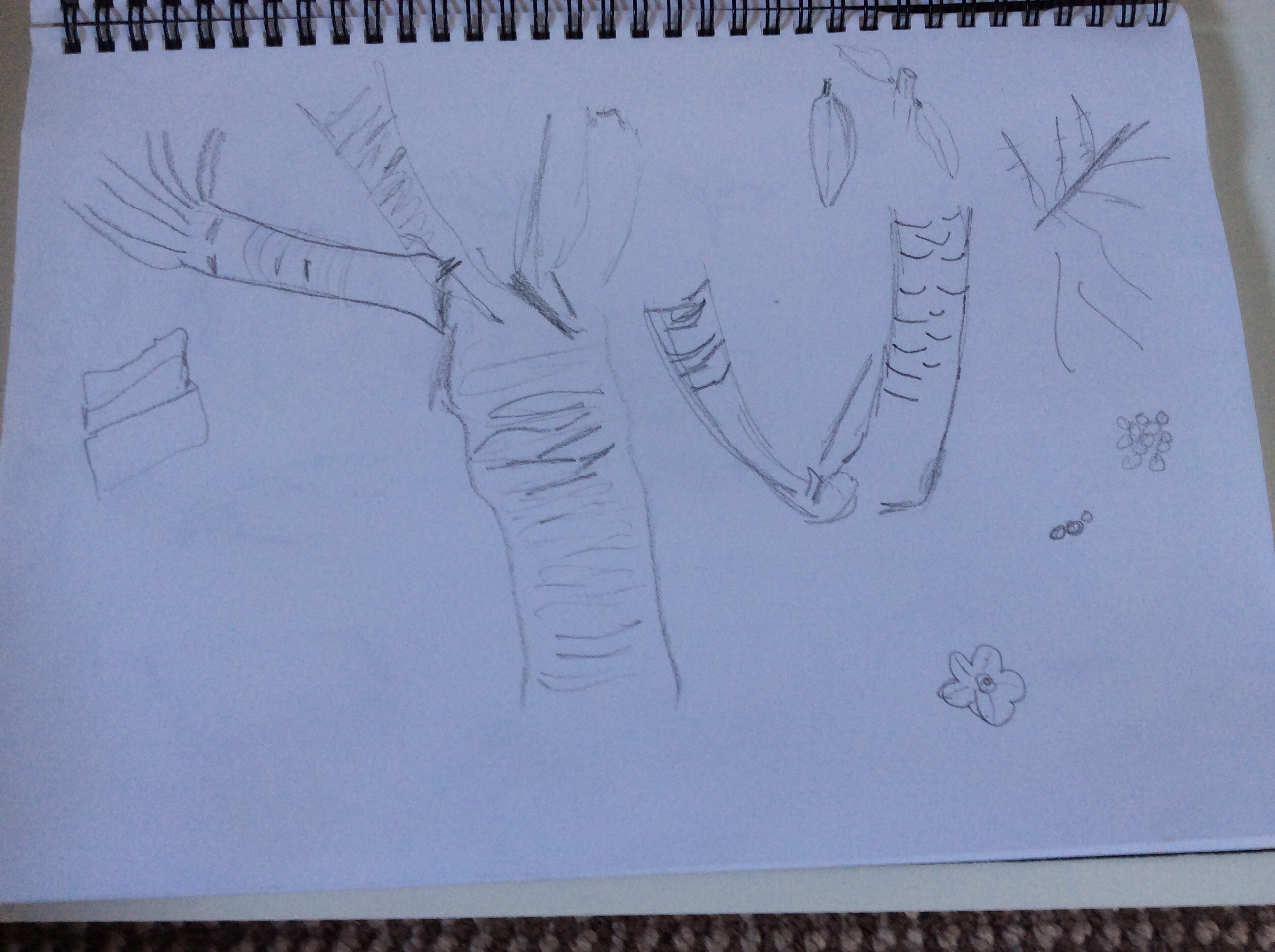
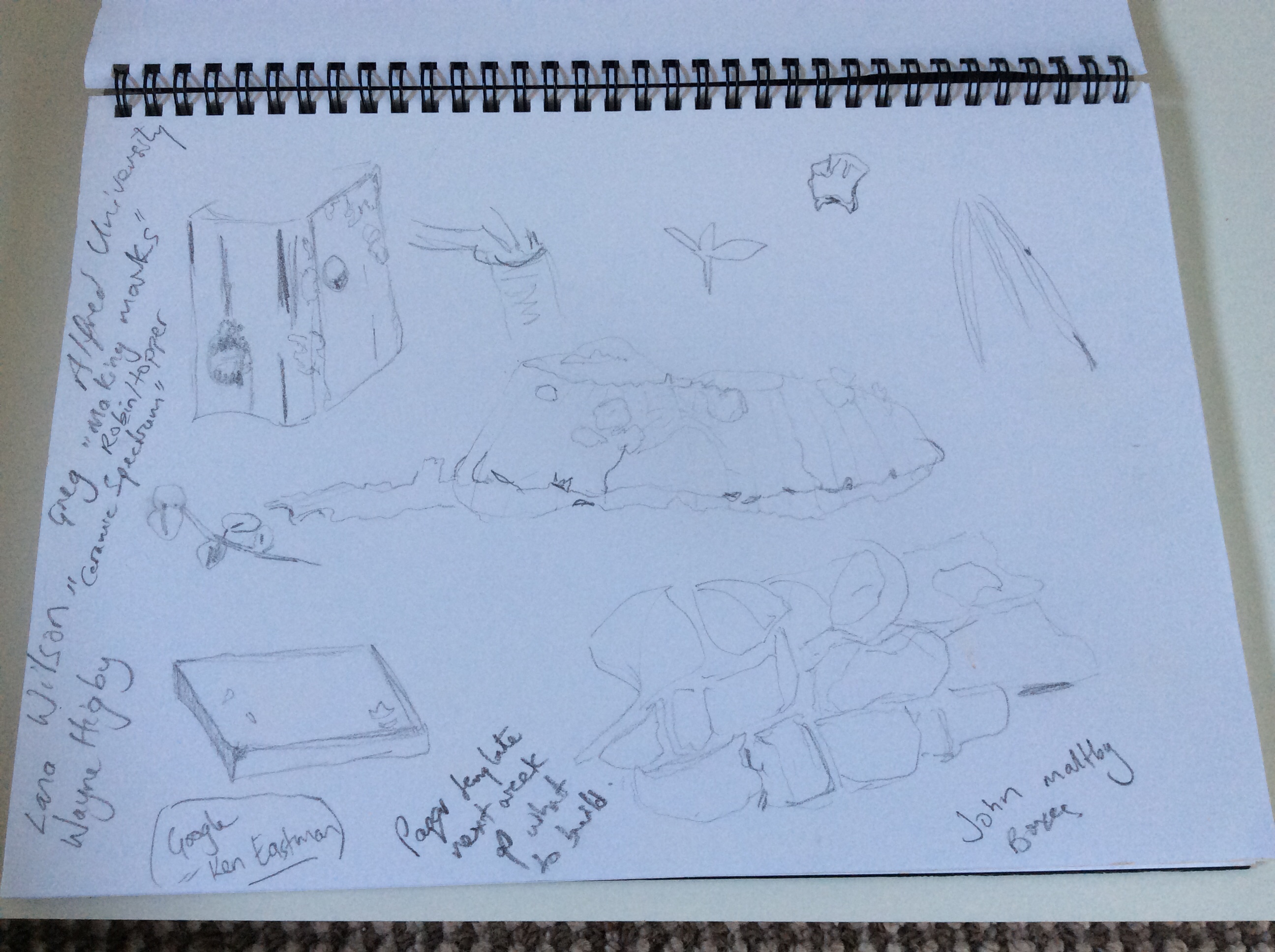
We Began the exercise by quickly sketching at least 10 visual forms from Penny’s garden of paradise and from the view. After rolling out the slabs of clay such as speckled buff in her rolling machine and then rolling with our own rolling pins until we got the correct thickness we started applying some surface treatments. We needed to carve and scrape, impress, wax resist, underglaze paint, use torn and cut stencils and stamps and roulettes.

Our next step was to work towards making some small examples of work to use for glaze testing.

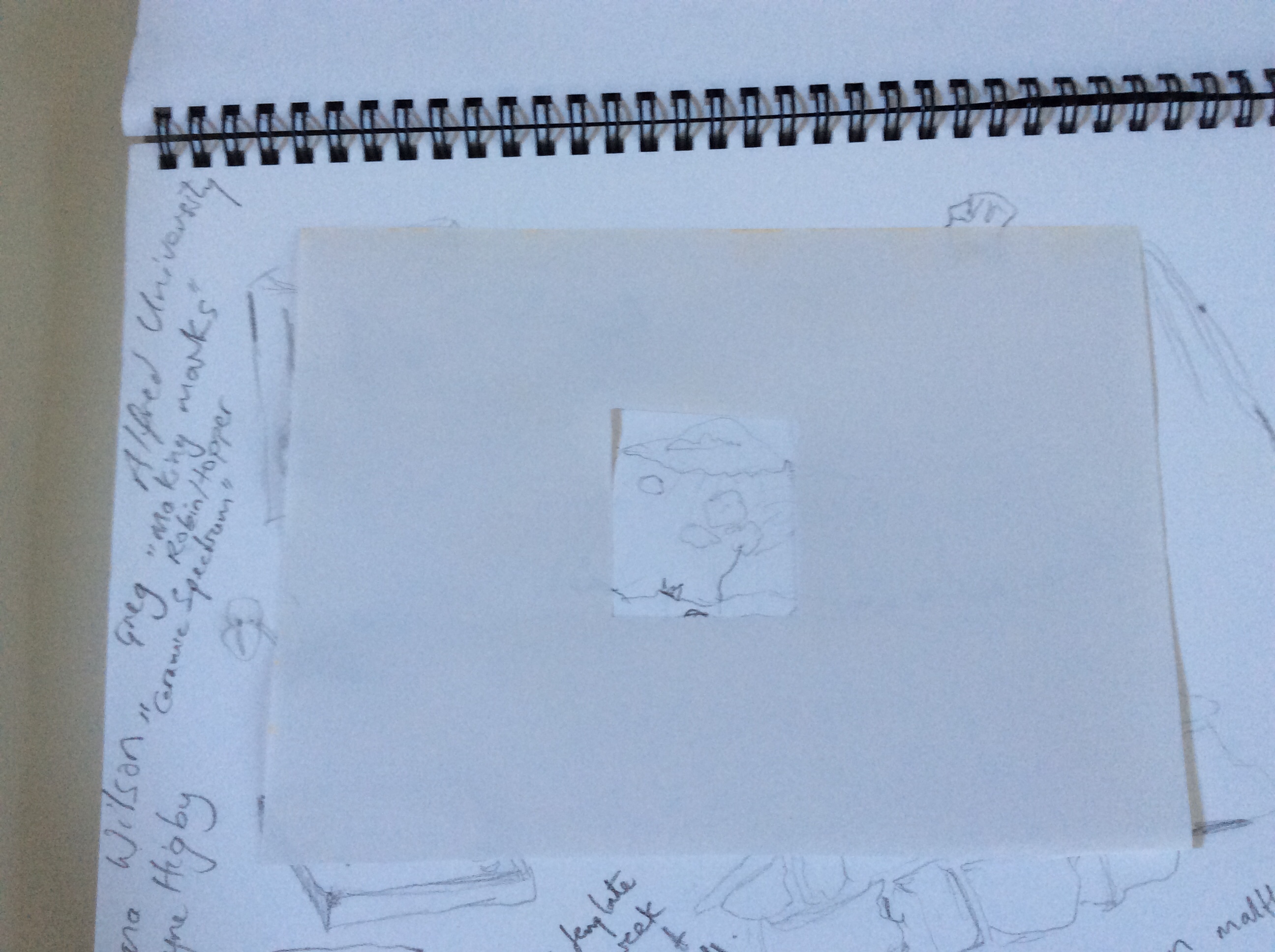
We had a square cut in some paper to put over a sketch to focus on an area which appealed and then we needed to draw a patten to be able to focus with hand building.

The Journey begins on the pottery path 😎2019 and 2020. I embark on a journey which will stimulate and encourage me to keep my senses engaged in all the activities I focus on.

Thanks for joining me!

Good company in a journey makes the way seem shorter. — Izaak Walton

post

November Assessment at Owhanake

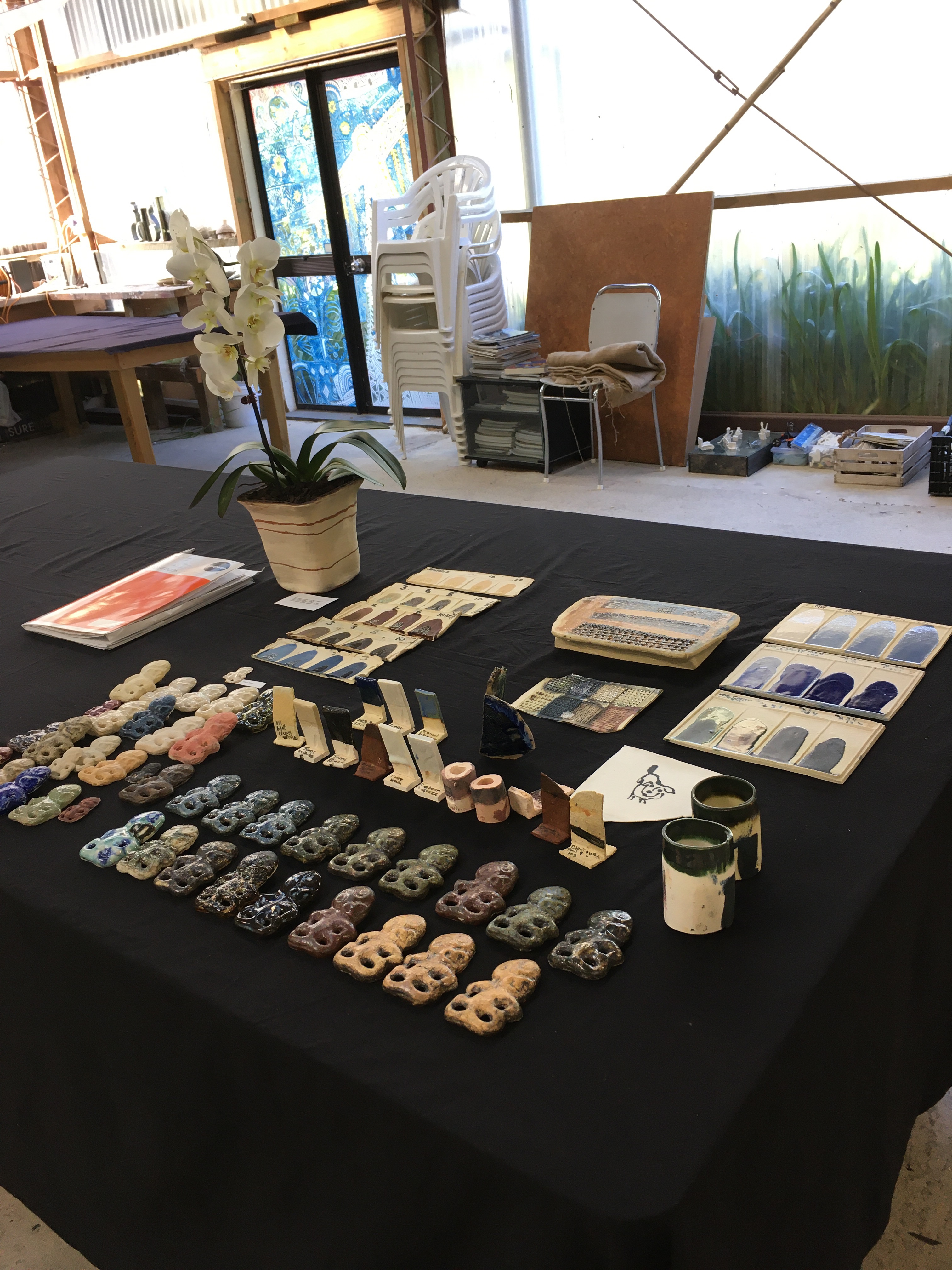
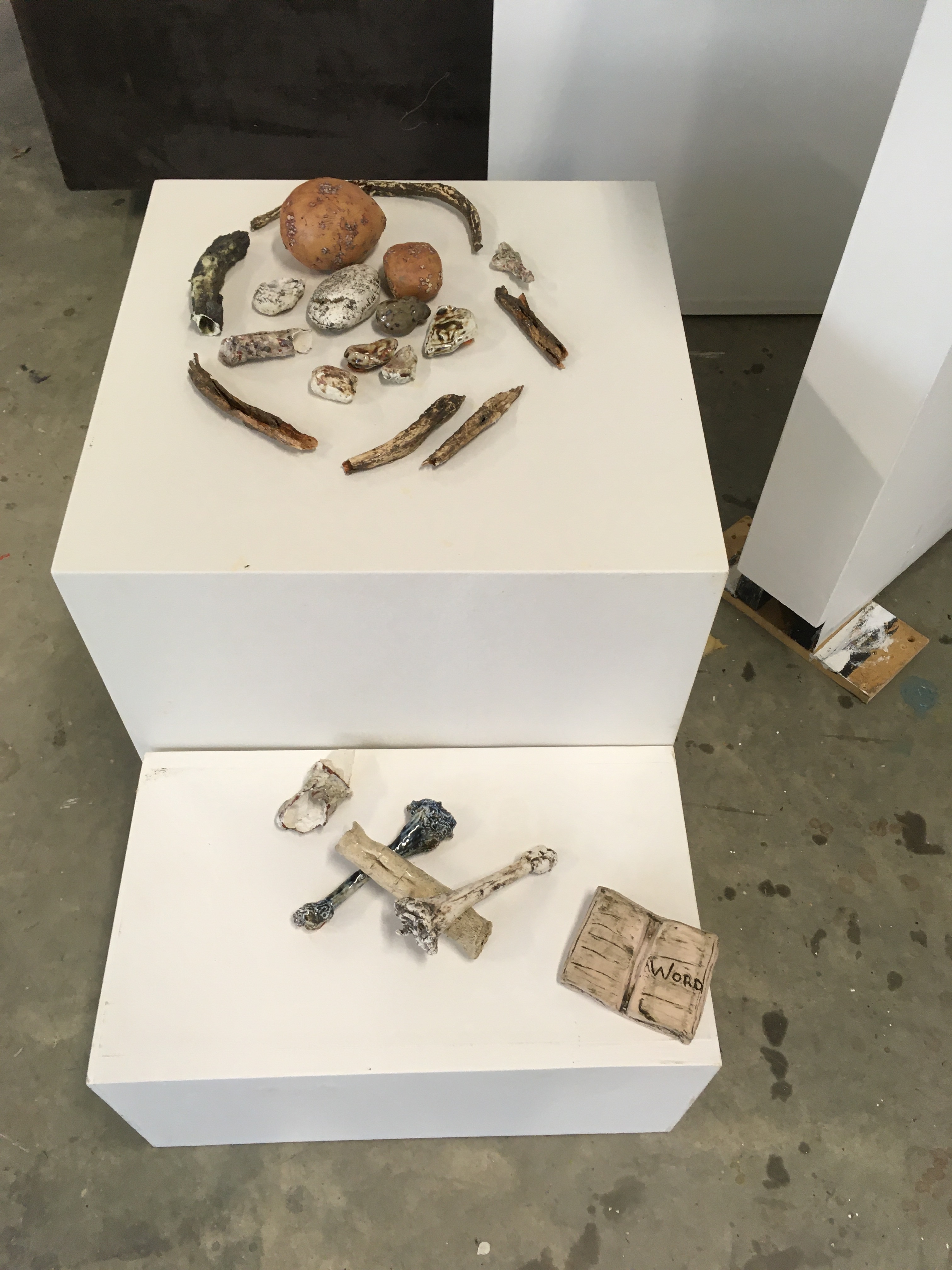
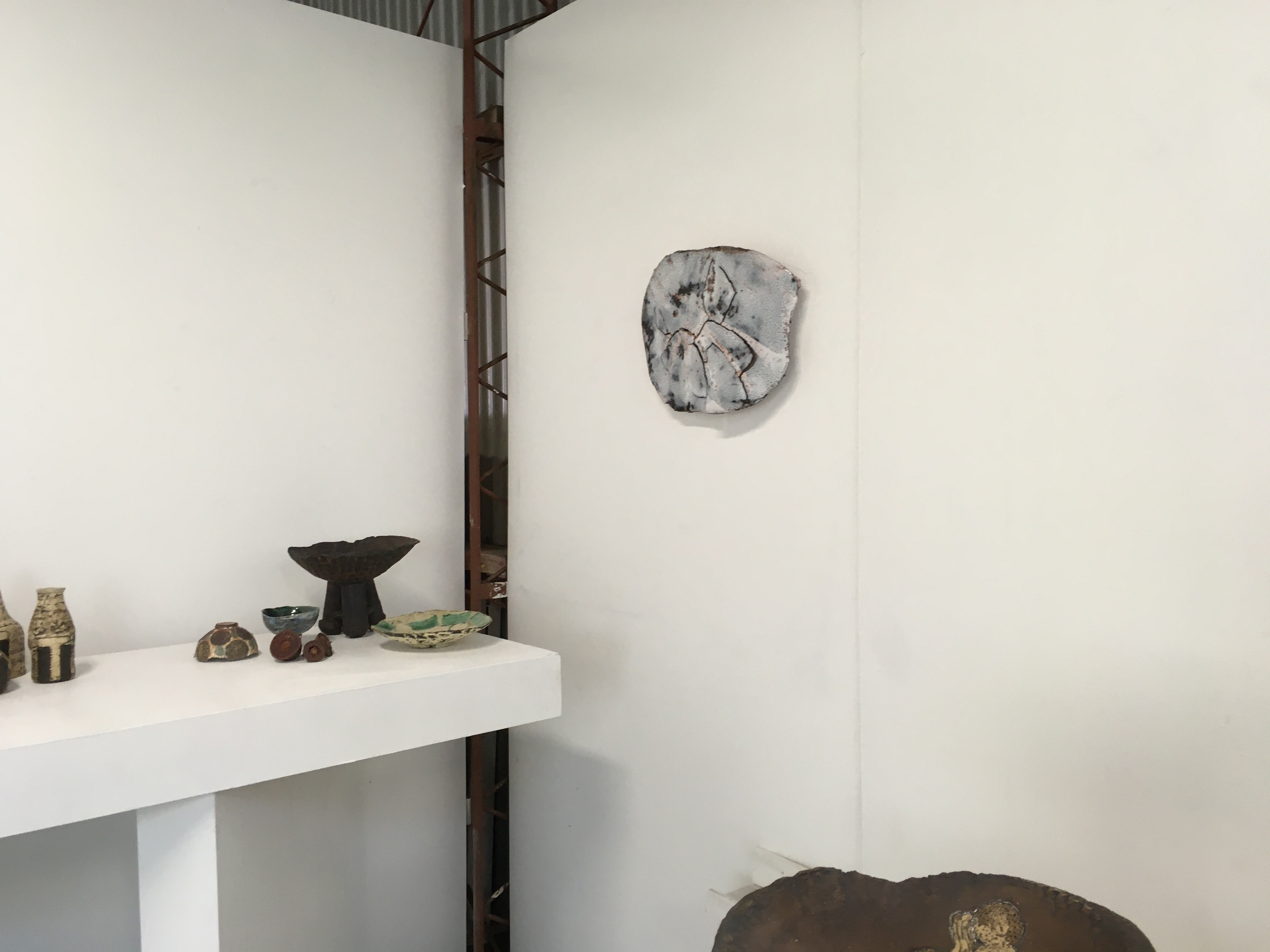
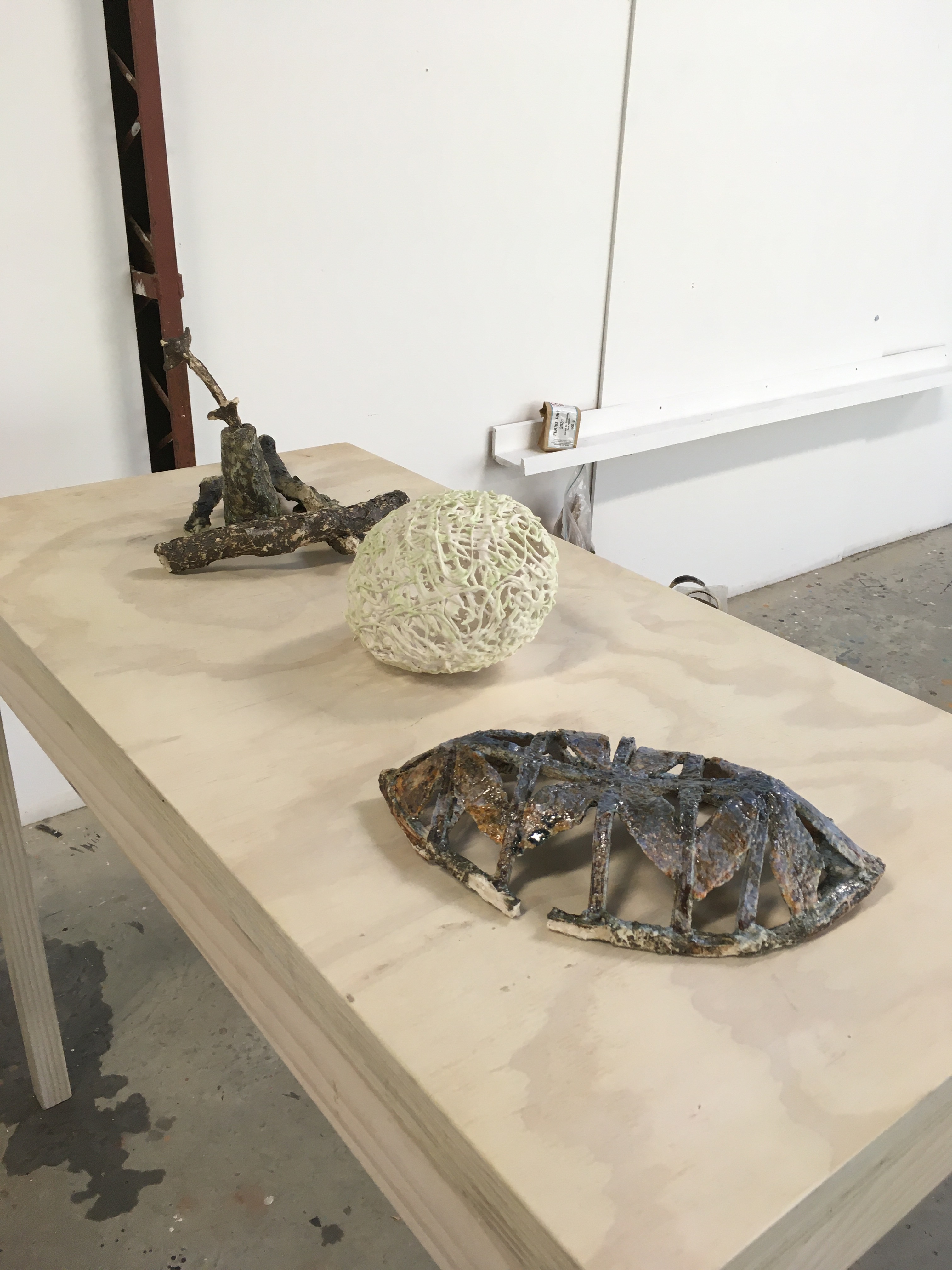
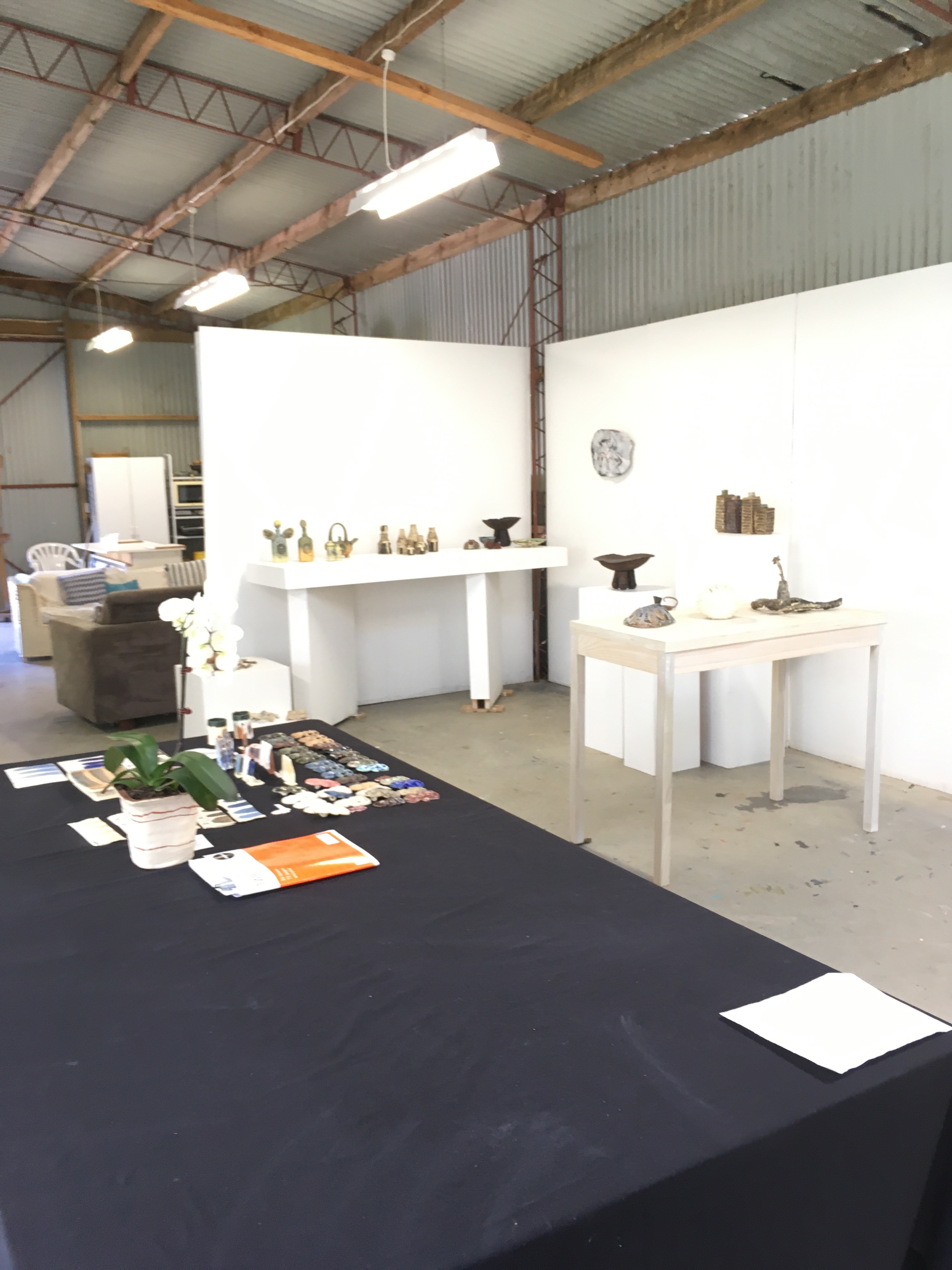
Barn. View of my exhibition items.

Glaze pallet used this year , 2019.

Modules of Throwing, slab, paper clay, pinch and coil and mould making .

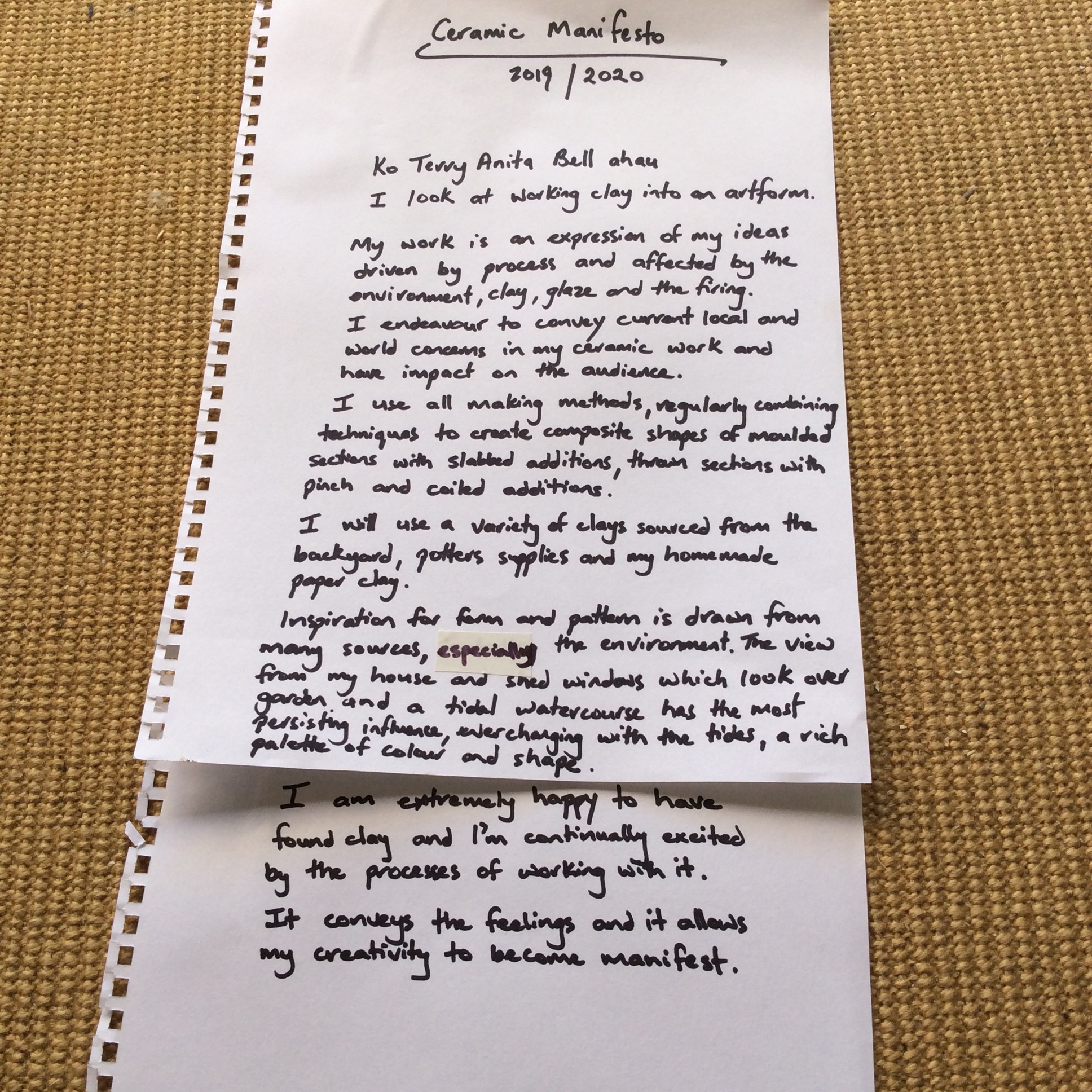
My Ceramic manifesto for works from 2019 and 2020.